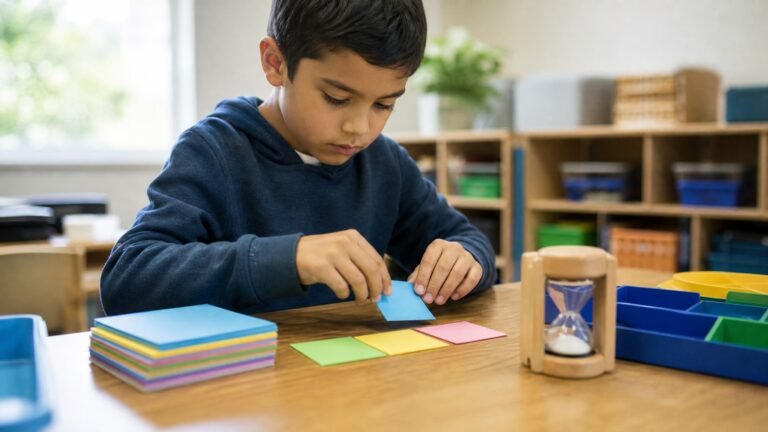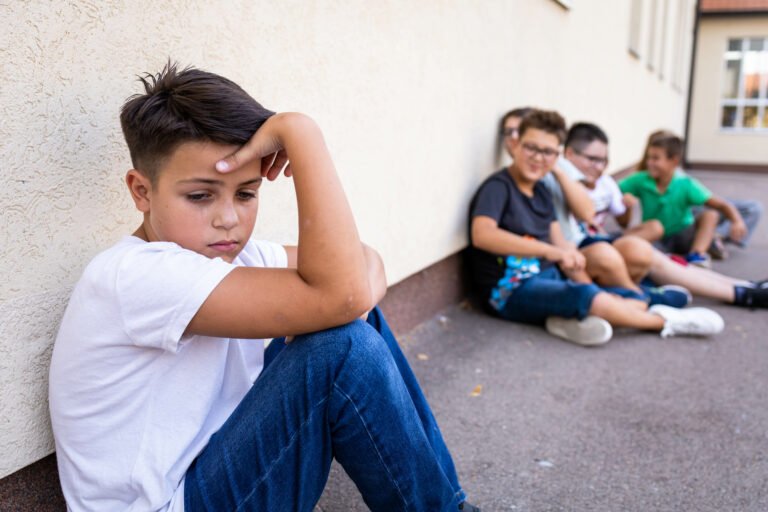
A small group counseling curriculum should do more than fill six sessions with appealing activities. It should give students a predictable place to practice a focused set of skills, hear that peers share similar struggles, and leave with strategies they can use in class, at home, and in relationships. For busy school counselors and clinicians, the challenge is creating that structure without spending every planning period reinventing it.
The most useful curriculum is not necessarily the longest or most elaborate. It is a clear, developmentally appropriate plan that can flex around attendance changes, varying student readiness, school events, and the realities that children bring into the room on any given day.
Start With a Clear Purpose, Not a Stack of Activities
Strong groups begin with a specific, observable purpose. “Build social skills” is broad. “Help fourth-grade students notice friendship problems, use an assertive request, and choose a repair step” gives the group a practical direction. The same principle applies to emotional regulation, grief support, executive functioning, self-esteem, coping skills, and school adjustment.
Before choosing materials, identify what students should be able to understand, practice, or communicate by the end of the group. A goal may include recognizing body cues connected to stress, naming trusted adults, using a calming strategy before reacting, or breaking a large school task into smaller steps. The goal should match the students’ developmental level and the reason they were referred.
This also helps prevent a common problem: a group that is enjoyable but difficult to describe in documentation. When the target skill is clear, session objectives, progress notes, caregiver communication, and outcome monitoring become much easier to organize.
Consider readiness and group fit
Students do not need identical needs to benefit from a group, but they do need enough shared purpose for the group to feel relevant. A sixth-grade coping skills group might include students with worry, frustration, and peer stress because each student can practice noticing emotions and selecting helpful responses. Combining students with widely different needs can work, but it requires more individualized scaffolding. Peer conflict often surfaces in friendship and social skills groups too, and our guide to bullying prevention activities for middle school can help when it does.
Screening is also part of ethical, trauma-informed practice. The American School Counselor Association describes group counseling as a planned, goal-focused, short-term service and recommends screening potential members and obtaining informed consent that explains the group’s purpose, its voluntary nature, and the limits of confidentiality (ASCA, The School Counselor and Group Counseling). Consider whether the student can participate safely in a peer setting, whether the topic may bring up sensitive experiences, and whether the student has enough regulation support for a group format. Some students may need individual intervention, additional accommodations, or a different type of support before joining.
Build a Small Group Counseling Curriculum Around a Repeatable Arc
A repeatable session rhythm helps students feel safe because they know what comes next. It also reduces the amount of verbal prompting needed from the facilitator. For younger students especially, predictable routines can make participation more accessible than a new format every week.
A practical six- to eight-session sequence often moves from connection to insight, then from practice to generalization. The group begins by establishing emotional and physical safety, moves into teaching and rehearsal, and ends by helping students identify how they will carry the skill forward.
A typical arc may include the following elements:
- Session 1: Introductions, purpose, group agreements, and a low-pressure baseline activity.
- Sessions 2-3: Recognizing feelings, patterns, triggers, strengths, or situations connected to the group goal.
- Sessions 4-6: Learning and practicing targeted coping, communication, problem-solving, or organization strategies.
- Session 7: Applying skills to realistic scenarios and planning for barriers.
- Session 8: Reviewing growth, identifying supports, and ending the group thoughtfully.
Not every group needs eight sessions. A brief school-based group may have only four meetings, while a clinical group may need more time for skill rehearsal and individualized processing. The trade-off is depth. Shorter groups can address a narrowly defined skill and reach more students, while longer groups allow more repetition, relationship-building, and generalization.
Within each session, keep the structure familiar: a brief check-in, a focused activity or discussion, skill practice, reflection, and a closing routine. A check-in can be as simple as choosing an emotion word, rating energy on a visual scale, or sharing one helpful moment from the week. It should invite participation without requiring personal disclosure.
Example: a six-session friendship group plan
Here is how that arc might look for an elementary friendship group:
| Session | Focus | Example activity |
|---|---|---|
| 1 | Building safety | Group agreements |
| 2 | Recognizing friendship challenges | Scenario sorting |
| 3 | Communication | Assertive responses |
| 4 | Problem-solving | Role-play |
| 5 | Friendship repair | Practice conversations |
| 6 | Reflection | Progress check and next steps |
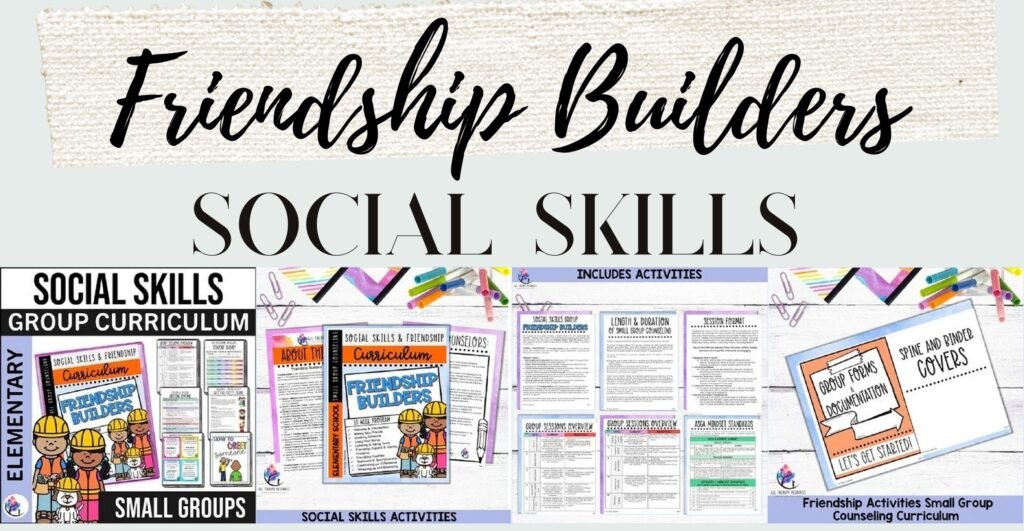
From our counseling room to yours: When we created Friendship Builders, our elementary social skills group curriculum, we followed exactly this kind of arc. Across 10 sessions, students move from welcome and group agreements through making new friends, greeting someone, using kind words, listening and taking turns, and repairing friendships, to teamwork, celebrating differences, and a planned final session. We also included the pieces that usually take longest to prepare, such as parent consent letters, attendance records, and student and teacher pre/post outcome measures, so your energy goes into the group rather than the paperwork. Counselors are using it in different ways. One school counselor shared in their review that it is “one of the best small group counseling curriculums I’ve used,” with activities that “truly help kids build the skills they need to form and maintain friendships.” Another used one of the activities at the start of the school year to help students with making and keeping friends, and a third ran it with a first grade social skills lunch bunch who “enjoyed these themed activities.”
Make Skill Practice Active and Developmentally Appropriate
Children and adolescents rarely learn a new coping or communication skill simply by hearing an explanation. They need to see it, try it, adapt it, and revisit it. A curriculum should include enough active practice that students can move from “I know the words” to “I can use this when I am frustrated, worried, or stuck.”
For elementary students, this may look like sorting situation cards, drawing a coping plan, using puppets or role-play, practicing a body-based regulation exercise, or completing a simple game with discussion prompts. Visual supports, brief directions, and concrete examples are especially helpful for students with language, attention, or executive functioning differences.
Adolescents often respond well to realistic scenarios that respect their growing independence. Instead of asking, “What should you do if a friend is mean?” try a scenario involving a misunderstood text, being left out of a group chat, conflict during a class project, or pressure to respond immediately when upset. Students can compare possible choices, predict consequences, and practice language they would actually use. If you run groups with older students, our identity and values activities for teens in counseling groups offer more discussion ideas.
Avoid making participation dependent on speaking in front of peers. Offer options such as writing, drawing, choosing from response cards, rehearsing with a partner, or passing during a round. Choice supports engagement and reduces the risk that group becomes another setting where a student feels put on the spot.
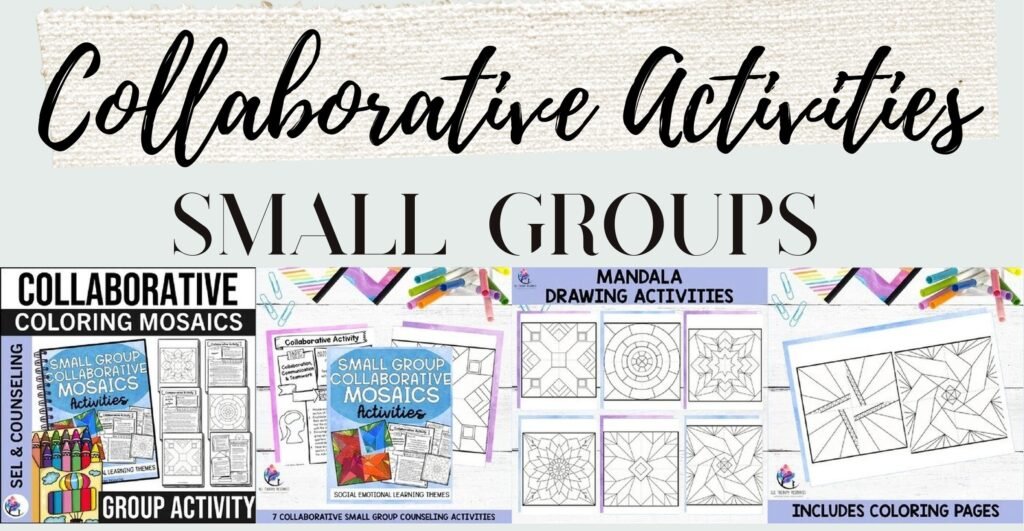
Try this in your next group: For a hands-on way to build collaboration, 7 Collaborative Small Group Counseling Curriculum Activities gives groups of four a shared mandala drawing to complete together, with themes such as friendship dramas, empathy, respect, and diversity and inclusion. Each activity comes with a double-sided handout covering objectives, facilitation steps, and debrief questions, so it works well as a low-pressure session that still has a clear skill focus. One reviewer called the activities “incredibly creative and so versatile.”
Plan for Regulation Before Processing
A thoughtful curriculum assumes that some students will arrive dysregulated, tired, guarded, or preoccupied. Beginning with a brief grounding routine can help the group settle before discussion begins. This might include paced breathing, a sensory-based check-in, stretching, a visual agenda, or a quiet choice activity.
Regulation strategies should be taught as options, not as compliance tools. One student may prefer movement, another may benefit from a drawing prompt, and another may need a few minutes of quiet. The goal is to help students notice what supports their own readiness to participate. Offering choice in this way reflects the principles of a trauma-informed approach outlined by SAMHSA, which include safety, trustworthiness and transparency, peer support, collaboration, and empowerment, voice, and choice (SAMHSA’s Concept of Trauma and Guidance for a Trauma-Informed Approach).
When discussing emotionally charged topics, keep the focus on skills and present-day support rather than inviting detailed disclosures in front of peers. If a student shares something that requires follow-up, respond calmly, thank them for speaking up, and follow established school or clinical procedures. Group confidentiality should be explained in age-appropriate language, along with its limits.
Use Materials That Reduce Preparation Without Reducing Clinical Judgment
Ready-to-use worksheets, discussion cards, visual supports, and structured activities can make group planning far more manageable. They are particularly useful when a counselor is running multiple groups across grade levels or when a multidisciplinary team needs consistent language around coping, behavior, communication, or executive functioning.
Materials work best when they support, rather than replace, professional judgment. A worksheet may offer a useful starting point, but the facilitator still decides whether the language fits the group, whether students need modeling first, and whether a student needs a simpler or more advanced version of the task. Resources from All Therapy Resources® can be adapted across counseling, classroom, and related-service settings while preserving a consistent skill focus. For example, the Coping Skills Cards Activity gives a regulation or coping group a ready-made set of strategies to sort, discuss, and rehearse, while Tricky Social Situations offers games, worksheets, and scenarios for friendship and social skills groups.
It can help to prepare one core activity and one lower-demand alternative for each session. If students arrive highly activated, a lengthy discussion may not be the right choice. A visual sorting task, brief movement-based practice, or guided drawing activity can keep the session aligned with its objective while meeting students where they are.
Counselors who use these resources tell us the variety matters. One shared that the Think It Through coping skills cards let students “explore what genuinely works for them instead of being given the same few suggestions,” while another said the scenarios in Tricky Social Situations “sparked great discussions” and helped students practice problem-solving and perspective-taking.
Track Growth in Ways Students Can Understand
Progress monitoring does not need to be burdensome. A brief pre- and post-group rating, a skill confidence scale, teacher observations, student work samples, or a simple facilitator rubric can provide meaningful information. The best measure depends on the goal.
For example, a student in a regulation group might rate how confident they feel identifying early signs of escalation and choosing a coping strategy. In a friendship group, the facilitator might track whether the student can identify a problem, name an assertive response, and select a repair option during role-play. These data points are more useful than trying to measure broad concepts such as “better behavior.” For ideas on keeping data manageable across your whole caseload, see our post on tracking counseling data without the paperwork.
Share growth with students in concrete language. “At the beginning, it was hard to name what your body was telling you. Now you can identify two warning signs and choose a strategy” reinforces effort and helps students recognize their own developing competence.
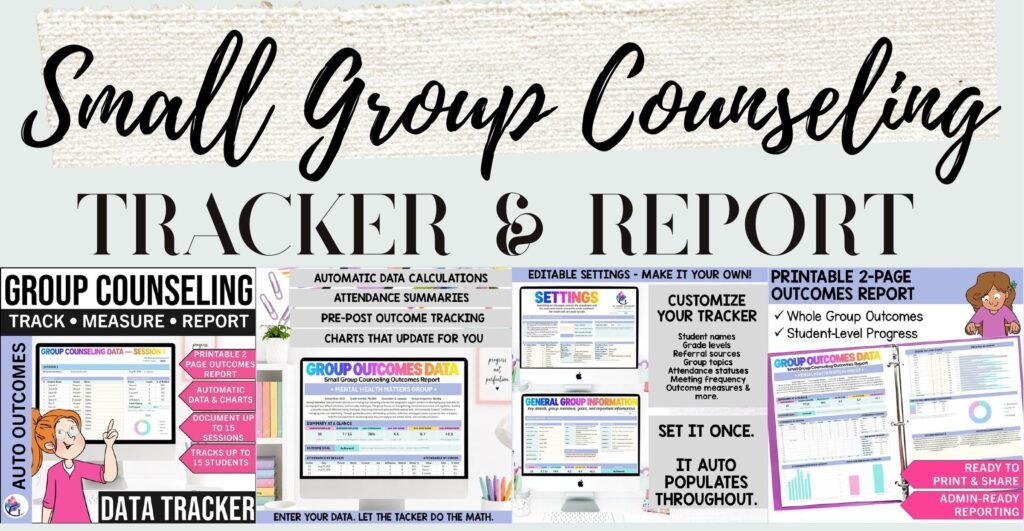
Make your group data easy: Our Small Group Counseling Data Tracker is an editable Excel workbook built for exactly this. Enter attendance, session notes, and pre/post scores for up to 15 students, align each session with the ASCA Mindsets & Behaviors, and it calculates attendance percentages, improvement scores, and charts for you. When the group ends, it produces a professional two-page outcomes report you can share with administrators, teachers, or caregivers, so you can show the impact of your groups without hours of spreadsheet work.
End With Continuity, Not Just a Goodbye
The final session should create a bridge back to daily life. Students can make a personal reminder card, identify trusted adults, choose one strategy to practice during a likely challenge, or write a brief note to their future selves. For younger children, a visual skill menu or simple take-home page may help caregivers reinforce the same language.
A well-designed small group is not defined by perfect attendance, immediate behavior change, or a polished final product. Its value is often quieter: a student realizes they are not alone, practices a skill without judgment, and leaves with a more believable sense that they can handle the next difficult moment.
Frequently Asked Questions
How many sessions should a small group counseling curriculum have?
Many school-based groups run for six to eight sessions, which allows time for connection, skill practice, and a planned ending. Shorter groups of around four sessions can work for a narrowly defined skill, while groups that need more rehearsal or individualized processing may run longer.
Do I need parent or guardian consent for small group counseling?
Follow your school and district policy. ASCA recommends obtaining informed consent that covers the group’s purpose and goals, the limits of confidentiality, and the voluntary nature of participation, and notes that informing parents or guardians is best practice.
How do I know if a small group worked?
Choose a measure that matches the group’s goal, such as a brief pre- and post-group skill rating, teacher observations, or a simple facilitator rubric. Comparing where students started with where they finished shows growth more clearly than broad impressions such as “better behavior.”
What if a student shares something sensitive during group?
Respond calmly, thank the student for speaking up, and follow your school or clinical procedures for follow-up. Keeping discussions focused on skills and present-day support, rather than detailed disclosures, helps protect everyone in the group.
Looking for practical, ready-to-use resources to support your small group counseling sessions? The All Therapy Resources Membership provides access to a growing collection of thoughtfully developed counseling activities, interactive games, and therapeutic tools designed to save preparation time while supporting meaningful, skill-focused learning.