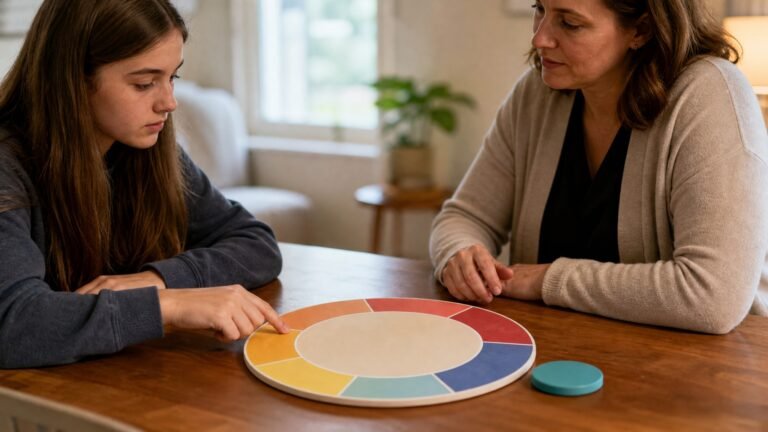
School-based occupational therapy often happens in the margins between classes. You set up, intervene, and collect data in minutes, not hours. Fine motor task cards help with that logistical friction by condensing clinical targets into portable, visually structured formats students can start right away. Used well, these printable tools bridge the gap between a treatment plan and the reality of a short pull-out session or push-in support, so you can keep therapeutic intensity up without spending precious minutes assembling elaborate activities.
This guide looks at how to use fine motor task cards in OT sessions: what they are good for, how to grade them, and how to fit them into push-in and small group models. If you are looking for broader activity ideas, our guides to fine motor activities for therapy and fine motor skills activities for teachers, therapists and parents cover the wider picture.
Why Fine Motor Task Cards Work Well in School-Based OT Sessions
Task cards suit the way school-based therapy is delivered. They are small, quick to set out, and each card presents one clear job. That makes them easy to use in a shared room, at a classroom table, or at a station that a paraprofessional supervises.
Bridging Clinical Goals and Classroom Reality
Bulky equipment and multi-step setup can eat the first five minutes of a twenty-minute session, leaving little time for intervention, let alone documentation. A fine motor task card cuts that setup time by presenting a discrete, self-contained activity a student can begin the moment they sit down. The format also respects the constraints of shared school spaces, where storage is limited and cleanup time is close to nonexistent.
Supporting Regulation Through Predictable Structure
Some students, including those with trauma histories or sensory processing differences, find open-ended tasks or a cluttered visual field hard to start. A single task card gives clear visual boundaries and signals exactly what is expected, which can lower the planning demand needed to get going. Predictability and clear expectations are part of creating the sense of safety that SAMHSA’s trauma-informed approach places first among its key principles.
Picture a student who arrives unsettled after a noisy transition. Instead of a choice of six activities, you place one card and one cup of materials in front of them and say, “Here’s our first job. Start at the green dot and follow the path.” The task is small, the finish line is visible, and the student can feel successful within a minute.
Visual-Motor Task Cards for Handwriting Readiness
Handwriting draws on visual perception, motor control, and the ability to bring the two together. Pattern, tracing, and pathway cards give students structured practice in that visual-motor integration in a short, low-pressure format.
Building Foundational Skills for Handwriting
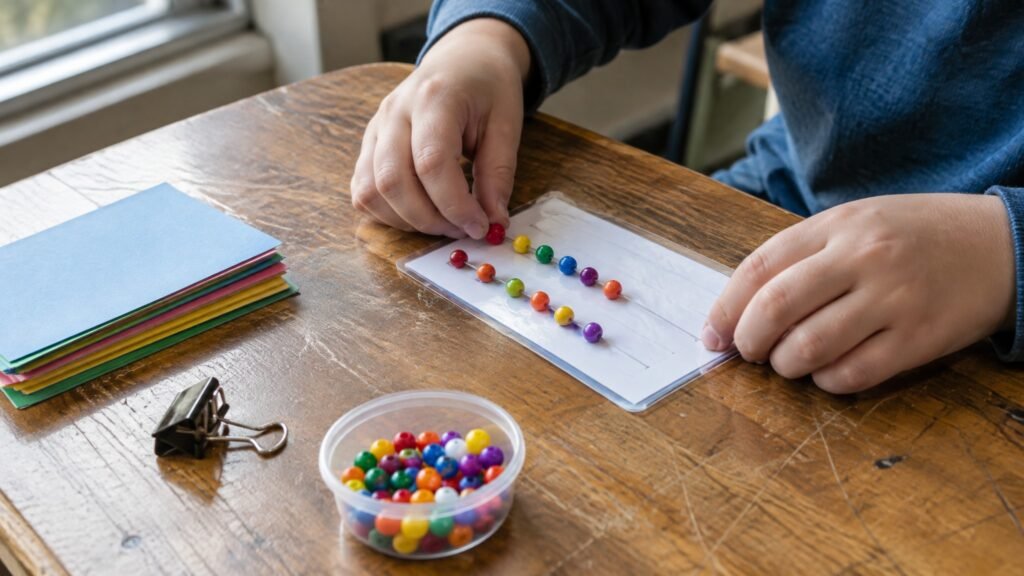
Letter formation asks a child to perceive spatial relationships, distinguish similar shapes, and reproduce a motor sequence with precision. Research supports the link: a study of kindergarten children found that visual-motor integration was related to the ability to copy letters legibly (Daly, Kelley & Krauss, 2003). When a student copies an ABAB sequence with beads, or follows a curved pathway with a dry-erase marker, they are practicing visual-motor skills that letter formation also relies on. Resources such as Pattern Worksheets, Visual Perception & Fine Motor Skills Activities work the same way, asking students to identify, complete, and extend visual patterns.
It is worth keeping these cards in proportion. A systematic review of handwriting interventions (Hoy, Egan & Feder, 2011) concluded that interventions without handwriting practice were not effective, and that effective occupational therapy for handwriting must include adequate handwriting practice. Task cards are a strong warm-up and foundation-builder, and they work best alongside real writing, not instead of it. Our article on why not every child with poor handwriting needs more handwriting practice explores how to look at the underlying skills too.
Using Task Cards as Quick Informal Observation Tools
A tracing or pattern card lets you watch visual-perceptual accuracy and fine motor control at the same time, giving you useful clinical observations between formal assessments. If a student keeps reversing a pattern, drifts off a pathway on curves but not straight lines, or can’t maintain spacing, that tells you something about the next step. Note what you see on a simple tally sheet, then compare it over a few weeks.
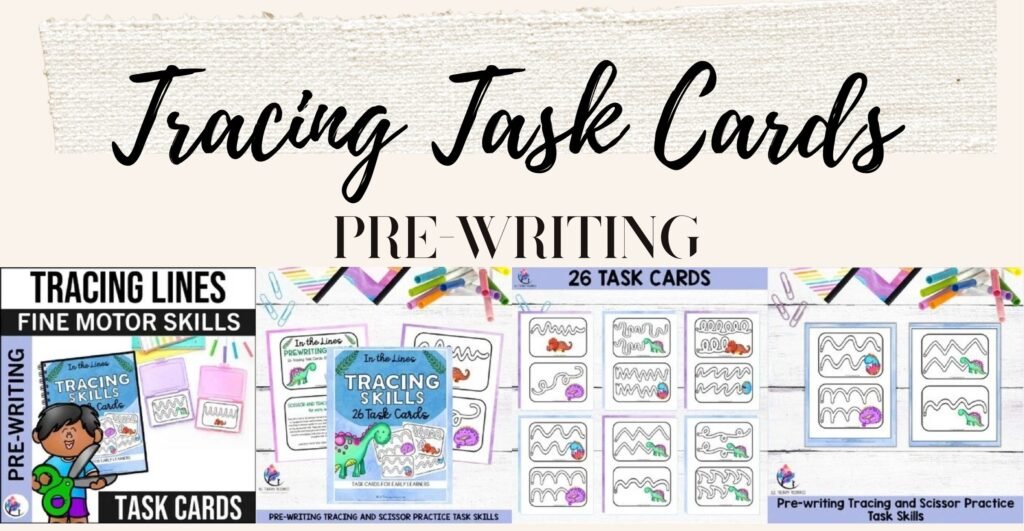
Try this in your next session: our Pre-Writing Tracing & Scissor Practice Task Cards include 26 dinosaur-themed cards with straight, curved and mixed paths, suited to preschool, kindergarten and early elementary students working on pencil control and scissor skills. Laminate them, start a session with two tracing cards using a dry-erase marker, then move to cutting the same path on paper. One reviewer wrote, “Amazing resource! Fun, engaging and professionally designed and developed.”
Thematic Cookie Tray Kits for Multidisciplinary Engagement
Isolated fine motor drills can feel repetitive, and young learners often stay engaged longer when the task has a theme and a purpose. Cookie tray kits keep pieces on a contained tray with clear physical boundaries, which helps when fine motor activities need to fit into shared school spaces without cleanup derailing the session.
Integrating Speech and Fine Motor Targets
Thematic kits can raise therapeutic density by embedding language practice inside manipulative play, so you can address more than one IEP goal without splitting the session into fragments. Pairing articulation cards with visual cues with fine motor manipulation means language production happens alongside a graded motor challenge. It also helps when OT and speech colleagues co-treat or share students.
In a farm-themed kit, for example, students place animals in a barn or crops in a field while answering “where” questions, which gives spatial language like “in,” “next to” and “behind” something concrete to attach to. Our Occupational Therapy & Speech Therapy Farm Theme Activities use this setup, and the same format comes in zoo, ocean, insect and other themes so you can rotate across weeks.
Small Pieces for Precision Grasp Practice
Small manipulatives invite a refined pincer grasp because their size calls for precise finger positioning instead of whole-hand raking. Insect counters, mini erasers, or small pom-poms placed by visual directive give repeated, purposeful grasp-and-release practice. For students who resist tweezers or peg activities, a playful theme can make the same effort feel more manageable.
Adapting Fine Motor Task Cards for Diverse Learner Needs
A single set of fine motor task cards can serve students across a wide developmental range, as long as you adjust the demands instead of swapping out the materials. That flexibility protects your preparation time while honoring each student’s current capacity and sense of competence.
Grading an activity up or down means changing the manipulatives, the visual complexity, or the response required, while the core card stays the same. A student with significant motor delays might use large pom-poms to match colors on a pattern card, while a peer working on precision uses mini erasers on the identical card. No student is visibly handed “easier” work, because the adaptation lives in the materials, not the assignment.
| What you change | Grade it down | Grade it up |
|---|---|---|
| Manipulatives | Large pom-poms, chunky blocks | Mini erasers, beads, tweezers |
| Tool | Finger tracing | Dry-erase marker, then pencil on paper |
| Visual complexity | Cover half the card, thick paths | Full card, thinner or curved paths |
| Response | Point or place | Copy the pattern from memory |
| Position | Flat on the table | On a slant board or vertical surface |
Want more materials to grade? Our Ocean Animals Pom Pom Mats, Nature Themed Play Dough Mats and Snowflake Popsicle Stick Patterns all work with the same up-and-down grading approach.
Connecting Fine Motor Work to Emotional Regulation
Fine motor intervention can support more than graphomotor skill, particularly for students carrying chronic stress. Repetitive, predictable hand tasks like sorting, threading, or finger tracing can give a dysregulated student something calm and concrete to focus on, especially when paired with intentional breathing cues.
Repetitive Motor Tasks as Grounding Strategies
Rhythmic, predictable hand movements give some students a non-verbal way to settle before they can use a cognitive coping strategy. When a student starts escalating, offering a familiar sorting or tracing task provides external structure and a manageable focus. This is not avoidance of emotional work; for many students it is the preparation that makes that work possible. Responses vary, so watch the individual student and offer choice. Our guide to trauma-informed grounding activities for children has more on matching strategies to the child.
Pairing Movement With Coping Skill Instruction
Coping skills tend to stick better when students practice them in calm moments, not only discuss them. Pairing a fine motor task with a simple script helps: “Trace slowly. Breathe in as your finger goes up, and out as it comes down.” Over time, the card becomes a familiar cue the student can reach for in a calm corner or regulation space.
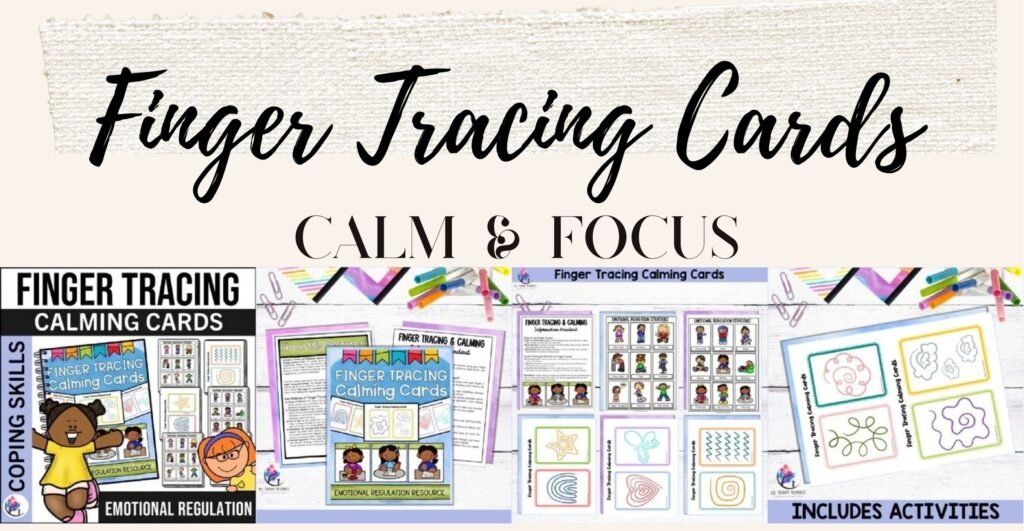
From our counseling room to yours: our Finger Tracing Calming Cards offer 12 simple finger-tracing designs that give students a tactile, low-demand way to practice mindful self-calming, and they pair well with the slow-breathing script above. They suit young students in OT, counseling or a classroom regulation space. Teach one card during a calm session, then leave the set where students can find it. As one reviewer shared, “I have these in my calm corner, and kids frequently pick them up to use when they are in the calm corner!”
Implementing Task Cards in Push-In and Small Group Models
Push-in service delivery calls for materials that can run with minimal adult support while you attend to other students or consult with classroom staff. Task cards fit well here because their visual clarity lets a paraprofessional or teacher run a station consistently while you focus on targeted observation or individual scaffolding.
Station Rotation Logistics for Therapists
Setting up three or four task card stations before a push-in block lets students rotate through varied fine motor and visual-motor challenges without needing you at every table. For example: a tracing station, a pattern-copying station, a cutting station, and a station you lead for the student with the most targeted goal. Pairing these with planning and sequencing tasks can also give students practice with executive functioning skills, such as starting, finishing, and checking work.
Data Collection Without Disrupting Flow
Because task cards produce a discrete, observable response, you can note accuracy or prompting levels with a brief scan instead of continuous one-on-one assessment. Recording whether a student completed a pathway within the lines or needed a prompt takes seconds, and it doesn’t interrupt the group or draw unwanted attention to the student. Treat this as supplementary progress monitoring alongside your formal data, following your district’s documentation requirements.
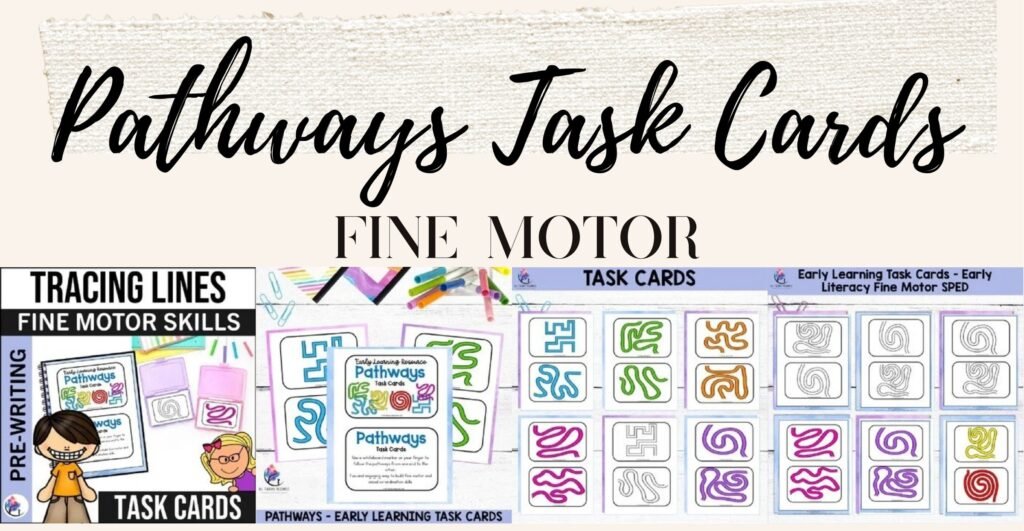
Try this in your classroom: our Pathways Early Learning Task Cards ask students to follow a path from one end to the other with a finger or whiteboard marker, which makes them easy to run at an independent station for pre-K, kindergarten and special education groups. Laminate a set, place them in a task box, and have students complete two paths before rotating. One kindergarten teacher wrote that they have “been an exciting addition to our morning soft start in kindergarten. It’s just the right amount of challenge!” and also used them for early finishers.
Choosing Fine Motor Task Cards for Your Caseload
Not every printable clears the bar for clinical usefulness, and telling well-designed materials apart from generic crafts protects both your time and your students’ progress. When choosing fine motor task cards, look for:
- A clear motor or visual-motor target for each card, not just an attractive theme.
- A range of difficulty within the set, so you can grade up and down without new materials.
- Durable, laminate-friendly formats that hold up under repeated use.
- Clean, uncluttered visuals that support students who are easily overwhelmed.
- Age-appropriate themes that students on your caseload will want to engage with.
Materials designed with a clear therapeutic purpose tend to hold up across a school year and across different students, which is what makes them worth the investment.
Frequently Asked Questions
What are fine motor task cards in occupational therapy?
Fine motor task cards are small, printable cards that each present one hand-skill activity, such as tracing a path, copying a pattern with beads, or cutting along a line. School-based OTs use them because they are quick to set up, easy to grade, and work in pull-out, push-in and small group sessions.
How do fine motor task cards support handwriting readiness?
Tracing, pathway and pattern cards give students practice in visual-motor integration, which research has linked to the ability to copy letters legibly. They work best as a warm-up or foundation alongside real handwriting practice, since a systematic review of handwriting interventions found that approaches without handwriting practice were not effective.
How can therapists grade fine motor task cards for different developmental levels?
Keep the card the same and change the materials or response: larger or smaller manipulatives, finger tracing versus marker or pencil, part of the card versus the whole card, or placing versus copying from memory. This lets students at different levels work on the same card without anyone being visibly singled out.
Can fine motor task cards help with emotional regulation?
For some students, a predictable, repetitive hand task such as finger tracing or sorting offers a calm, concrete focus during stressful moments, especially when paired with slow breathing. Responses vary, so introduce the cards during calm times, offer choice, and observe what helps each individual student.
Looking for practical, ready-to-use resources to support your fine motor and occupational therapy sessions? The All Therapy Resources Membership provides access to a growing collection of thoughtfully developed OT, fine motor and sensory activities, interactive games, and therapeutic tools designed to save preparation time while supporting meaningful, skill-focused learning.