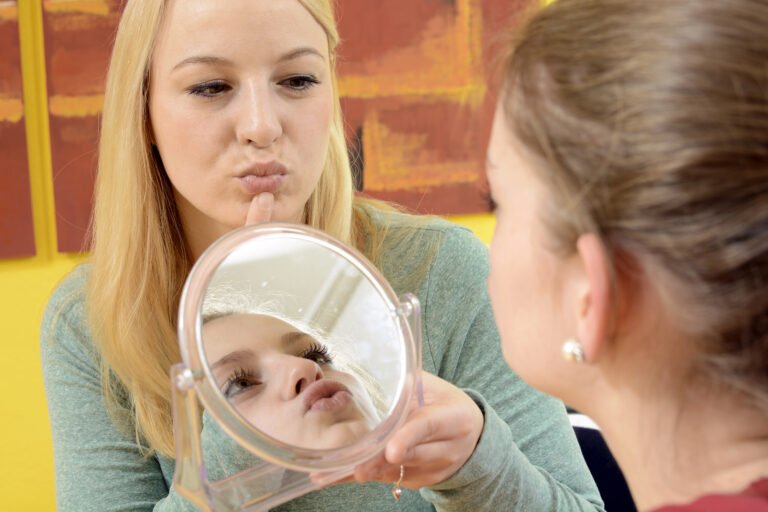

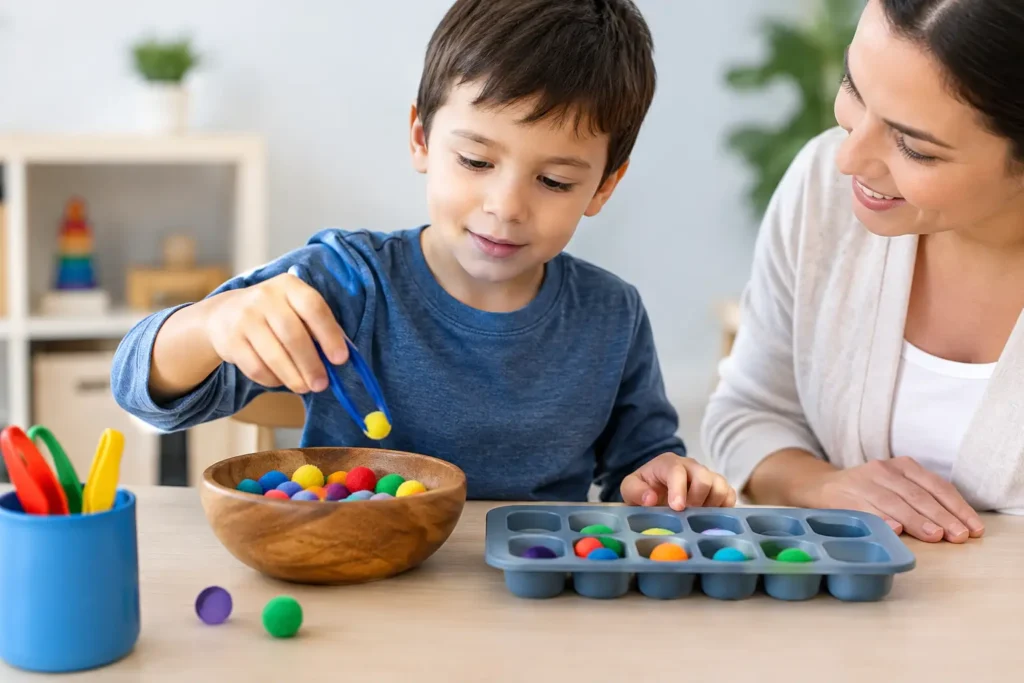
A child who avoids writing may not be refusing the assignment. They may be managing hand fatigue, uncertainty about how to start, sensory discomfort, frustration after repeated mistakes, or the social pressure of working beside peers. Well-chosen fine motor activities for therapy create a lower-pressure way to observe these barriers while helping children practice skills that matter in daily life.
For school-based and clinical professionals, the goal is rarely to keep a child busy with small objects. The stronger approach is to select purposeful tasks that support participation, preserve dignity, and connect naturally to counseling, communication, regulation, or educational goals. A clothespin task can become a feelings check-in. A sticker pathway can support persistence. Building with small pieces can invite flexible thinking after a plan does not work.
Start With Participation, Not the Activity
Fine motor work is most meaningful when it is connected to a functional concern. Before choosing materials, consider what is getting in the child’s way. Is the student struggling to manage classroom tools, participate in art or play, complete written work, use fasteners, or stay engaged when a task feels demanding? Are they avoiding an activity because of motor demands, or because the activity has become associated with failure, sensory overload, or adult correction?
This distinction matters. A child may need practice with grasp strength, bilateral coordination, in-hand manipulation, visual-motor integration, or hand endurance. Another child may have the physical ability to complete the task but need support with emotional regulation, initiation, frustration tolerance, or confidence. Often, both are present.
Within an interdisciplinary setting, professionals can use fine motor tasks to reinforce shared goals while staying within their appropriate scope. Occupational therapists may lead assessment and intervention for specific motor and functional concerns. Counselors, educators, speech-language practitioners, and behavioral support staff can incorporate accessible hand-based activities as engagement tools, observation opportunities, and structured supports. When concerns persist or significantly affect participation, collaboration and referral are more helpful than simply increasing the difficulty of a worksheet.
Why Fine Motor Skills Matter in Everyday Activities
Fine motor development involves the coordination of small muscles in the hands and fingers, working alongside visual-motor integration, bilateral coordination, motor planning, and sensory processing. These skills contribute to everyday activities such as handwriting, managing clothing fasteners, using classroom tools, opening containers, and participating in play.
Occupational therapists consider not only how a child performs an individual movement, but also how motor, sensory, environmental, and emotional factors influence their ability to participate in meaningful daily activities. Purposeful fine motor activities can provide opportunities to practice developing skills while supporting confidence, independence, and engagement.
Fine Motor Activities for Therapy With a Clear Purpose
The same material can serve very different goals depending on the prompt, pace, and support provided. The following activities work well because they are adaptable, easy to prepare, and meaningful across individual sessions, small groups, classrooms, and home-based practice.
Clip, Sort, and Respond
Clothespins, binder clips, or chip clips build pinch strength and coordination, but the therapeutic value comes from what children do with them. Place clips on cards that show feeling words, coping tools, social scenarios, speech targets, or classroom choices. A child might clip the coping strategy they would try when worried, identify the emotion shown in a scenario, or sort problems into “small,” “medium,” and “adult-help” categories.
Start with clips that are manageable. Standard clothespins can be challenging for some children, and fatigue can quickly turn a reflective activity into a discouraging one. Larger clips, fewer choices, or stabilizing the card on a table can keep the focus on participation.
Putty, Dough, and Resistance Tasks
Therapy putty and modeling dough offer flexible, hands-on opportunities for children to develop fine motor strength, finger dexterity, bilateral coordination, and hand control. Activities such as rolling, pinching, squeezing, flattening, and manipulating dough can help strengthen the small muscles of the hands while encouraging purposeful movement and exploration.
For children who benefit from sensory-based activities, dough can also provide an engaging way to participate in therapeutic tasks. Hide small objects in putty for a search-and-find activity, roll dough into shapes, or encourage children to create objects that represent emotions, coping strategies, or personal experiences. These activities can be adapted to support fine motor goals alongside communication, creativity, and emotional expression.
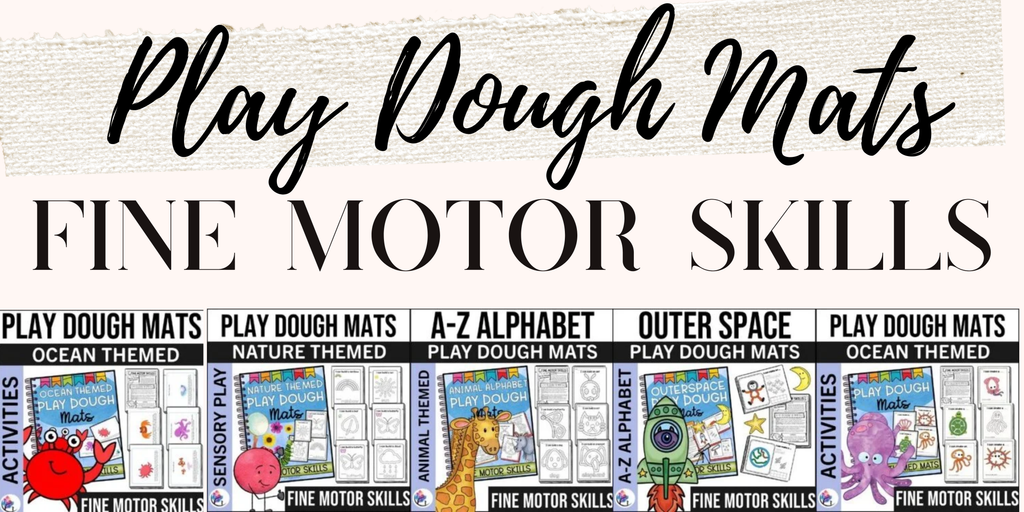
Themed playdough mats offer an additional layer of structure and engagement. Rather than simply manipulating dough, children are encouraged to create, build, and explore within a meaningful visual context. Our Nature-Themed Playdough Mats, Outer Space Playdough Mats, and Ocean-Themed Playdough Mats provide playful opportunities to practice rolling, shaping, pinching, and placing dough while supporting visual-motor coordination, spatial awareness, and imaginative play.
For example, children might create ocean creatures, build planets and stars, or explore natural environments using different shapes and textures. Therapists can adjust the complexity of each activity to suit individual developmental needs, introduce bilateral hand-use challenges, or incorporate descriptive language, sequencing, and problem-solving prompts.
The therapeutic value lies not simply in completing the mat, but in how the activity is adapted to the child’s individual goals. Occupational therapists can use these activities to support targeted fine motor development, while educators and other professionals may incorporate them into play-based learning, communication, and social-emotional activities.
Resistance activities can be regulating for some children, but not all. Observe each child’s sensory preferences, physical abilities, and responses to the materials. Offering choices, adjusting resistance, and allowing breaks helps ensure activities remain accessible, supportive, and enjoyable.
Tear, Cut, and Create: Hands-On Fine Motor Activities
Creative, hands-on activities provide meaningful opportunities for children to develop fine motor coordination, bilateral hand use, visual-motor integration, and precision while engaging in purposeful play. Cutting, tearing, gluing, sorting, and placing small objects encourage children to coordinate their hands and fingers while developing skills that support everyday classroom participation and independence.
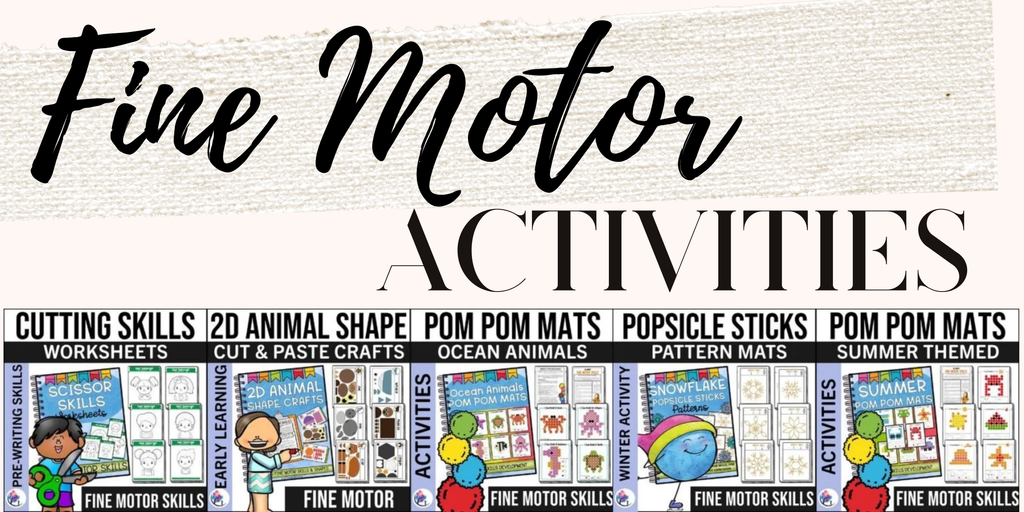
Developing Scissor Skills Through Cutting Activities – Scissor activities help children practice hand strength, bilateral coordination, visual tracking, and controlled hand movements. Beginning with simple snipping tasks and progressing toward straight lines, curves, and more complex shapes allows children to build confidence while developing greater precision. Our Fine Motor Skills Scissor Skills Cutting Worksheets provide structured opportunities for children to practice cutting skills at an appropriate developmental level. These activities can be incorporated into occupational therapy sessions, classroom fine motor centers, or individualized learning activities.
Building Creativity and Coordination With 2D Animal Crafts – Cut-and-paste crafts offer another engaging way to develop fine motor skills while encouraging creativity, visual perception, and spatial awareness. Children practice manipulating scissors, positioning shapes, applying glue, and assembling individual pieces into a completed picture. Our 2D Animal Shape Cut & Paste Crafts combine early geometry concepts with hands-on fine motor development. As children cut, identify, arrange, and assemble different shapes to create animals, they can practice hand-eye coordination, bilateral integration, visual discrimination, and motor planning. These activities also provide opportunities to incorporate language development, sequencing, problem-solving, and following directions, making them adaptable across occupational therapy, early childhood education, and classroom learning environments.
Strengthening Finger Dexterity With Pom Pom Mats – Pom pom activities offer a playful alternative to traditional pencil-and-paper tasks. Picking up, transferring, sorting, and placing pom poms onto visual patterns can encourage precision, controlled finger movements, visual-motor coordination, and sustained attention. Our Ocean Animals Pom Pom Mats and Summer Pom Pom Mats provide colorful, themed activities that encourage children to match and position pom poms while developing fine motor control. For an additional challenge, children can use child-appropriate tweezers or tongs to practice grasp patterns, hand strength, and coordinated movements. The activities can be adapted by changing pom pom sizes, adjusting the number of pieces, providing visual models, or modifying the tools used to accommodate individual abilities.
Bead, Lace, and Sequence
Stringing beads, lacing cards, and threading materials support precision, visual attention, and sequencing. They also lend themselves to structured therapeutic prompts. Children can string beads in colors that represent parts of a calming plan, steps in a problem-solving sequence, or people in their support system.
For a group, each participant might add a bead after naming a strength they bring to the group. The activity creates turn-taking and shared attention without putting every child on the spot at once. Use larger beads, thicker laces, or rigid stringing tools when dexterity is still developing. The task should offer a manageable challenge, not become a test of speed.
Build, Balance, and Repair
Small construction materials, interlocking blocks, bolts and nuts, or simple building challenges naturally create opportunities to practice planning and flexibility. Ask a child to build a “safe place,” create a structure that represents a personal goal, or work with a partner to build something using a limited set of materials.
The most useful therapeutic moments often occur when the design falls apart. Rather than rushing in to fix it, name the process: “That was frustrating. What is your next step?” This supports emotional language, coping, and flexible problem-solving while keeping the experience grounded in a real task.
Pattern Recognition and Visual-Motor Skills Activities
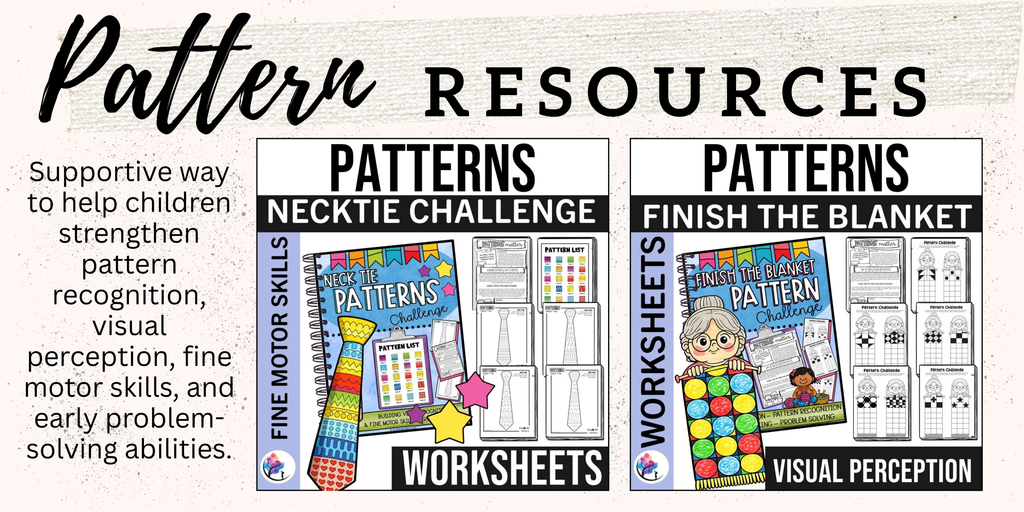
Pattern-based activities provide engaging opportunities to strengthen visual perception, fine motor coordination, and problem-solving skills. Through identifying, completing, and creating patterns, children practice interpreting visual information and coordinating purposeful hand movements.
Our Winter Snowflake Popsicle Patterns provides a hands-on approach to developing pattern recognition, visual-motor integration, spatial reasoning, and motor planning.
Our Necktie Pattern Challenge Worksheets and Finish the Blanket Pattern Challenge Worksheets offer creative ways to practice visual discrimination, pattern recognition, sequencing, and pencil control through structured activities.
For a more hands-on approach, our Winter Snowflake Popsicle Stick Pattern Mats encourage children to manipulate, rotate, and position popsicle sticks to recreate visual designs, supporting bilateral coordination, visual-motor integration, spatial reasoning, and motor planning.
These resources can be incorporated into occupational therapy sessions, classroom learning centers, or individualized interventions, with activities adapted to each child’s developmental abilities and functional goals.
Sticker Paths and Precision Drawing
Stickers, dot markers, stencils, mazes, and tracing paths are practical options for brief sessions and classroom-based check-ins. A child can place stickers along a visual scale to rate energy, stress, or confidence. They can complete a maze while practicing slow breathing or draw a path from “problem” to “help” with possible choices along the way.
These activities are useful when writing is a barrier, but they should not become a disguised handwriting demand. If the therapeutic goal is emotional expression, offer choices such as pointing, selecting images, dictating to an adult, or drawing rather than insisting on written responses.
Build the Right Level of Challenge
A useful fine motor activity sits near the edge of a child’s current ability without pushing them into repeated failure. Too little challenge can feel meaningless. Too much can increase avoidance, dysregulation, or negative self-talk.
Adjusting the task does not mean lowering expectations. It means removing unnecessary barriers so the child can engage with the intended goal. You might enlarge materials, reduce the number of steps, secure paper with tape, offer a model, provide adaptive grips, or allow extra time. Conversely, a child who is ready for more challenge may benefit from a timed cooperative task, an added planning step, or a design constraint.
Observe how the child responds, not just whether they finish. Do they switch hands frequently? Press too hard or too lightly? Avoid crossing the midline? Need repeated reassurance? Become upset when a piece does not fit? These observations can inform collaboration with the broader support team and help shape future sessions.
Protect Choice, Safety, and Emotional Comfort
Fine motor tasks can feel surprisingly personal. Children who have struggled with handwriting, self-care, or classroom output may anticipate criticism before they even begin. The language adults use matters. Replace comments such as “That is easy” or “Try harder” with neutral, supportive observations: “You kept adjusting your grip,” “You noticed that piece was not working,” or “You chose a different strategy.”
Choice also strengthens engagement. Offer two materials when possible, let the child decide whether to work seated or standing, and provide a clear way to pause. In trauma-informed practice, predictability and emotional safety are not extras. Explain what will happen, keep directions brief, and avoid turning a preferred sensory material into a reward that can be taken away.
Safety remains part of planning. Select materials appropriate to the child’s age and supervision needs, especially when small pieces or cutting tools are involved. Consider allergies, mouthing behaviors, infection-control procedures, and whether a task is suitable for the setting.
Make the Activity Carry Into Daily Life
The strongest sessions help children notice what they did and how they did it. A brief reflection can connect the task to a real setting: “When did you have to slow down?” “What helped when your plan changed?” “Where might you use that strategy at school or home?”
A child does not need to produce a perfect project for an activity to be successful. If they practiced asking for help, tolerated a small mistake, used both hands together, shared materials, or stayed with a challenging task for one more minute, that is meaningful progress. Thoughtfully selected fine motor activities give children a hands-on way to experience capability – and that experience can carry far beyond the therapy table.
Multidisciplinary Fine Motor Activities for OT and Speech Therapy
Fine motor activities can offer valuable opportunities for multidisciplinary collaboration between occupational therapists and speech-language pathologists. Through purposeful, play-based activities, professionals can address complementary developmental goals, including fine motor coordination, visual perception, communication, language development, sequencing, and following directions.
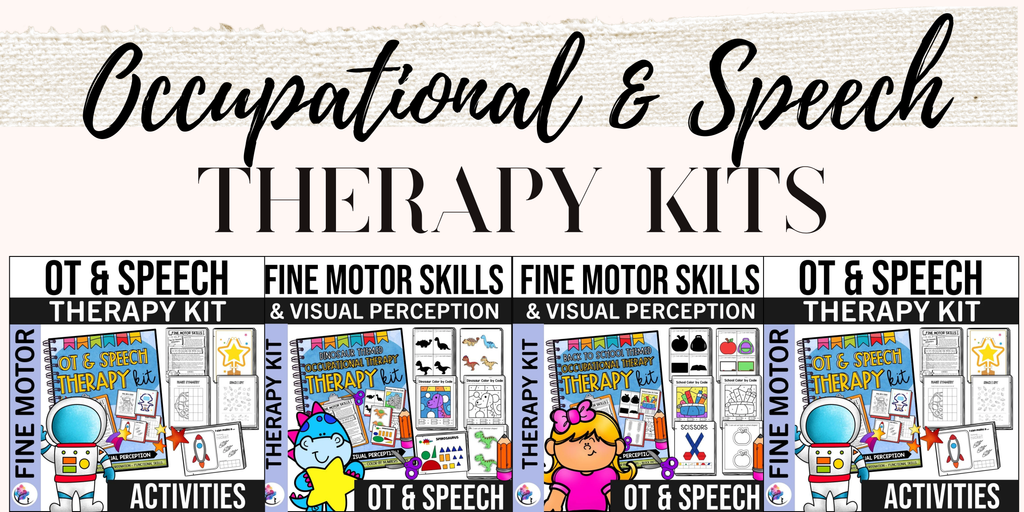
Our Fine Motor Skills & Visual Perception Therapy Kits, available in Farm, School, Dinosaur, and Outer Space themes, bring together a variety of engaging activities, including shadow matching, coloring, cutting, playdough mats, pattern blocks, color-by-code worksheets, and more.
These versatile resources allow occupational therapists to target fine motor control, bilateral coordination, visual-motor integration, and perceptual skills, while speech-language pathologists can incorporate vocabulary development, descriptive language, categorization, sequencing, and expressive and receptive language goals.
By using shared materials with individualized therapeutic objectives, professionals can encourage collaborative, play-based learning while reducing preparation time and creating engaging opportunities for children to practice multiple developmental skills.
Whether used during coordinated OT and speech therapy sessions, individual interventions, or classroom-based support, these themed activity kits provide flexible tools that can be adapted to each child’s strengths, abilities, and therapeutic goals.
Explore Practical Fine Motor and Occupational Therapy Resources
Supporting fine motor development is about more than strengthening little hands. It’s about helping children build the skills, confidence, and independence they need to participate in everyday activities.
At All Therapy Resources, we offer practical, ready-to-use activities and professional tools designed to support children’s developmental, sensory, motor, and functional learning needs. Explore our Resource Shop for engaging activities and therapy resources that can be adapted to individual goals, abilities, and learning environments.