

Are you looking for meaningful, effective ways to support teen mental health in your high school — but aren’t sure where to start?
Across middle and high schools, educators and school counselors are seeing a clear increase in student anxiety, stress, emotional overwhelm, and disconnection. Many teenagers are navigating academic pressure, social challenges, identity development, and digital overload — often without the emotional tools they need to cope.
The question many schools are now asking is:
How do we support teen mental health in a proactive, structured, and safe way — without overwhelming already busy staff?
The answer lies in intentional, structured mental health education paired with safe, supportive spaces where students can explore emotions, develop coping strategies, and build resilience. With the right resources and approach, schools can create a culture where mental health is openly discussed, supported, and strengthened.
Why Mental Health Support in High School Matters More Than Ever
High school is a critical developmental period. Teenagers are forming identity, managing increasing responsibilities, and navigating complex social and emotional landscapes. Without explicit teaching and support, many students struggle silently.
In schools where structured mental health support is implemented, educators often notice:
• Students becoming more open about emotions and stress
• Increased willingness to seek help when needed
• Improved emotional vocabulary and self-awareness
• Better peer relationships and empathy
• Reduced behavioral incidents linked to overwhelm or anxiety
• Greater resilience and problem-solving skills
Mental health education is not simply about preventing crisis — it is about equipping students with lifelong emotional skills.
When students understand their thoughts, feelings, and behaviors, they are far more likely to make safe, confident decisions both inside and outside the classroom.
Creating Safe Spaces for Teen Mental Health Conversations
Many high school students want support — but don’t always know how to ask for it. Others fear judgment, stigma, or simply don’t have the language to describe what they are experiencing.
Creating safe spaces for discussion is one of the most powerful steps a school can take.
In our work supporting schools, we have found that students engage more openly when:
• Conversations feel structured but relaxed
• Activities are interactive rather than lecture-based
• Emotional skills are taught explicitly
• Discussions normalize mental health experiences
• Students feel heard rather than “fixed”
• There is consistency and predictability in sessions
This is where structured programs and engaging tools make a significant difference.
Using Small Group Counseling to Support Teen Mental Health
Small group counseling is one of the most effective ways to support high school mental health. It allows students to feel less alone while learning practical coping strategies in a supportive environment.
For example, within our Mental Health Awareness Small Group Counseling Curriculum for High School, students are guided through structured sessions that build emotional awareness, resilience, and help-seeking skills over time.
Across sessions, schools often notice meaningful changes in students such as:
• Increased ability to identify and name emotions
• Greater understanding of stress and how it affects the body
• More balanced thinking patterns
• Improved coping strategies for anxiety and overwhelm
• Stronger peer connections and sense of belonging
• Increased confidence in seeking support from trusted adults
The structured nature of small group counseling provides consistency, while also allowing flexibility to meet students where they are emotionally.
What Effective Teen Mental Health Lessons Should Include
When planning mental health support for high school students, it helps to ensure lessons and activities include:
• Emotional awareness and literacy
• Stress and nervous system education
• Healthy coping strategies
• Cognitive and thinking skills
• Identity and self-understanding
• Help-seeking and support networks
• Reflection and goal setting
A structured curriculum ensures these topics are introduced gradually and safely, allowing students to build understanding and confidence over time.
Within our high school small group curriculum, sessions are designed to move from foundational emotional awareness through to deeper self-understanding, coping strategies, and future-focused reflection — helping students feel empowered rather than overwhelmed.
Engaging High School Students Through Interactive Mental Health Activities
While structured counseling groups are powerful, whole-class and small-group interactive activities can also play an important role in reinforcing mental health skills.
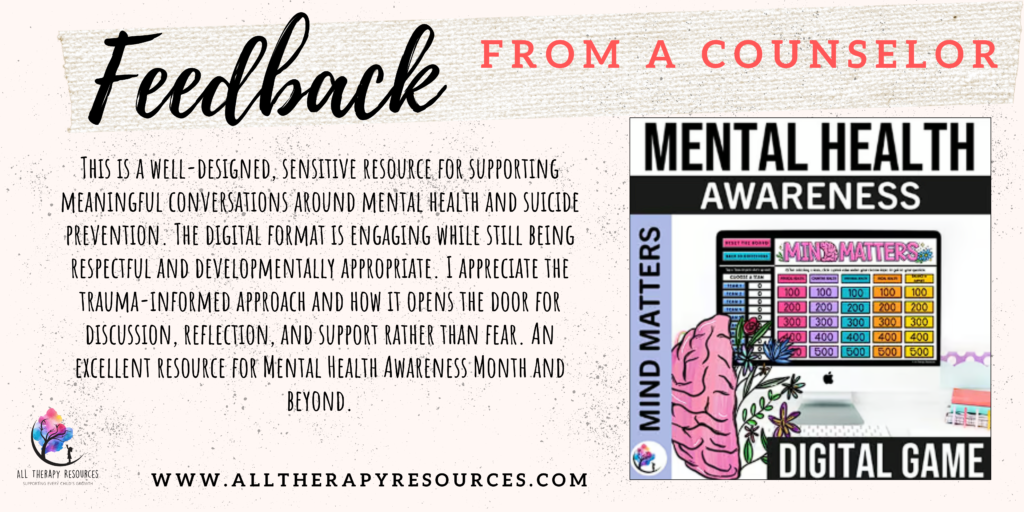
For example, our Mental Health Awareness Digital Game provides an engaging way for students to explore key mental health concepts through discussion, teamwork, and reflection. Interactive formats help students:
• Engage in meaningful mental health conversations
• Reflect on coping strategies and decision-making
• Build connection through shared discussion
• Explore real-life scenarios safely
• Learn through participation rather than passive listening
Educators often notice that even students who are typically quiet begin contributing when mental health is explored through structured, interactive formats rather than direct questioning.
Observable Changes Schools Often See in Students
When schools implement structured mental health supports, both through small group counseling and classroom activities, changes are often noticeable.
Teachers and counselors frequently report hearing students say:
“I didn’t know other people felt like this too.”
“I have ways to calm down now when I feel overwhelmed.”
“I know who I can talk to if I’m struggling.”
“I understand my thoughts better.”
“I feel more confident asking for help.”
These shifts may seem small, but they represent significant progress in emotional awareness and resilience.
Over time, these changes can lead to improved wellbeing, stronger relationships, and increased engagement with school.
Building a Whole-School Culture of Mental Health Support
Supporting teen mental health is not a one-time lesson or awareness week — it is an ongoing commitment to creating safe, supportive learning environments.
Schools that successfully support student wellbeing often:
• Provide structured small group counseling opportunities
• Integrate mental health discussions into SEL programs
• Use engaging activities to normalize conversations
• Teach coping strategies explicitly
• Encourage help-seeking and peer support
• Create predictable, safe spaces for reflection
When mental health support is consistent and embedded into school culture, students begin to feel safer, more connected, and more confident navigating challenges.
Supporting High School Students with Confidence
As educators and mental health professionals, supporting teens can sometimes feel overwhelming — particularly when needs are complex and time is limited.
Having structured, ready-to-use resources can make a significant difference.
Our Mental Health Awareness Small Group Counseling Curriculum for High School provides a clear, supportive framework for running meaningful counseling groups that build resilience, emotional awareness, and help-seeking skills.
Alongside this, our Mental Health Awareness Digital Game offers an engaging way to introduce and reinforce mental health concepts in classrooms, advisory periods, and group settings.
Together, these resources support schools in creating safe, practical, and effective mental health support systems for teenagers.
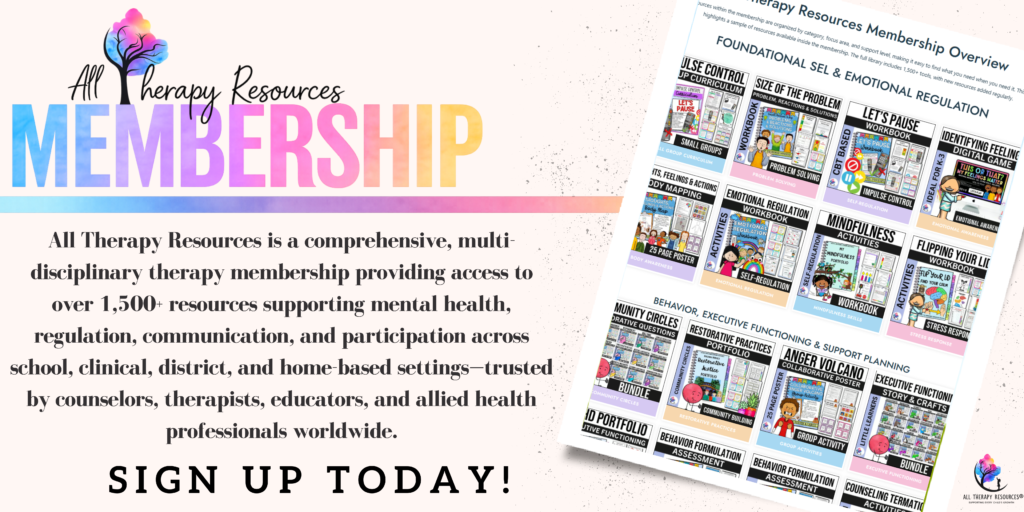
If you are looking to strengthen mental health support in your high school, explore our mental health resources and the All Therapy Resources Membership for ready-to-use counseling tools, SEL activities, and structured programs designed to support students with confidence and care.
Frequently Asked Questions
What are the best mental health activities for high school students?
The most effective activities combine emotional awareness, coping strategies, and open discussion. Interactive formats, small group counseling, and structured reflection activities help students engage meaningfully.
How can school counselors support teen mental health effectively?
Structured small group counseling programs, safe discussion spaces, and practical coping strategy lessons allow students to build insight, resilience, and confidence in seeking support.
Why is mental health education important in high school?
High school students face increasing academic, social, and emotional pressures. Teaching mental health skills helps students manage stress, build resilience, and develop lifelong emotional wellbeing skills.
What should a high school mental health curriculum include?
A strong curriculum includes emotional awareness, coping strategies, stress education, identity development, help-seeking skills, and reflection opportunities delivered in a safe, supportive format.
How can schools create a supportive mental health culture?
Consistency is key. Schools that provide ongoing mental health education, small group counseling, and open conversations create environments where students feel safe, supported, and understood.