

A student who shuts down during writing, calls out during group work, or leaves the room when corrected is communicating something – even when the behavior is disruptive. Positive behavior intervention activities give professionals a way to respond with instruction, connection, and structure rather than relying only on consequences. The goal is not to make children more compliant. It is to help them build the skills, safety, and confidence needed to participate more successfully.
For busy school and clinical teams, the most useful activities are simple enough to repeat, flexible enough to individualize, and connected to a clear understanding of what the behavior may be accomplishing. A strategy that helps one child request a break may be ineffective for another child who needs support with task initiation, peer conflict, sensory overload, or language demands.
Start With the Skill, Not the Behavior Label
Labels such as defiant, unmotivated, or attention-seeking can quickly narrow an intervention plan. Instead, describe what is observable and ask what skill or need sits underneath it. A child who argues when work is presented may be avoiding a task that feels confusing or overwhelming. A student who jokes loudly during instruction may be seeking connection, stimulation, or relief from anxiety.
This shift matters because effective intervention teaches a replacement behavior that serves a similar purpose in a safer, more workable way. If a student escapes difficult work by ripping it up, the replacement skill might be using a help card, asking for one problem at a time, or requesting a brief regulated break. The adult response should make the new skill more efficient and more likely to work than the challenging behavior.
Before selecting an activity, identify the setting, common triggers, adult and peer responses, and what happens immediately after the behavior. Brief observations and collaborative conversations with the student, caregiver, and team can reveal patterns that a generic behavior chart will miss.
Positive Behavior Intervention Activities for Everyday Practice
Practice a Break Request Before the Hard Moment
A break card is most effective when it is more than a laminated pass. Teach the student what a regulated break looks like, where it happens, how long it lasts, and how they return to the task. During a calm counseling session, classroom meeting, or individual check-in, role-play several situations: a frustrating assignment, a noisy room, a disagreement with a peer.
Use a visual sequence such as: notice body clues, show the card or use a practiced phrase, go to the agreed space, use one calming option, and return for the next small step. Keep the return expectation realistic. For some students, returning to one item or two minutes of work is a meaningful starting point.
This activity is especially helpful when leaving the area has become a repeated pattern. It does not mean every request should automatically result in extended avoidance. The team can honor the regulation need while gradually building tolerance for re-engagement.
Using a Calm Down Corner to Support Emotional Regulation
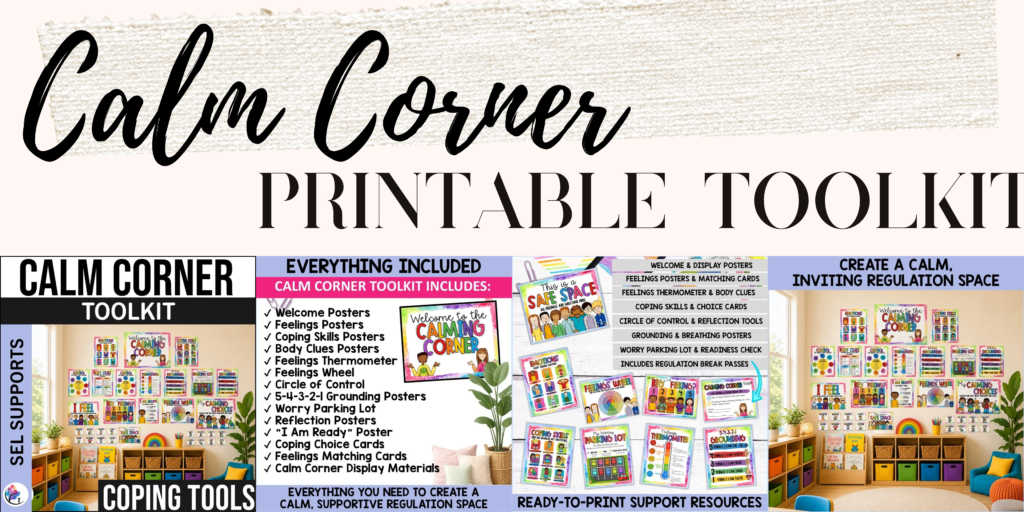
A calm down corner can be a valuable part of a positive behavior intervention plan, particularly for students who need support recognizing their emotions, managing frustration, or taking a regulated break before returning to learning.
Rather than simply providing a quiet place to sit, an effective calming space should teach students what to do when they begin feeling overwhelmed. This might include identifying their emotions, noticing physical signs of stress, selecting an appropriate coping strategy, and recognizing when they feel ready to re-engage.
For example, a student who becomes frustrated during a writing assignment might use a break request card to access the calming space. Once there, they could use an emotions chart to identify how they’re feeling, explore a visual coping strategies menu, and choose an activity such as paced breathing, grounding, or quiet reflection.
The key is to teach and practice these strategies when the student is calm, rather than expecting them to independently use unfamiliar tools during emotional escalation. Educators can model the process, establish predictable routines, and gradually support students in developing greater independence.
Our Calm Corner Toolkit was developed to help educators create supportive regulation spaces that go beyond simply providing somewhere for children to sit. It brings together emotional awareness visuals, body clues posters, feelings thermometers, coping skills choice cards, and grounding activities that help children recognize their emotional needs and explore strategies for managing difficult moments.
In practice, these visual supports can be particularly valuable for children who struggle to identify or communicate what they are experiencing. Rather than relying on verbal instructions during heightened emotional states, children can use familiar visuals to identify feelings, recognize early warning signs, and select strategies that have been introduced and practiced during calmer moments.
By embedding these tools into everyday classroom routines, calm corners can become proactive spaces for teaching emotional regulation, strengthening independence, and supporting positive behavior intervention rather than simply responding to challenging behavior after it occurs.
Use Behavior Mapping to Make Patterns Visible
Older elementary students and adolescents often respond well to a simple behavior map completed with a supportive adult. Draw four connected boxes labeled: What happened before? What did I do? What happened next? What could I try next time?
Keep the language neutral. Rather than asking, “Why did you make that choice?” try, “What was going on right before things got harder?” A student may identify a peer comment, a confusing direction, hunger, embarrassment, or a worry that adults had not recognized.
Then rehearse one alternative response. A student who responds to teasing with threats might practice moving toward a designated adult, using a short boundary statement, or sending a prearranged signal. This is not a one-time reflection sheet. Revisit the map after successes as well as setbacks so the student can notice which supports are helping.
Build a Regulation Menu
Children frequently hear “calm down” without being shown what calming actually looks like in their own bodies. A regulation menu offers concrete options and preserves some choice. Create it with the child, using words, pictures, or both. Options might include wall pushes, paced breathing, drawing, a quiet seat, headphones when appropriate, a drink of water, or a brief movement task.
The menu should fit the environment and the student. A middle schooler may prefer a discreet grounding strategy or a quick errand rather than a brightly colored calming chart. A young child may need an adult to co-regulate through simple language, rhythm, or shared movement before they can choose independently.
Practice using the menu when the child is already calm. During escalation, reduce language and offer one or two familiar options rather than presenting a long list. Regulation supports work best when adults also maintain a steady, respectful presence.
Another practical way to strengthen these skills is through behavior sorting activities. Our Helpful & Unhelpful Behavior Choices – File Folder resource encourages students to identify, sort, and reflect on different behavioral choices through an interactive, hands-on activity. It can be used during individual counseling, small group sessions, or SEL lessons to help students recognize helpful responses, consider alternatives, and build more positive decision-making skills.
Teach Attention-Seeking as Connection-Seeking
When a student repeatedly interrupts, performs for peers, or seeks adult attention through conflict, planned connection can be a meaningful preventive support. A brief daily check-in is one practical activity: greet the student, ask a predictable question, listen for one minute, and preview a success goal for the next part of the day.
Pair this with explicit teaching about how to gain attention appropriately. Role-play a hand signal, a note placed on the teacher’s desk, waiting for a pause, or asking to talk at a scheduled time. Then notice and acknowledge the skill specifically: “You waited and used the signal. That helped me know you needed me.”
This approach is not about giving unlimited attention to every interruption. It is about reducing the need for disruptive bids by making positive connection predictable and teaching a workable alternative.
Rehearse Flexible Thinking Through Small Scenarios
Many behavior concerns become more intense when plans change, a game feels unfair, or a child makes a mistake. Flexible-thinking activities can help students practice tolerating manageable disappointment before it occurs in real time.
Present short, relevant scenarios: “Your partner is absent,” “The computer freezes,” or “Someone else gets picked first.” Ask the student to identify the feeling, the unhelpful impulse, and two possible flexible responses. For younger children, use drawings, puppets, or simple choice cards. For adolescents, a brief rating scale can help: How big is the problem? What response fits its size?
Avoid presenting flexibility as passive acceptance of harmful situations. Students still need language for advocacy, boundaries, and seeking support. The point is to widen their response options when circumstances are inconvenient, unexpected, or imperfect.
Teaching Flexible Thinking Through Interactive Challenges
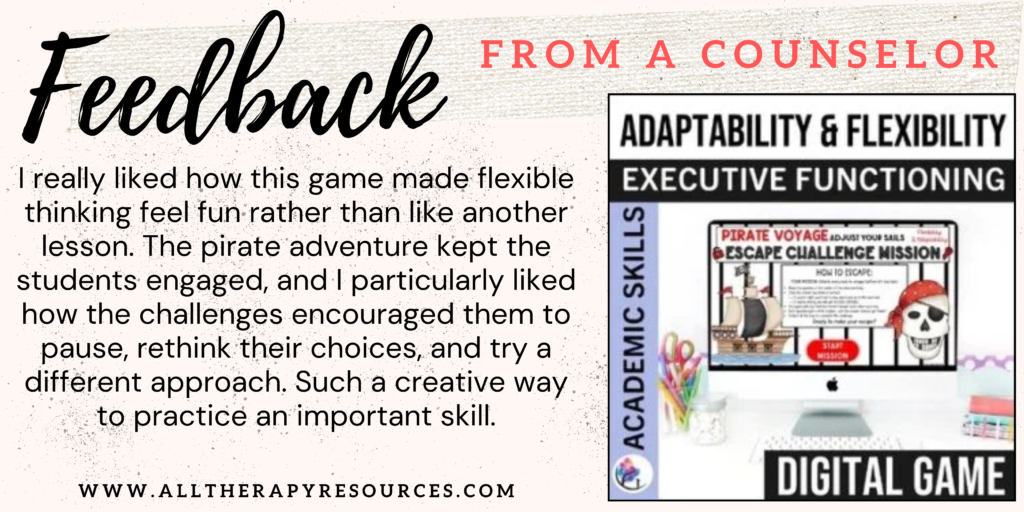
Flexible thinking is an important executive functioning skill that helps children adapt when expectations change, plans don’t work out, or situations feel unpredictable. While discussing hypothetical scenarios can be helpful, interactive activities provide opportunities for students to actively practice considering alternatives, managing frustration, and adjusting their responses.
In my work with children, I’ve found that game-based learning can make these conversations more accessible, particularly for students who find direct discussions about their behavior uncomfortable or challenging. When flexibility is explored through a fictional scenario, children can consider different responses without feeling personally criticized or pressured to discuss their own difficulties.
Our Flexible Thinking Activities – Academic Digital Escape Rooms resource uses an interactive pirate adventure, Adjust Your Sails, to help students explore adaptability, flexible thinking, and problem-solving. As students navigate challenges, they answer questions, consider different choices, and adjust their thinking to progress through the game.
The escape room also creates natural opportunities for therapeutic discussion. When students encounter an incorrect answer or unexpected challenge, educators and counselors can explore questions such as, “What could we try differently?” or “How can we respond when something doesn’t go as planned?”
Designed for elementary and middle school students, this PowerPoint-based activity can be incorporated into individual counseling, small-group interventions, classroom SEL lessons, or executive functioning skills instruction.
By practicing flexible thinking through engaging, low-pressure activities, children can begin developing a broader range of responses to challenges they may encounter in everyday learning and social situations.
Reinforcement Should Be Specific and Credible
Positive reinforcement is often misunderstood as praise delivered constantly or rewards given for basic expectations. It is more useful to think of reinforcement as feedback that makes a desired skill worth repeating. The feedback should be immediate enough to connect with the behavior and specific enough that the student knows what worked.
“You got started even though the assignment felt hard” is more informative than “Good job.” A student working on peer interactions might hear, “You disagreed without insulting anyone, and you stayed in the conversation.” For some children, adult recognition is reinforcing. Others respond better to choice, movement, leadership opportunities, access to a preferred activity, or a chance to share an interest.
External rewards can be helpful, particularly when a skill is new or effortful. Still, they should not replace relationship, clear expectations, or instruction. Consider fading a point system once the behavior becomes more established, while continuing natural feedback and meaningful opportunities for success.
Supporting Students With ADHD and Executive Functioning Challenges
For students with ADHD, positive behavior intervention often involves more than addressing the behavior itself. Difficulties with attention, impulse control, organization, emotional regulation, and flexible thinking can affect how students manage classroom expectations, transitions, and everyday challenges.
Providing explicit instruction, visual supports, predictable routines, and opportunities to practice executive functioning skills can help students develop greater independence and confidence.
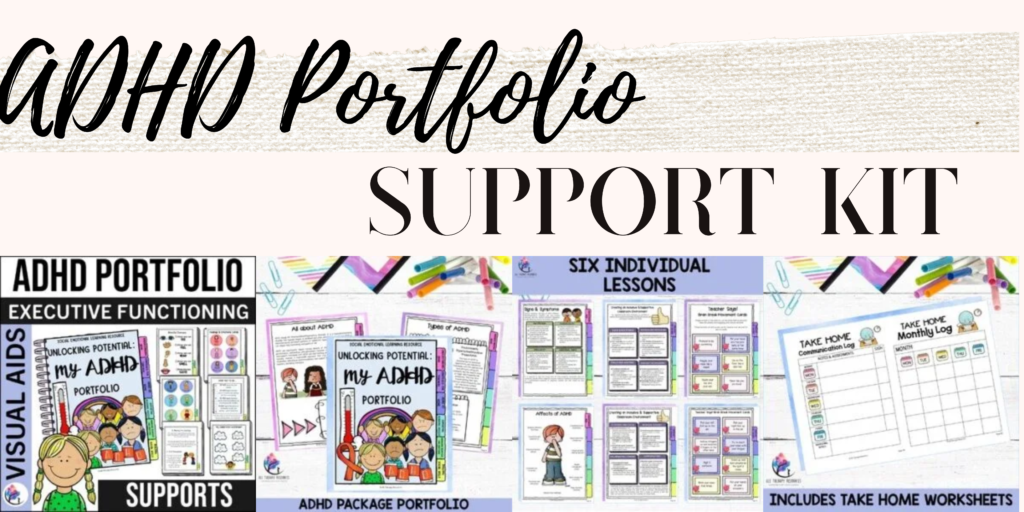
Our ADHD Strategies & Student Checklists – Executive Functioning Portfolio provides practical worksheets, visual communication aids, coping strategies, and structured activities to support students with ADHD. Covering six key areas, including understanding ADHD, classroom and home strategies, academic success, managing behavior and emotions, and social skills, this resource can be used by educators, counselors, and families to provide individualized support.
By combining skill development with supportive environmental adjustments, we can help students build on their strengths while developing practical strategies for everyday success.
Make the Plan Work Across Adults and Settings
An intervention can lose effectiveness when adults use different language, expectations, or responses. A child may be taught to request help in counseling but find that the classroom routine has no clear way to honor that request. Small adjustments can improve consistency: use the same break signal, agree on a return routine, and share the student’s preferred regulation tools with relevant team members.
Caregivers should be invited into the process as partners, not asked to duplicate a school plan without context. A simple home-school communication format may focus on one skill and one success noticed that day. For example: “Used a break request after becoming frustrated,” followed by a brief note about what helped. This keeps communication strengths-based and manageable.
Document what was taught, what supports were offered, and how the student responded. Data do not need to be complicated to be useful. Frequency, duration, task completion, or use of a replacement skill can help teams decide whether to continue, adjust, or intensify support.
A practical way to support consistency is through an individualized Behavior Support Plan. Our Create Your Own Behavior Support Plan resource helps educators, counselors, and caregivers identify early warning signs, recognize different stages of escalation, and explore the thoughts, feelings, and behaviors associated with each stage. With a completed example and customizable template, it provides a visual framework for identifying helpful supports and developing more consistent responses across settings.
Tracking and Evaluating Behavior Support Services
Effective behavior intervention also involves understanding how time and resources are allocated across student support services. For school-based behavior specialists, tracking direct interventions, behavioral observations, student check-ins, assessments, and consultation activities can help identify patterns, evaluate service delivery, and communicate the scope of their work.
Our Behavior Specialist Use of Time Tracker is an automated Microsoft Excel workbook designed to simplify this process. With customizable activity categories, monthly tracking, automatic calculations, visual charts, and a yearly summary, it helps behavior specialists document their services and see how their time is distributed across different responsibilities.
By combining thoughtful intervention planning with consistent service documentation, school teams can make more informed decisions about how behavior support is delivered.
Clinical Considerations for Effective Positive Behavior Intervention
Effective positive behavior intervention begins with understanding the individual child. The same observable behavior may serve different functions depending on the child’s needs, experiences, and environment. Strategies should therefore be informed by individualized assessment rather than behavior alone.
Reinforcement should be meaningful, respectful, and responsive to the child, with its effectiveness determined by whether it strengthens the intended skill or behavior over time. Equally important is monitoring outcomes beyond behavior reduction, including improvements in communication, emotional regulation, participation, independence, and overall wellbeing.
The goal is not simply to reduce challenging behavior, but to build meaningful skills, strengthen supportive environments, and improve the child’s quality of life.
Understanding Behavior Through Functional Assessment and Formulation
Before implementing a behavior intervention, it is important to explore not only what a child is doing, but what may be contributing to the behavior. Factors such as environmental demands, communication difficulties, unmet needs, emotional distress, and previous experiences can all influence how a child responds.
In my clinical work, I’ve found that structured behavior formulation can help shift conversations away from labeling behavior and toward developing a shared understanding of the child’s experiences and support needs. This is particularly valuable when collaborating with educators, caregivers, and multidisciplinary teams.
Our Behavior Formulation Support Document – Functional Reflection Tool provides a practical framework for examining what happened before, during, and after a behavioral incident, identifying possible contributing factors, and considering supportive responses. It includes a structured reflection form, completed example, and key behavior concepts poster to support collaborative discussion and positive behavior support planning.
While this reflective tool does not replace a comprehensive Functional Behavior Assessment (FBA), it can support more thoughtful, individualized intervention planning by encouraging professionals to look beyond the behavior itself.
Understanding the possible function of behavior helps us move from simply reacting to challenging situations toward developing proactive, compassionate, and meaningful supports.
When Activities Need More Support
Positive behavior intervention activities are not a substitute for a comprehensive assessment or individualized care when concerns are persistent, severe, or related to safety. If a student’s behavior includes significant aggression, self-harm concerns, repeated elopement, trauma-related distress, or major functional impairment, involve appropriate school-based and clinical supports according to your setting’s procedures.
Even then, the foundation remains the same: understand the student’s experience, reduce unnecessary barriers, teach practical skills, and respond in ways that preserve dignity. The most effective activity is often the one a child can use in the exact moment they begin to feel overwhelmed – and the one an adult is ready to notice, support, and reinforce with calm consistency.
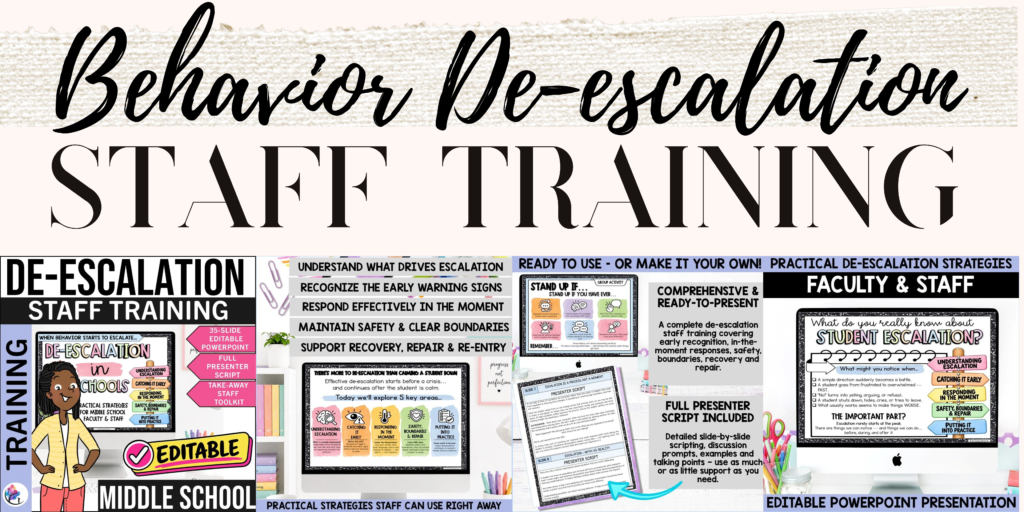
Strengthening Positive Behavior Support Through De-Escalation Staff Training
Positive behavior intervention is not only about teaching children new skills. It also involves equipping educators and school staff with the knowledge, confidence, and practical strategies to recognize early signs of escalation, respond to challenging behavior, and support students through emotional distress.
In my work supporting schools, I’ve seen how important a consistent, trauma-informed approach can be. When staff understand the factors contributing to behavior and share a common language for responding, they are better positioned to reduce unnecessary escalation, maintain supportive boundaries, and help students return to learning.
Our De-Escalation Staff Training Workshops provide structured, ready-to-use professional development for Elementary, Middle, and High School settings. Each workshop includes an editable PowerPoint presentation, comprehensive presenter scripts, practical strategies, realistic school-based scenarios, and interactive staff activities.
Rather than focusing solely on managing behavior in the moment, these workshops encourage educators to understand escalation, recognize opportunities for early intervention, and respond in ways that prioritize safety, connection, and emotional regulation.
Explore our De-Escalation Staff Training Workshops to support a more consistent, confident, and trauma-informed approach to behavior across your school.
Supporting Positive Behavior Beyond the Classroom
Effective positive behavior support is an ongoing process of understanding children’s needs, building meaningful skills, and creating environments where they feel safe, supported, and capable of success.
Whether you’re a school counselor, therapist, educator, or behavior specialist, having access to practical, research-informed tools can make it easier to translate positive behavior intervention strategies into everyday practice.
At All Therapy Resources, our extensive collection of counseling, behavior intervention, emotional regulation, and social-emotional learning resources is designed to support professionals in making a meaningful difference.
Explore the All Therapy Resources Shop to discover ready-to-use resources that support children’s emotional wellbeing, behavior, and development.