

Planning effective small group counseling sessions involves more than choosing engaging activities. School counselors need structured, developmentally appropriate interventions that respond to students’ needs, build practical skills, and allow progress to be measured over time.
Whether you’re supporting students with friendship challenges, emotional regulation, school transitions, or mental health concerns, a well-designed small group counseling curriculum can provide consistency, direction, and meaningful opportunities for skill development.
This article looks at developmentally appropriate curriculum options across elementary, middle, and high school settings, with a focus on Tier 2 interventions. Each section connects common student challenges to ready-to-use resources that save preparation time without sacrificing clinical integrity or trauma-informed practice.
Aligning Small Group Counseling Curriculum With Tier 2 Interventions
Small group counseling curriculum ideas need to align with multi-tiered systems of support, so students receive targeted intervention rather than general guidance. The American School Counselor Association published updated guidelines in 2019 that define comprehensive school counseling program expectations, naming small group service delivery as a core component of Tier 2 support.
Defining the Scope of Tier 2 Small Groups
Tier 2 small group counseling differs from classroom guidance because it targets students who show emerging needs requiring more intensive skill-building than universal prevention provides. These groups serve students showing early warning signs through behavioral referrals, attendance patterns, or teacher concerns, but who don’t yet require individualized therapeutic services. New York State put comprehensive regulatory requirements for K-12 school counseling programs in place starting in the 2019-2020 academic year, establishing standards that emphasize curriculum-based service delivery at this tier.
Structured curricula give you the consistency fidelity requires, and equitable access across different facilitators and school sites. Without standardized lesson plans, groups risk becoming unstructured support circles. Those circles may feel validating, but they can fail to teach measurable skills or produce documented outcomes.
Matching Curriculum Intensity to Student Need
Selecting the right curriculum intensity means distinguishing between students who need psychoeducation and those who need deeper therapeutic processing. Delaware’s SEL toolkit names expressing feelings, building community, resolving conflict, and celebrating diversity as core themes for small group counseling implementation at the Tier 2 level. Your role is matching these thematic areas to specific referral concerns while holding the line on what group formats can safely address.
A curriculum built for Tier 2 should never try to replace individual therapy for students with significant trauma histories or acute mental health crises. That limitation protects both students and facilitators, keeping groups skill-focused and psychologically safe rather than turning them into spaces for processing complex traumatic narratives without adequate clinical support.
Elementary Social Skills and Friendship Building Curricula
Elementary students build foundational peer relationship skills through concrete, experiential learning rather than abstract discussion. Effective social-emotional learning at this age calls for repeated practice with immediate feedback in structured environments, where mistakes become teaching moments rather than social failures.
Developmentally Appropriate Peer Interaction Lessons
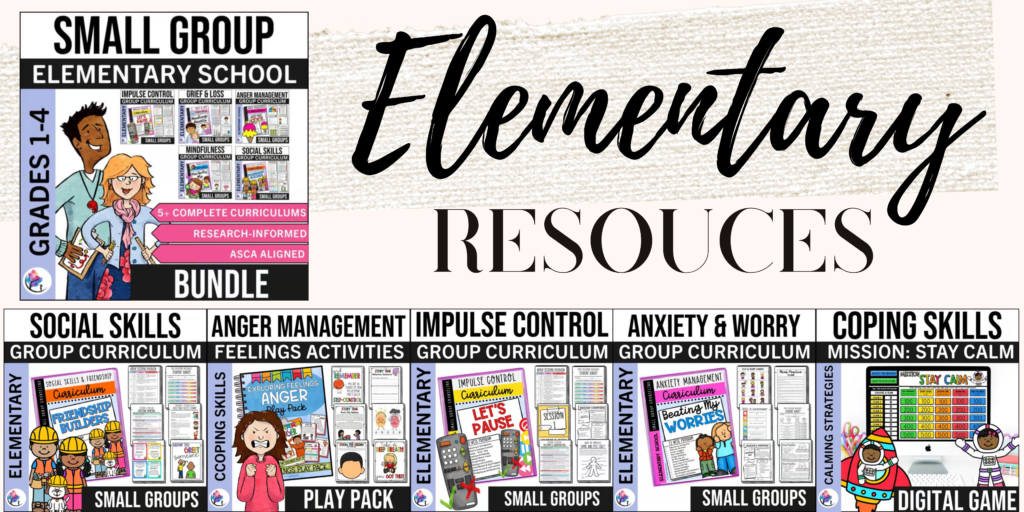
Perspective-taking, cooperative play, and conflict resolution form the core of elementary social skills instruction because these competencies directly address common referral concerns like peer isolation and playground conflicts. Friendship Builders is a research-based small group curriculum built for elementary students aged 5–11, targeting peer relationship development through interactive, developmentally appropriate lessons. It moves past generic conversation prompts and offers active skill rehearsal, helping children internalize prosocial behaviors through doing rather than just hearing.
Students respond best when lessons connect directly to their lived experiences in classrooms and cafeterias. Abstract concepts like “being kind” become actionable once you break them into observable steps children can practice, get feedback on, and carry into natural settings throughout their school day.
Integrating Play-Based Social Emotional Learning
Play is the primary language young children use to process social information and practice new interpersonal skills. Games, role-plays, and hands-on activities keep a curriculum engaging while giving kids naturalistic chances to apply skills that mirror real-world social demands. Worksheets alone can’t teach friendship. Children need embodied experiences where they navigate turn-taking, read social cues, and manage frustration in real time, with an adult scaffolding the moment.
Printable materials work best when they supplement, rather than replace, the interactive parts of your group sessions. A well-designed small group curriculum printable gives students visual anchors and take-home reinforcement, extending learning beyond the counseling office without becoming the only vehicle for instruction.
Middle School Transition and Career Exploration Lesson Plans
Middle school is a developmental window where identity formation collides with big environmental changes and rising executive function demands. Students navigating this transition benefit from curricula that respect their growing autonomy while giving them structure for exploring future possibilities.
Navigating Academic and Social Transitions
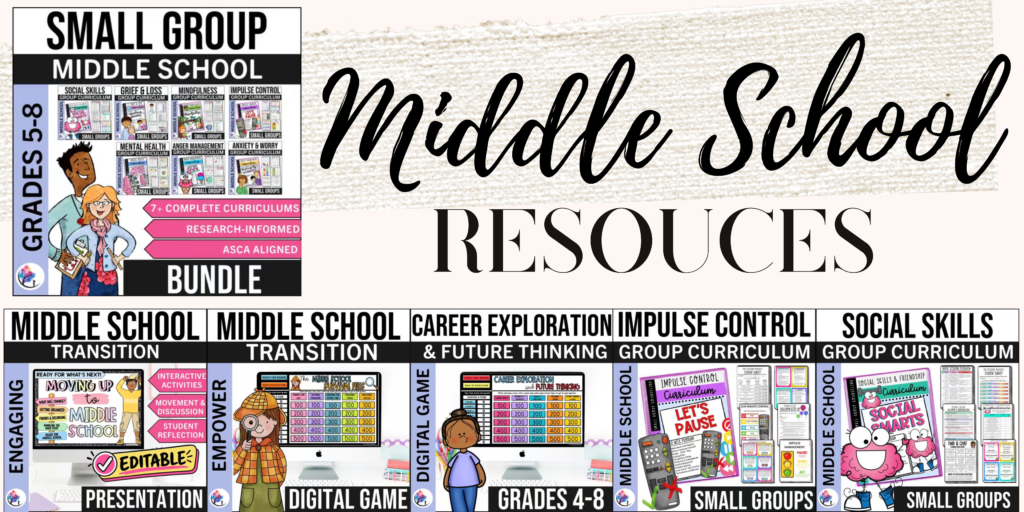
The shift to middle school brings new organizational demands, multiple teachers, and more complex peer dynamics, and it can overwhelm students who lack preparation or support. Interactive digital games hold attention at this developmental stage better than traditional worksheets, which often trigger resistance or disengagement. Middle School Survival Files uses a detective-themed format to help students explore the academic, social, and emotional sides of starting middle school, in a way that respects their maturity while naming genuine anxieties.
You can use a digital intervention like this as a standalone transition tool, or fold it into broader small group counseling lesson plans addressing adjustment concerns. The gamified format lowers defensiveness and gives the group a shared vocabulary for challenges students might otherwise minimize or avoid.
Future-Oriented Psychoeducation for Adolescents
Career exploration at the middle school level is about self-awareness and interest identification, not definitive career selection. Psychoeducational content delivered through engaging formats helps students connect current academic effort to future possibilities without stirring up anxiety about premature decision-making. The Career Exploration and Future Thinking Game, built for grades 4–8, supports this by helping students explore career pathways and understand their interests through gameplay that feels relevant rather than prescriptive.
Middle school counseling group topics that land best tend to involve identity, belonging, and future possibility rather than deficit-focused remediation. Framing career exploration as self-discovery rather than vocational testing fits adolescent development while building self-advocacy skills.
Trauma-Informed Mental Health Awareness Activities for Secondary Students
Addressing mental health literacy in secondary schools takes careful attention to psychological safety and clear boundaries within group formats. Trauma-informed principles shape not just content selection, but session structure, facilitator positioning, and the criteria for deciding which students belong in group versus individual support.
Creating Psychological Safety in High School Groups
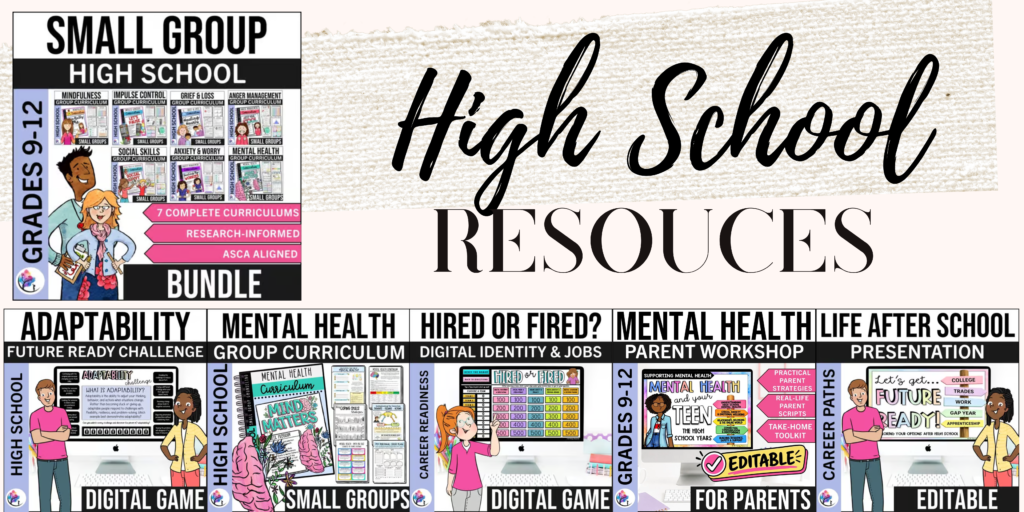
High school mental health groups need to prioritize emotional awareness and coping strategy development over disclosure of traumatic experiences, to keep things safe for every participant. All Therapy Resources’ Mind Matters curriculum applies trauma-informed principles built specifically for secondary students, focusing on emotional awareness and help-seeking skills rather than processing traumatic narratives in group settings. It’s designed to build mental health literacy without asking students to share personal trauma histories in front of peers.
This distinction matters because group formats don’t have the privacy or clinical intensity safe trauma processing requires. Your curriculum should normalize help-seeking and build emotional vocabulary, while making clear that deeper therapeutic work happens individually, with qualified mental health professionals.
Building Emotional Literacy and Help-Seeking Skills
Emotional literacy is the foundation for everything else in mental health promotion, since students can’t regulate or talk about internal states they can’t name or recognize. Curriculum components on emotion identification, stress responses, and coping strategies should come before any content on crisis recognition or help-seeking protocols. Sequencing matters here: introducing suicide prevention content before the group has trust and shared emotional vocabulary risks triggering distress without providing containment.
Treat mental health awareness curricula as preventative psychoeducation, not therapeutic intervention. That framing keeps your student selection appropriate and your boundaries clear about what group formats can ethically address in a school setting.
Structuring Effective Group Counseling Session Plans
Predictable session structures lower cognitive load and anxiety for students who struggle with ambiguity or transitions. Consistent rituals signal safety, so participants can spend their energy on skill acquisition instead of guessing what happens next.
Consistent Rituals and Predictable Formats
Effective group counseling lesson plans follow a reliable sequence: check-in, skill introduction, experiential activity, and processing time, every session. Opening rituals might involve brief mindfulness exercises, feeling charts, or structured sharing prompts that ground students and mark the shift into counseling space. Closing rituals give students a chance to re-regulate before heading back to class, which cuts down on unresolved emotions spilling into the next period.
Your consistency models the predictability many Tier 2 students lack in other parts of their lives. When students know what to expect, they take bigger interpersonal risks and engage more fully with hard skill-building work, because the container stays stable even when the content gets difficult.
Balancing Didactic Instruction With Experiential Processing
Direct instruction should take up no more than about 20 percent of session time, with the rest going to active practice and reflective processing. Students hold onto social-emotional concepts through embodied experience and peer feedback far better than through lecture or video alone. Your role shifts from expert presenter to facilitator, guiding students toward understanding through discovery and mutual support rather than handing it to them.
Processing questions should tie activities back to students’ real-world applications rather than staying abstract. “How might you use this skill during lunch tomorrow?” generates more transferable learning than “How did that activity make you feel?” because it bridges the gap between the counseling office and daily life.
Monitoring Progress and Selecting Students for Small Groups
Data-informed selection and progress monitoring are what separate Tier 2 interventions from informal support groups. A systematic approach makes sure resources reach students who genuinely need targeted intervention, while giving you documentation for accountability.
Data-Informed Screening and Referral Criteria
Good candidate selection relies on multiple data points, including teacher rating scales, behavioral referral patterns, attendance records, and academic performance indicators, rather than a single source. Signs a student fits Tier 2 include emerging concerns that affect functioning but don’t meet special education eligibility thresholds, willingness to participate voluntarily, and no acute safety concerns requiring an individualized crisis response. Students who need intensive trauma processing, active suicidality management, or severe behavioral stabilization typically need individual services before group participation makes sense.
You protect group cohesion and individual wellbeing by screening out candidates whose needs go beyond what a group format can safely hold. Clear inclusion and exclusion criteria, shared with referring staff, cut down on inappropriate referrals and keep your limited Tier 2 capacity focused on students most likely to benefit.
Measuring Skill Acquisition Over Time
Progress monitoring should track both skill acquisition within sessions and generalization to natural environments, using brief, repeatable measures at regular intervals. Pre- and post-group assessments with standardized rating scales give you quantitative data on growth, while qualitative observations during sessions pick up nuanced changes in peer interaction and self-regulation. Simple tools, like weekly goal-tracking sheets or behavior frequency counts, create ongoing feedback loops that inform facilitation decisions without piling on documentation.
Data collection does two jobs: it demonstrates intervention effectiveness for administrators, and it informs real-time adjustments to better fit the current group. When progress stalls, your data helps you figure out whether the issue is curriculum fit, facilitation approach, or something specific to an individual student.
Putting Small Group Counseling Data Into Practice
Monitoring student progress doesn’t need to mean adding hours of paperwork. Having a consistent system for documenting attendance, recording interventions, and measuring student outcomes can make small group counseling both more manageable and more meaningful.
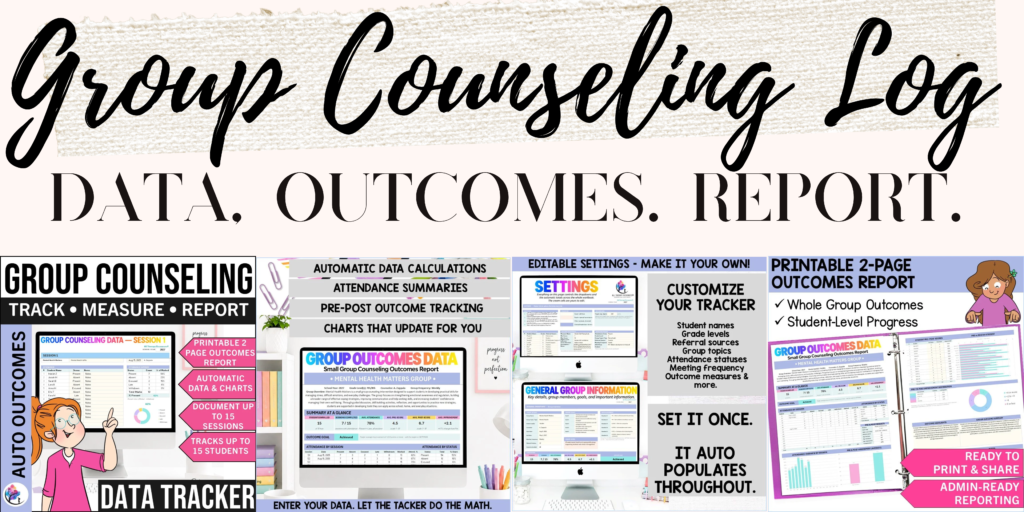
The All Therapy Resources Small Group Counseling Data Tracker was developed to help school counselors streamline this process. This editable Excel workbook allows counselors to:
- Track attendance and session details for up to 15 students
- Document up to 15 group counseling sessions
- Monitor student progress using pre- and post-intervention scores
- Align counseling goals with ASCA Mindsets & Behaviors
- Automatically generate charts and a professional counseling outcomes report
By bringing these elements together, school counselors can spend less time managing paperwork and more time delivering meaningful interventions.
Explore the Small Group Counseling Data Tracker to see how structured progress monitoring can support your school counseling program.
Adapting Printable Resources for Diverse Learner Profiles
Standardized curricula need thoughtful adaptation to serve diverse student populations equitably and effectively. Cultural responsiveness and neurodivergent accessibility aren’t optional add-ons. They’re essential parts of ethical Tier 2 service delivery.
Purchased small group curriculum printable materials should work as flexible frameworks that call for your clinical judgment, not rigid scripts demanding verbatim delivery. Consider whether examples reflect your students’ cultural backgrounds, whether the language assumes neurotypical processing styles, and whether activities accommodate different sensory profiles and communication preferences. Adaptation honors the curriculum’s evidence base while making sure it actually reaches the specific kids sitting in your circle.
Your professional judgment is what turns generic resources into culturally sustaining, neurologically inclusive interventions. This adaptation work is where purchased materials become real Tier 2 supports, rather than well-intentioned programming that misses the mark.
Ready-to-use, trauma-informed small group counseling curricula can cut down your preparation time while strengthening the quality and consistency of your Tier 2 interventions. Explore the ATR membership library for ongoing access to evidence-informed resources built with the realities of school-based practice in mind, or browse individual curricula in the ATR Shop to find what your students need right now.
Frequently Asked Questions
What distinguishes tier 2 small group counseling from classroom guidance lessons?
Tier 2 small groups target students showing emerging needs through behavioral referrals, attendance patterns, or teacher concerns and provide more intensive skill-building than universal classroom guidance offers. These groups use standardized curricula delivered to carefully selected students rather than whole-class instruction, allowing for focused practice and progress monitoring on specific social-emotional or behavioral goals.
How do I choose developmentally appropriate counseling topics for different grade levels?
Elementary students benefit from concrete social skills instruction focused on perspective-taking, cooperative play, and conflict resolution through hands-on activities and play-based learning. Middle school curricula should address transition navigation, identity exploration, and future-oriented psychoeducation using interactive formats that respect growing autonomy. High school topics can include mental health literacy, emotional awareness, and help-seeking skills delivered through trauma-informed frameworks that prioritize psychological safety over personal disclosure.
What makes a student an appropriate candidate for a specific small group intervention?
Appropriate candidates demonstrate emerging concerns impacting school functioning but not meeting special education thresholds, show willingness to participate voluntarily, and lack acute safety concerns requiring individualized crisis response. Selection should rely on multiple data points including teacher rating scales, behavioral referrals, and attendance records rather than single-source recommendations. Students needing intensive trauma processing or active suicidality management typically require individual services before group participation becomes safe or beneficial.
How should I monitor progress in small group counseling to evaluate effectiveness?
Use brief pre- and post-group standardized rating scales combined with weekly qualitative observations and simple goal-tracking tools to measure both skill acquisition and generalization to natural environments. Data collection should occur at regular intervals without creating excessive documentation burden, serving both accountability purposes and real-time facilitation adjustments. When progress stalls, your data helps determine whether curriculum fit, facilitation approach, or individual student factors require different intervention levels.