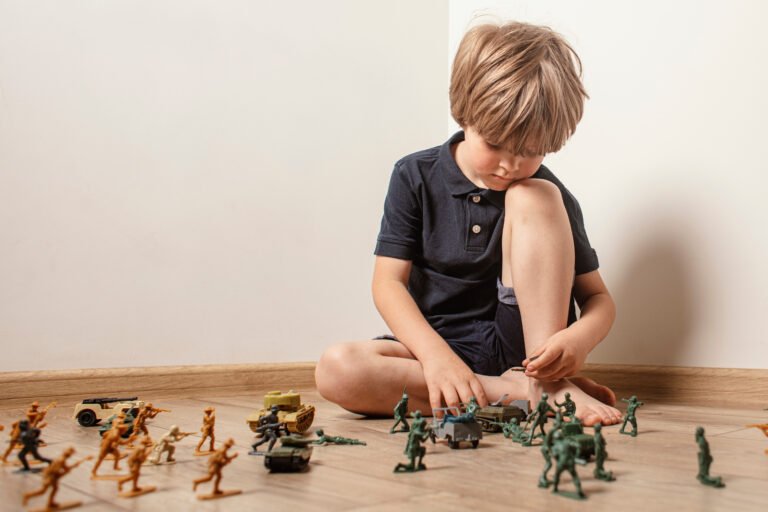


A child who says, “I don’t know,” when asked about a hard week may build a tray with a fence around a small figure, a storm cloud nearby, and a bridge just outside the boundary. Sand tray therapy prompts offer an invitation into that symbolic language without requiring a child or teen to explain more than they are ready to share. Used thoughtfully, they can help professionals notice themes, support emotional expression, and create a sense of choice and safety.
The prompt is not the intervention by itself. The relationship, the pace of the session, the available materials, and the practitioner’s attunement matter just as much. A well-timed question can open reflection; too many questions can turn expressive play into a performance. The goal is to offer enough structure for a client who feels stuck while preserving the freedom that makes sand tray work meaningful.
Understanding Play Therapy and the Role of Sand Tray Interventions
Play therapy provides children with a developmentally appropriate way to explore emotions, communicate experiences, develop coping skills, and work through challenges within a supportive therapeutic relationship. Rather than relying exclusively on verbal communication, play therapists use carefully selected therapeutic approaches and materials to help children express thoughts and feelings that may be difficult to put into words.
Sand tray interventions are one of the expressive approaches that may be incorporated into play therapy. Through miniature figures, objects, and symbolic scenes, children can explore relationships, emotional experiences, personal strengths, and challenges at their own pace. When facilitated by appropriately trained professionals, sand tray work can support emotional expression, reflection, and therapeutic exploration while respecting each child’s developmental needs and readiness.
Preparing Children and Families for Play Therapy
Beginning play therapy can bring questions and uncertainty for both children and their families. Helping them understand what to expect can promote predictability, informed participation, and a sense of emotional safety before therapeutic work begins.
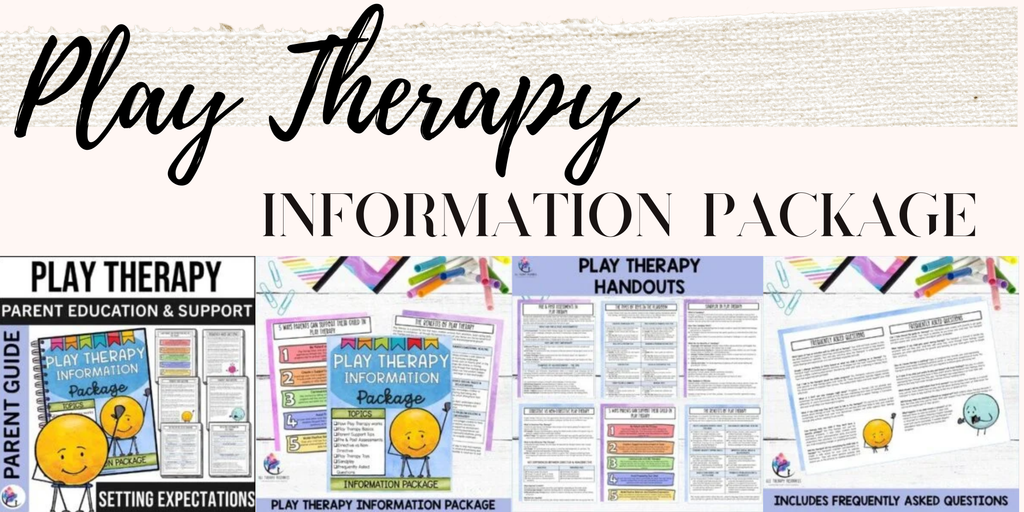
Our Play Therapy Information Package – Parent Education & Support provides therapists with ready-to-use parent handouts covering the foundations of play therapy, its potential benefits, therapeutic approaches, assessment considerations, and practical ways families can support their child’s therapeutic journey. It also includes information about sandplay therapy and its role in supporting emotional expression.
For children preparing to attend therapy, our Going to Play Therapy Social Narrative, available in English and Spanish, offers a gentle, child-friendly introduction to the therapeutic process. Through a supportive story, introductory letter, and frequently asked questions, children can explore what happens during play therapy, become familiar with the experience, and discuss any questions or concerns they may have.
Together, these resources help therapists establish a foundation of understanding, collaboration, and trust with children and caregivers, supporting a thoughtful introduction to the therapeutic process.
When to Use Sand Tray Therapy Prompts
Prompts are especially useful when a child is new to the sand tray, has difficulty getting started, or benefits from a shared focus in a brief school-based session. They can also provide a predictable entry point for small groups, classroom counseling activities, or sessions targeting a particular skill such as coping, perspective-taking, or transition planning.
At other times, an open invitation is the better choice. A student who arrives highly activated, a client processing an experience indirectly, or a young person who has found a comfortable rhythm in unstructured sand work may need less direction. Trauma-informed practice means following the client’s cues rather than assuming disclosure or insight should happen on a set timeline.
Before introducing a prompt, offer practical choices: which tray to use, whether to work quietly or talk while building, and whether the tray will be photographed, left in place briefly, or taken apart at the end. Explain the limits of privacy in language appropriate for the setting. These small steps support predictability and ethical care.
Sand Tray Therapy Prompts for Feelings and Regulation
Emotion-focused prompts work best when they invite representation rather than demand a verbal label. They give children a way to show internal experiences through distance, size, movement, and objects.
Try a simple invitation such as, “Make a tray that shows what your day has felt like so far.” For a student who has had a conflict, you might say, “Create a scene with one part that feels upset and one part that needs help.” With adolescents, “Show what people see on the outside and what is happening on the inside” often allows for a more nuanced conversation about masking, stress, or belonging.
Regulation prompts can be particularly useful before asking a client to revisit a difficult topic. Consider: “Build a place where a character can take a break,” or “Make a tray with something that helps the character feel steady when things get too big.” The focus should remain on the client’s meaning. A cave may represent comfort for one child and isolation for another; avoid assigning symbolic interpretations based on the object alone.
After the tray is built, begin with observation: “I notice the safe place is at the edge of the tray.” Then invite the client to lead: “What would you like me to know about this part?” This approach communicates curiosity without pressure.
Prompts That Support Problem-Solving and Strengths
Sand trays can make problems more visible and more flexible. When a challenge is represented outside the child, it may feel easier to examine possible responses without framing the child as the problem.
For a current concern, invite the client to “Build the problem as it feels right now, then add anything that could make it a little more manageable.” The phrase “a little” matters. It keeps the task realistic and does not suggest that a child must solve a complex family, peer, or school situation in one session.
Other useful prompts include, “Create a path from a hard moment to a next step,” and, “Build a team for a character facing a challenge.” These can help identify existing supports, preferred coping strategies, and barriers that deserve further attention. A child may place a helper far away, for example, which can lead to a gentle discussion about what makes asking for help difficult.
Strength-based prompts are not about forcing a positive ending. Instead, they make room for competence alongside struggle. Invite a client to create “a scene that shows something you have handled before,” or “a tray with three things that help a character keep going.” For teens, a future-oriented prompt such as “Show a place or situation where you feel more like yourself” can support values-based reflection without requiring a detailed disclosure.
Prompts for Relationships and Perspective-Taking
Relationship themes often emerge naturally in sand work. When a more focused prompt is helpful, keep it broad enough for the client to define the relationship on their own terms.
“Make a scene showing what it is like to be part of a group” can open conversation about friendship, classroom dynamics, teams, or family roles. “Build a tray with two characters who want different things” supports perspective-taking and conflict resolution. Ask what each character notices, needs, or hopes will happen next.
For younger children, it may be useful to externalize the interaction through animal figures or fantasy characters. For adolescents, miniature objects, natural materials, or a more abstract arrangement may feel less childish and more comfortable. The same prompt does not fit every age, culture, sensory profile, or therapeutic goal.
Be careful not to use relationship prompts to seek details that a child has not volunteered. If a tray raises a concern about safety, respond according to your professional role, setting procedures, and mandated reporting obligations. Sand tray materials can support communication, but they do not replace careful assessment or individualized clinical judgment.
How to Facilitate Without Taking Over
The most effective sand tray therapy prompts leave room for silence. Once a client begins building, resist the urge to narrate every choice or ask what each item means. Some children think through movement and placement first, then find words later. Others may never want to explain every element, and that boundary deserves respect.
A practical sequence is to offer one clear prompt, allow time for construction, invite the client to title the tray or tell its story if they wish, and close with a grounding question. You might ask, “What feels important to remember from this tray?” or “What would help you shift back to the rest of your day?” In a school setting, this final transition is particularly helpful before a student returns to class.
Document observable content and the client’s own language rather than treating symbols as fixed evidence. For example, note that the student placed a figure behind a wall and described it as wanting quiet time. This is more accurate and clinically useful than recording an assumed meaning for the wall.
Adapting Prompts Across Settings
Time and materials shape what is practical. In a 20-minute school counseling check-in, one focused prompt and a brief reflection may be enough. In outpatient therapy, a tray may remain intact across sessions when clinically appropriate. Small groups benefit from shared expectations about touching materials, personal space, and whether members will comment on one another’s trays.
A full collection of miniatures is helpful, but meaningful work can happen with a modest set of people, animals, natural objects, structures, vehicles, and open-ended items. For students with sensory sensitivities, offer alternatives such as kinetic sand, a dry tray, gloves, tools for moving sand, or arranging miniatures beside the tray. Participation should not depend on tolerating a particular texture.
All Therapy Resources encourages practical tools that reduce preparation time while protecting the quality of the intervention. A small bank of flexible prompts, paired with consistent opening and closing routines, can help busy professionals use sand tray work with intention rather than reaching for a question only when a session stalls.
The most useful prompt is often the one that helps a child feel understood without asking them to be more ready, more verbal, or more certain than they are. Offer the invitation, notice what unfolds, and let the tray belong to the person who created it.
Bringing Trauma-Informed Sandplay Therapy Into Practice
Sandplay therapy offers children and adolescents a meaningful way to explore emotions, relationships, internal conflicts, and lived experiences through symbolic expression. For individuals who find verbal communication difficult, overwhelming, or emotionally demanding, the sand tray can provide an alternative pathway for expression, reflection, and therapeutic connection.
A trauma-informed approach to sandplay recognizes the importance of emotional safety, choice, pacing, and the therapeutic relationship. Rather than directing a child’s narrative or assigning predetermined meanings to symbols, practitioners create opportunities for exploration while remaining attentive to the child’s individual experiences, developmental needs, and readiness to engage.
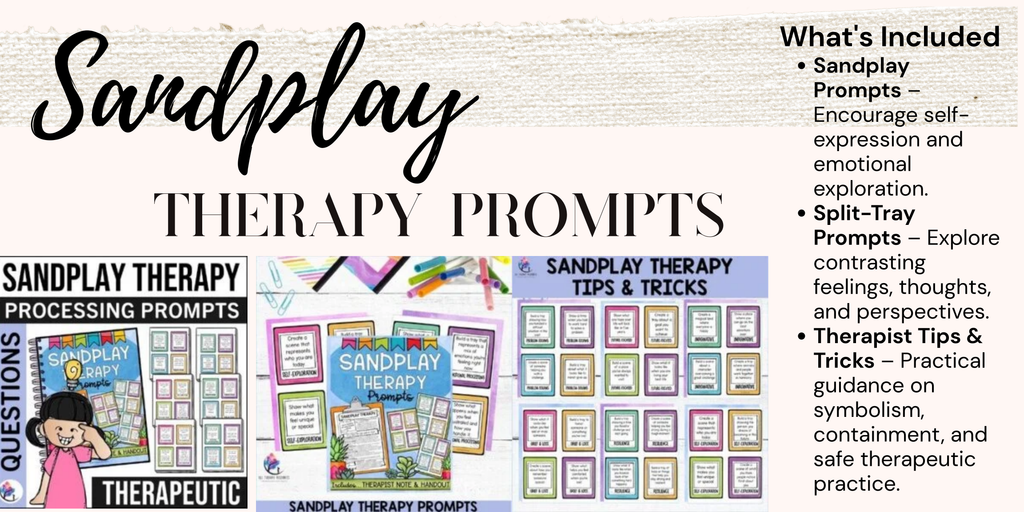
Our Sandplay Therapy Prompts & Guide, available in both English and Spanish, was developed to support trained professionals in bringing greater intention and clinical consideration to their sandplay sessions.
The resource includes therapeutic processing prompts to encourage emotional expression and self-reflection, split-tray activities to explore contrasting experiences and perspectives, and practical guidance addressing therapeutic containment, symbolism, and creating a safe therapeutic environment.
These prompts can support exploration of emotional regulation, relationships, identity, personal strengths, and difficult experiences without requiring children to disclose more than they feel ready to share. Importantly, the resource emphasizes that meaningful sandplay work is guided by the child’s experience, the therapeutic relationship, and the practitioner’s professional judgment—not by interpreting individual symbols in isolation.
Thoughtfully facilitated sandplay is not simply about what a child creates in the tray, but the opportunities for expression, connection, and understanding that emerge through the therapeutic process. Explore our Sandplay Therapy Prompts & Guide, available in English and Spanish, to discover practical, clinically informed prompts for your therapeutic practice.
Looking for More Play-Based Counseling Activities?
At All Therapy Resources, we believe meaningful therapeutic play begins with connection, curiosity, and opportunities for children to express themselves in ways that feel safe and comfortable. Explore our collection of counseling activities and therapeutic resources, designed to help school counselors, play therapists, and mental health professionals support emotional expression, coping skills, resilience, and social-emotional development.