

Ask a high school student what they’re planning to do after graduation and you’ll usually get a wide range of responses. Some students have known what they want to do for years. Others have several completely different ideas, while some will simply shrug and say, “I have no idea.”
And that’s okay. One of the biggest misconceptions around life after high school planning is that students need to leave school knowing exactly what they want to do with the rest of their lives. They don’t. What they need is an understanding of the options available to them, some insight into what matters to them, and the skills to make an informed next decision.
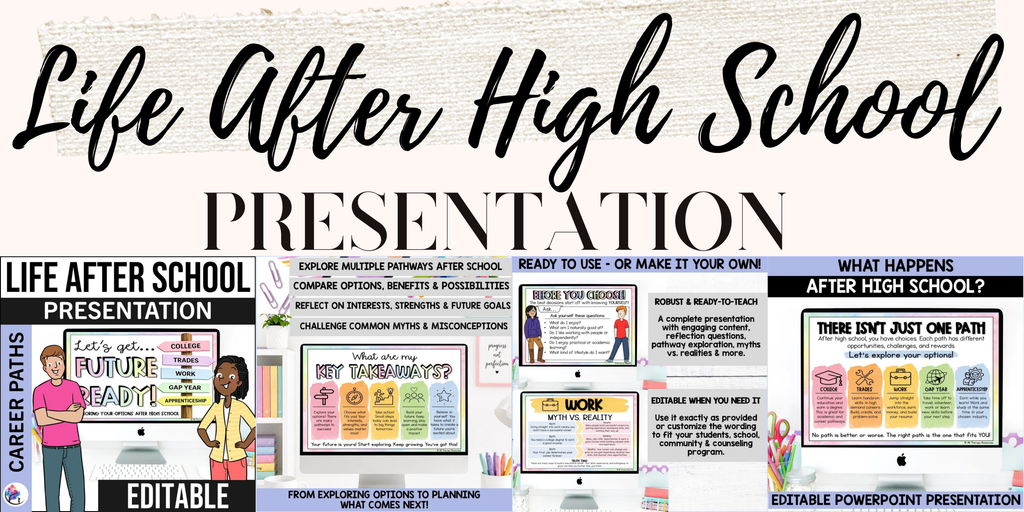
This is exactly why we created our editable Future Ready! Exploring Your Options After High School PowerPoint Presentation. Rather than presenting college as the expected destination, the presentation explores multiple postsecondary pathways, including college and university, trades, apprenticeships, entering the workforce, and gap years, while encouraging students to consider which options might genuinely suit them.
Stop Asking Students to Plan Their Entire Life
“What are you going to do with your life?” is an enormous question to ask a teenager. Even adults change careers, return to education, discover new interests, relocate, retrain, and find opportunities they couldn’t possibly have anticipated when they were seventeen.
A much more useful question is, “What could be a good next step for you?” That immediately makes future planning feel more manageable. Students aren’t being asked to choose one permanent identity. They’re deciding what makes sense based on what they know about themselves and their options right now.
This is an important part of career readiness and postsecondary planning. We want students to become capable decision-makers, not teenagers who feel pressured to produce a perfectly mapped-out ten-year plan before graduation.
Start With the Student, Not the Pathway
Before talking about college, apprenticeships, trades, work, or gap years, we like to bring the conversation back to the student. What interests them? What are they good at? How do they prefer to learn? What matters to them? What kind of lifestyle might they eventually want?
A student who enjoys practical, hands-on problem-solving may be interested in very different pathways from someone who loves academic research and extended study. Another student might value independence and entering the workforce sooner, while someone else may be excited about spending several years developing specialist knowledge.
None of those preferences automatically determines what a student should do. They simply provide useful information to consider when exploring possible pathways.
This is why our Life After High School Presentation includes self-reflection alongside information about postsecondary options. Before students decide where they’re going, we want them thinking about who they are and what they might want from the next stage of their lives.
Helping Students Discover Their Interests and Strengths
Before students can make meaningful decisions about their future, they need opportunities to understand themselves. Exploring personal interests, strengths, values, and developing skills can help students recognize potential career pathways without feeling pressured to commit to a particular direction.
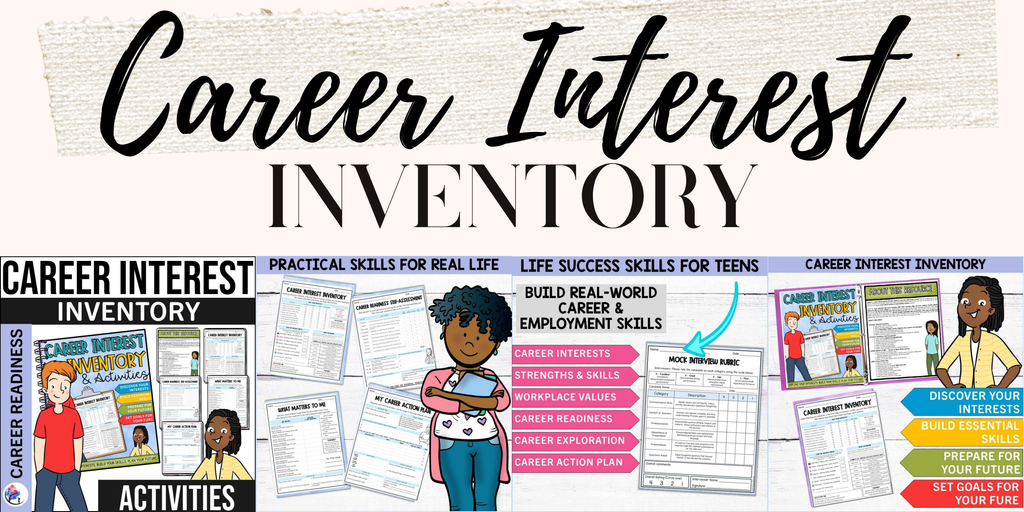
Our Career Interest Inventory & Career Readiness Activities provides structured opportunities for self-discovery through interest surveys, career readiness assessments, values exploration, and personalized action planning. These activities help students connect who they are today with the possibilities they may wish to explore tomorrow.
College Is One Pathway, Not the Pathway
For some students, college or university will absolutely be the appropriate next step. Their chosen career may require a degree, they may enjoy academic learning, and further study may fit beautifully with their goals.
But that doesn’t mean it is the right pathway for every student.
Trades, apprenticeships, direct entry into the workforce, and planned gap years can also form part of a successful transition after high school. The important question isn’t whether one pathway is universally better than another. It is whether the pathway makes sense for this particular student and what they are trying to achieve.
Our Future Ready presentation deliberately introduces students to multiple pathways so they can explore the differences rather than feeling that there is one expected route after graduation.
Teach Students to Compare Options, Not Just Choose Them
One of the most valuable career readiness skills we can teach students is how to compare possibilities thoughtfully.
Instead of asking, “Which option sounds best?”, we can encourage students to investigate what each pathway actually involves. What qualifications are required? How long might training take? What will it cost? What type of learning is involved? What opportunities could it create? What are some of the considerations or challenges?
Now students aren’t choosing between labels such as college, trade, or work. They’re learning how to evaluate the reality behind each option.
Our Future Ready! Exploring Your Options After High School Presentation supports these conversations by exploring different pathways alongside career examples, benefits, considerations, reflection questions, and Myth vs. Reality discussions.
Students Need Permission to Explore Without Committing
Sometimes teenagers avoid career exploration because they believe investigating something means they are committing to it.
It doesn’t.
A student can investigate university and decide it isn’t right for them. They can research an apprenticeship and realize the actual work isn’t what they imagined. They can explore a career they’ve never heard of and discover something that genuinely interests them.
Changing your mind after learning more isn’t necessarily indecision. Sometimes it means the exploration process worked.
We want students to feel comfortable gathering information, asking questions, reconsidering assumptions, and changing direction when new information tells them something isn’t a good fit.
Making Career Exploration Interactive
Career exploration doesn’t always need to involve worksheets or formal assessments. Interactive activities can encourage students to explore their interests, strengths, values, and future possibilities in a collaborative, low-pressure environment.
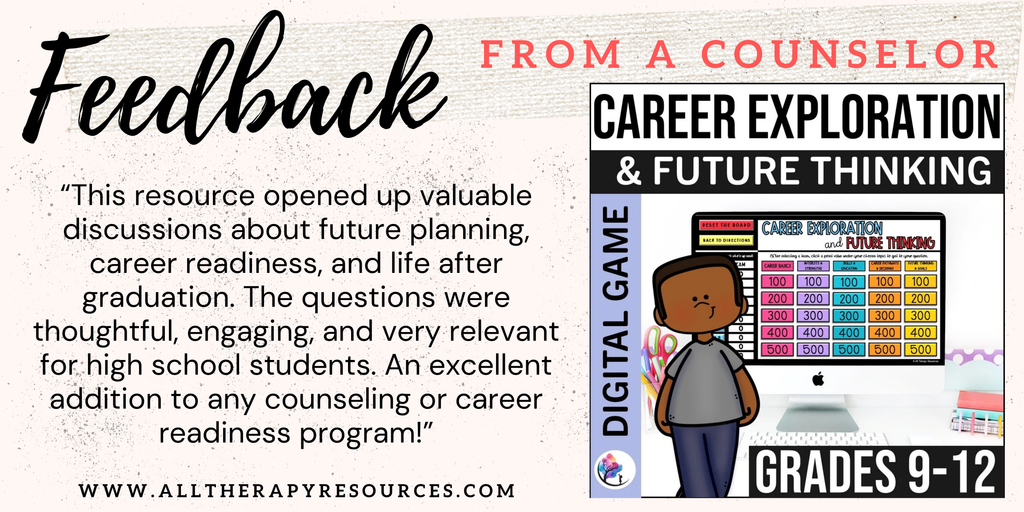
Our Career Exploration & Future Thinking Digital Game brings these conversations to life through five engaging categories covering career pathways, personal strengths, transferable skills, decision-making, and future goals. Designed for high school students, this interactive PowerPoint game combines psychoeducation, critical thinking, and discussion to make career readiness more meaningful and accessible.
Challenge the Assumptions Students Already Have
Students don’t begin postsecondary planning with a blank slate. They bring messages they’ve heard from family, friends, teachers, social media, and the wider community.
Some may believe that university is the only pathway to success. Others may have assumptions about trades, apprenticeships, gap years, or entering the workforce directly after school.
Rather than simply replacing one assumption with another, we can teach students to examine these beliefs critically. Where did this idea come from? Does it apply to every career? What evidence would we need to evaluate it? What are the benefits and considerations of this pathway?
This is why we included Myth vs. Reality discussions within the presentation. Career education becomes much more meaningful when students are actively questioning ideas rather than simply being given another set of statements to accept.
A Gap Year Should Still Have a Purpose
Gap years can be another valuable pathway to explore. For some students, time between school and further education may provide opportunities to work, travel, volunteer, save money, develop independence, gain experience, or simply make a more informed decision about what they want to do next.
But there is a difference between having no plan and having a planned gap year.
If a student is considering this option, we can help them think about what they would like to gain from that year. Will they work? Save money? Travel? Develop a particular skill? Gain experience? Explore careers? What would make them look back at the end of the year and feel that the time had been useful?
This helps students think about intentionality rather than simply whether taking a gap year is “good” or “bad.”
Trades and Apprenticeships Deserve Genuine Exploration
Trades and apprenticeships shouldn’t be presented as backup options for students who don’t attend university. They are distinct pathways that may align extremely well with particular interests, strengths, learning preferences, and career goals.
Students considering these options can investigate what the work actually involves, the training required, qualifications gained, physical demands, employment opportunities, and potential pathways for progression.
Again, the aim isn’t to convince students to choose one option over another. It is to help them become better at investigating what a pathway would realistically involve before deciding whether it suits them.
Entering the Workforce Is More Than “Getting a Job”
Some students may plan to enter the workforce soon after high school, either as a longer-term pathway or while deciding what they want to do next.
That option deserves thoughtful preparation too.
Students can consider the types of work that interest them, the skills they already possess, the skills employers may value, opportunities for training and advancement, and how an initial job might connect with longer-term goals.
Their first job also doesn’t need to determine their entire career. It can provide experience, confidence, transferable skills, professional references, financial independence, and information about what they do or don’t enjoy in a workplace.
Life after high school rarely unfolds in one perfectly straight line, and students benefit from understanding that.
Future Readiness Means Knowing How to Find Information
Students aren’t going to graduate knowing everything about every possible career or pathway, nor should we expect them to.
A much more useful skill is knowing how to investigate something they don’t know.
Can they research a course? Compare entry requirements? Find out what qualifications a particular career requires? Speak with someone working in the field? Identify a career counselor or another adult who could help? Find reliable information about training opportunities?
When we teach those skills, we stop trying to provide every answer and start helping students become capable career investigators.
That’s a skill they can continue using throughout adulthood, particularly because the decision they make after high school probably won’t be the last career decision they ever make.
Don’t Confuse “I Don’t Know” With Lack of Motivation
A student who says “I don’t know what I want to do” isn’t necessarily disengaged or unmotivated.
They may simply not have enough information yet. They might have several interests and struggle to narrow them down. They may be afraid of making the wrong choice or feel overwhelmed by the expectation that they should already know.
Sometimes the most effective response isn’t pushing them toward a decision. It’s making the decision smaller.
What is one career you could investigate this week? What is one pathway you’d like to understand better? Who could you speak with? What is one course, apprenticeship, workplace, or training opportunity you could research?
Students don’t necessarily need certainty before they can start moving forward.
Turn “Someday” Into a Practical Next Step
This is an important part of how we use our Future Ready! Exploring Your Options After High School PowerPoint Presentation.
The presentation doesn’t simply introduce students to college, university, trades, apprenticeships, work, and gap years. It also includes self-reflection, career examples, benefits and considerations, Myth vs. Reality discussions, key takeaways, and future-focused reflection.
Ultimately, we want students to take that information and ask, “What does this mean for me?”
Their next step might be researching an apprenticeship, comparing two university courses, checking entry requirements, making an appointment with a career counselor, talking to someone who works in a particular field, exploring a local employer, or finding out more about a career they’ve never previously considered.
The action doesn’t need to be enormous. It just needs to move the student from “I should probably think about my future” toward something they can actually do.
How We Use the Life After High School Presentation
Our editable Future Ready! Exploring Your Options After High School PowerPoint Presentation can be used as a stand-alone high school counseling, career exploration, college and career readiness, or postsecondary planning lesson, or as part of a broader career readiness program.
We like using it to open the conversation before expecting students to make specific decisions. It gives everyone a shared understanding of the different pathways available and creates opportunities to discuss assumptions, preferences, benefits, considerations, and individual fit.
Because the presentation text is editable, counselors and educators can also customize it for their own students. Local colleges, training providers, apprenticeship opportunities, career services, community resources, or school-specific information can be added so the conversation becomes relevant to the opportunities students can actually access.
There Isn’t One Definition of a Successful Future
Perhaps one of the most valuable conversations we can have with teenagers is about what success actually means to them.
For one student, success may involve university and a profession requiring extensive academic study. Another may want to develop a skilled trade. Someone else might prioritize financial independence, creativity, travel, flexibility, entrepreneurship, family, helping others, or work-life balance.
Their definition may change as they do.
The future a student imagines at seventeen doesn’t have to be identical to the future they want at twenty-seven. Career readiness isn’t about predicting every turn their life will take.
It is about helping students develop the ability to understand themselves, explore possibilities, evaluate options, make informed decisions, and take meaningful next steps.
That’s what we really mean when we talk about helping students become future ready.
Want More Ready-to-Use Career & Future Planning Resources?
Our editable Future Ready! Exploring Your Options After High School PowerPoint Presentation is included in the All Therapy Resources® Membership, alongside our growing library of 1,600+ ready-to-use counseling, therapy, SEL, career readiness, life-skills, and educational resources.
Inside the membership, you’ll find resources for career exploration, career interest inventories, postsecondary planning, college and career readiness, mock interviews, resumes and job applications, workplace skills, goal setting, self-advocacy, executive functioning, decision-making, life skills, school transitions, social-emotional learning, and much more.
The membership is designed for school counselors, career counselors, psychologists, social workers, teachers, special educators, transition programs, therapists, behavior professionals, and other helping professionals supporting young people as they prepare for adulthood.
Whether you’re working with a student who already has their future mapped out or one whose current answer is “I honestly have no idea,” our goal is to give you practical resources that make those conversations more meaningful and turn uncertainty into exploration.
Because students don’t need us to decide their future for them. They need opportunities to understand their options, learn more about themselves, and develop the confidence and skills to take the next step.
Join the All Therapy Resources® Membership and explore the complete resource library today.