
Creating a positive classroom environment starts with simple actions—like teaching students the value of kindness. One engaging and meaningful way to introduce this concept is through a collaborative kindness coloring poster activity that encourages teamwork, creativity, and empathy.
A kindness-themed classroom project allows students to work together to create a meaningful visual display while reinforcing important social-emotional learning (SEL) skills. Furthermore, activities like this help students understand how small acts of kindness can create a stronger classroom community.
In this article, we’ll explore how a Kindness Coloring Poster Bulletin Board Activity can support student development, promote positive behavior, and provide a fun, low-prep classroom activity teachers can use throughout the year.
Why Teaching Kindness in the Classroom Matters
Teaching kindness is an important part of social-emotional learning in schools. As a result, when students learn how to show kindness, empathy, and respect for others, it helps create a safer and more supportive classroom environment.
For example, kindness activities allow students to reflect on how their actions affect others while building stronger peer relationships.
Benefits of teaching kindness in the classroom
- Encourages empathy and compassion
- Builds a positive classroom culture
- Strengthens peer relationships
- Reduces bullying and negative behaviors
- Supports emotional development and self-awareness
When teachers incorporate SEL kindness activities, students begin to understand that kindness is something they can practice every day, meaningfully and memorably. Students — and they are achievable when coping skills are taught intentionally and consistently.
What Is a Kindness Collaborative Coloring Poster?
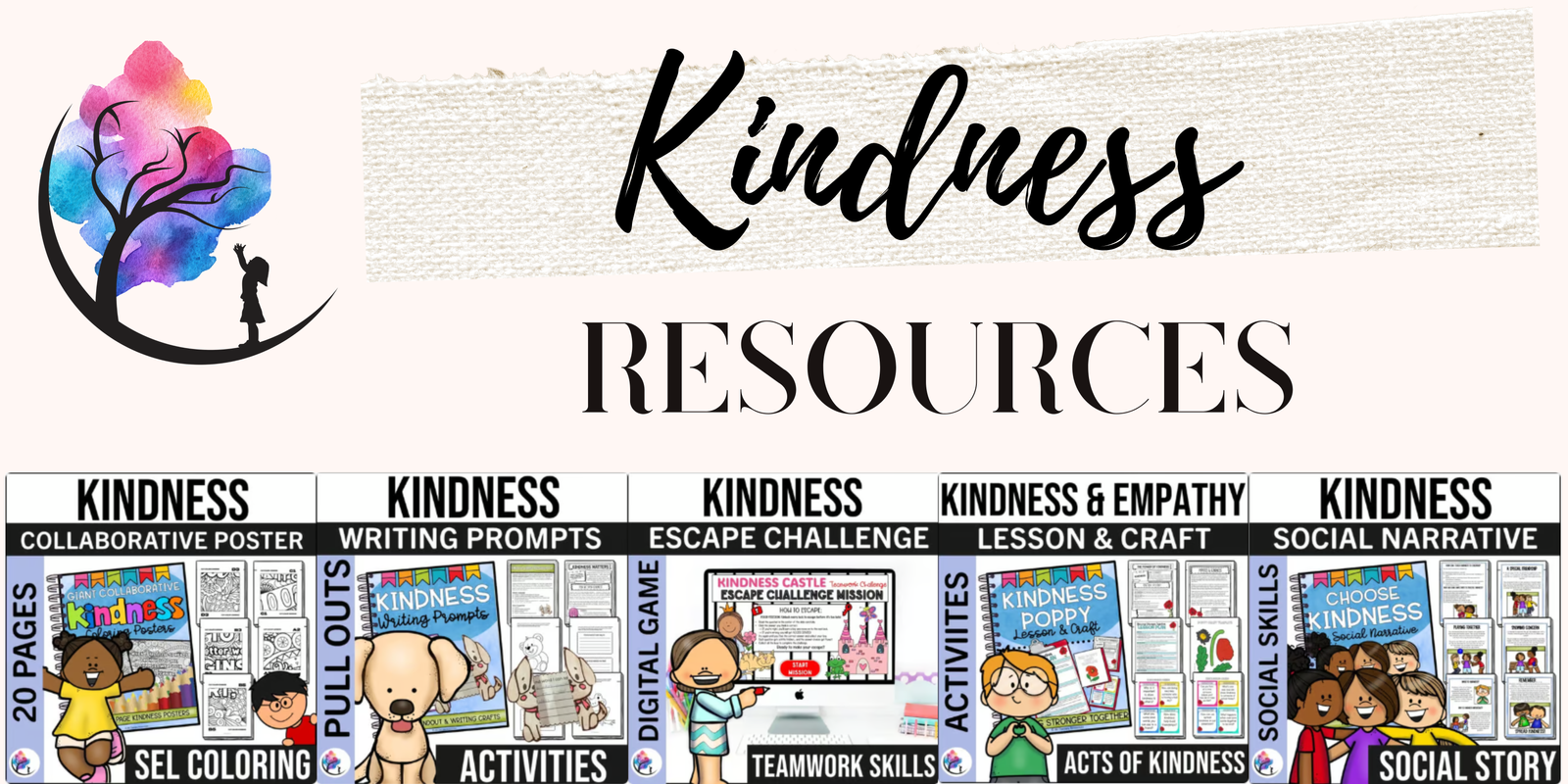
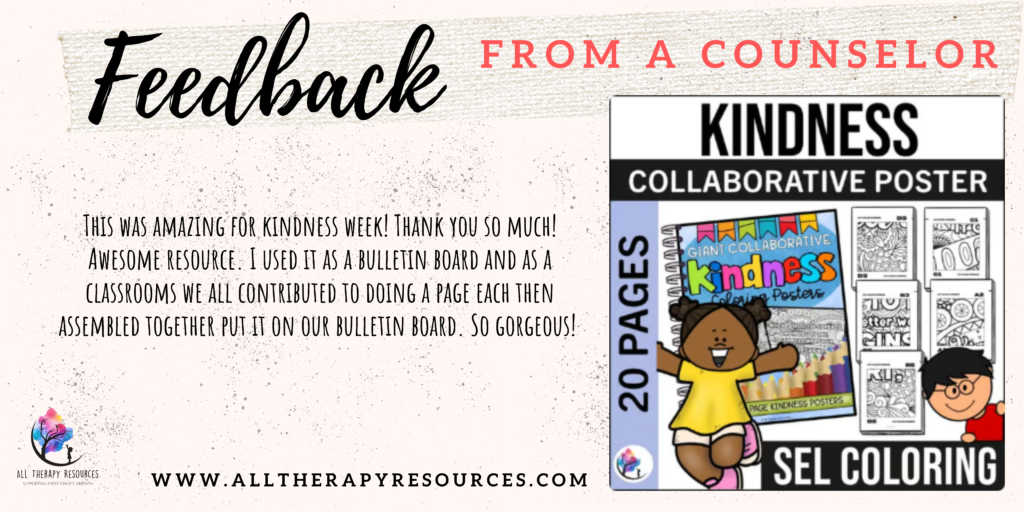
A Kindness Collaborative Coloring Poster is a classroom activity where students work together to color individual sections of a large poster. Each student contributes a small piece, and when all the pages are combined, they form a large visual message promoting kindness.
This activity allows every student to contribute while still working toward a shared goal.
The kindness resource includes:
- 20 printable coloring pages
- Pages that assemble into a 30 × 37.5-inch collaborative poster
- A finished display perfect for classroom bulletin boards or hallway displays
Once assembled, the poster becomes a daily visual reminder for students to practice kindness and respect toward others.
How the Kindness Poster Activity Works
Implementing the Kindness Coloring Poster Activity in your classroom is simple, but its impact can be profound. This activity is designed to be low-prep, flexible, and adaptable for a variety of classroom settings. Here’s a detailed step-by-step guide for teachers to ensure a smooth and meaningful experience:
Step 1: Print the Poster Pages
Begin by printing the 20 individual poster pages included in the resource. Each page is standard 8.5 × 11 inches, making it easy to print on any classroom printer. You can choose color or black-and-white printouts, depending on your classroom resources and how you want the final poster to look.
Step 2: Assign Poster Sections
Distribute the pages to students in a way that ensures everyone contributes equally to the final poster. For larger classrooms, students can work in pairs or small groups. Assigning sections also teaches students about fair responsibility and teamwork, as every piece is important to completing the overall visual message.
Step 3: Color and Decorate
Students can use crayons, markers, colored pencils, or even watercolor paints (if appropriate) to decorate their assigned section. Encourage them to express their creativity, add positive messages, and incorporate patterns or symbols of kindness. This step not only fosters artistic expression but also reinforces the SEL message as students reflect on what kindness means to them while designing their section.
Step 4: Assemble the Poster
Once all pages are completed, combine them to form the large 30 × 37.5-inch poster. Assembly can be a fun classroom activity itself, teaching students cooperation, problem-solving, and attention to detail. Once assembled, the poster can be laminated or displayed on a bulletin board, classroom door, hallway, or counseling space, serving as a daily visual reminder of kindness in action.
Step 5: Reflect and Discuss
After displaying the poster, take a few moments as a class to reflect on the activity. Ask students:
- How did it feel to contribute to a larger project?
- What acts of kindness can we practice in our classroom this week?
- How does seeing everyone’s work together inspire teamwork and empathy?
This reflection strengthens the SEL component, making the activity more than just an art project—it becomes a powerful learning experience that students carry into their daily interactions. play that represents teamwork, kindness, and creativity.
When to Use This Kindness Activity in the Classroom
One of the best things about this resource is its flexibility. Teachers can use this collaborative poster activity at many different times during the school year.
Popular times teachers use kindness poster activities
- World Kindness Day
- Random Acts of Kindness Week
- Social Emotional Learning lessons
- Character education units
- Classroom community-building activities
- Back-to-school classroom activities
Because it is a print-and-go activity, it also works well for:
- Morning work
- Early finishers
- Indoor recess
- Substitute teacher plans
Teachers can easily integrate the activity into their SEL routines, morning work, early finishers, or substitute lesson plans.
SEL Skills Students Develop Through This Activity
The Kindness Coloring Poster Activity is more than just a collaborative art project—it’s a tool for comprehensive social-emotional learning. Students engage with multiple SEL competencies while completing their individual sections, fostering emotional intelligence, empathy, and cooperative skills.
1. Empathy
Students learn to recognize and appreciate the feelings of others. Coloring a shared kindness poster encourages them to think about how small acts of generosity and care impact their classmates and the classroom community. This process develops perspective-taking skills and helps students understand the importance of being thoughtful and compassionate.
2. Collaboration and Teamwork
Completing the poster as a group teaches students the value of working together toward a common goal. They learn to communicate ideas, negotiate responsibilities, and support one another, which are essential skills for both academic and personal success. This collaborative effort helps build trust, patience, and mutual respect among peers.
3. Self-Expression and Creativity
While students are guided by the theme of kindness, they are encouraged to use their unique creativity and artistic style in their individual sections. This helps them develop confidence in expressing ideas visually and allows them to explore personal interpretations of kindness. Creative expression is also linked to improved focus, problem-solving, and emotional regulation.
4. Responsibility and Accountability
Each student is responsible for completing their part of the poster. This teaches personal accountability, as the success of the final project depends on every participant. Students learn that their contribution matters, reinforcing the connection between individual effort and group outcomes.
5. Emotional Awareness and Mindfulness
Engaging in coloring and collaborative art encourages mindfulness, helping students slow down, focus on the task, and reflect on positive values. The activity also provides an opportunity to discuss emotions and reactions, reinforcing emotional literacy and coping strategies in a supportive environment.
6. Communication and Problem-Solving
During the assembly and discussion of the poster, students may encounter challenges in arranging pages or deciding on design elements. These situations help them practice effective communication, conflict resolution, and cooperative problem-solving skills, all of which are essential components of SEL.
By engaging in this project, students not only create a beautiful classroom display, but they also internalize critical social-emotional skills that support kindness, empathy, and collaboration long after the activity is complete.
Where to Display Your Kindness Poster
Once assembled, the collaborative poster makes an excellent classroom display that students will feel proud of.
Teachers often display their posters:
- On classroom bulletin boards
- On the classroom door
- In school hallways
Seeing their completed project reminds students that every person contributed to something meaningful.
Final Thoughts: Building a Kind Classroom Community
Teaching kindness doesn’t have to be complicated. Simple collaborative activities can have a powerful impact on students.
A Kindness Coloring Poster Bulletin Board Activity is a creative way to promote empathy, teamwork, and positive behavior while engaging students in a fun art project.
By combining creativity with social-emotional learning, teachers can help students understand that kindness is something everyone can contribute to—one small action at a time.
Frequently Asked Questions
What is a collaborative coloring poster activity?
A collaborative coloring poster activity is a classroom project where each student colors one section of a larger poster. When all the pages are combined, they create a single large artwork that represents teamwork and shared creativity.
How does a kindness coloring poster support social-emotional learning?
A kindness coloring poster helps students practice empathy, cooperation, and positive communication. Activities like this encourage students to reflect on how acts of kindness can improve relationships and create a supportive classroom environment.
What grade levels is a kindness poster activity best for?
Kindness coloring poster activities work well for elementary and middle school students. Still, they can also be adapted for older students during social-emotional learning lessons, character education programs, or classroom community-building activities.
When can teachers use a kindness bulletin board activity?
Teachers can use kindness poster activities during World Kindness Day, Random Acts of Kindness Week, SEL lessons, classroom community-building activities, or morning work. They are also great for early finishers or substitute teacher plans.
How do you assemble a collaborative classroom poster?
Teachers print each poster page, allow students to color their individual sections, and then assemble the pages to form the final poster. The completed poster can be displayed on a classroom bulletin board, hallway wall, or classroom door.