

Have you ever noticed how quickly some students go from calm… to completely overwhelmed?
One small frustration.
One unexpected change.
One peer interaction.
And suddenly—it’s like everything explodes.
If you’ve seen this in your classroom, counseling room, or even at home, you’re not alone. And more importantly—this isn’t about “bad behavior.” It’s about regulation.
Understanding the “Fuse”: What’s Really Happening in the Brain
When I talk about helping students “calm their fuse,” I’m really talking about what’s happening neurologically.
When a child perceives a threat (and yes—this can be something as simple as embarrassment or frustration), the brain’s emotional center—the amygdala—activates rapidly. This is often referred to as an “amygdala hijack.”
At that moment:
- The thinking brain (prefrontal cortex) goes offline
- The body shifts into fight, flight, or freeze
- Reasoning, perspective-taking, and impulse control decrease
This is why telling a child to “just calm down” rarely works.
They can’t access calm yet.
They need tools to get there.
Research in neuroscience and trauma-informed practice consistently shows that students must first regulate their nervous system before they can reflect, problem-solve, or make thoughtful choices.
This is the foundation of everything we do in emotional regulation work.
Why “Calm Your Fuse” Works So Well for Students
One thing I’ve learned over the years is this…
Children don’t connect with lectures—they connect with meaning.
And that’s why I love using the “fuse” metaphor.
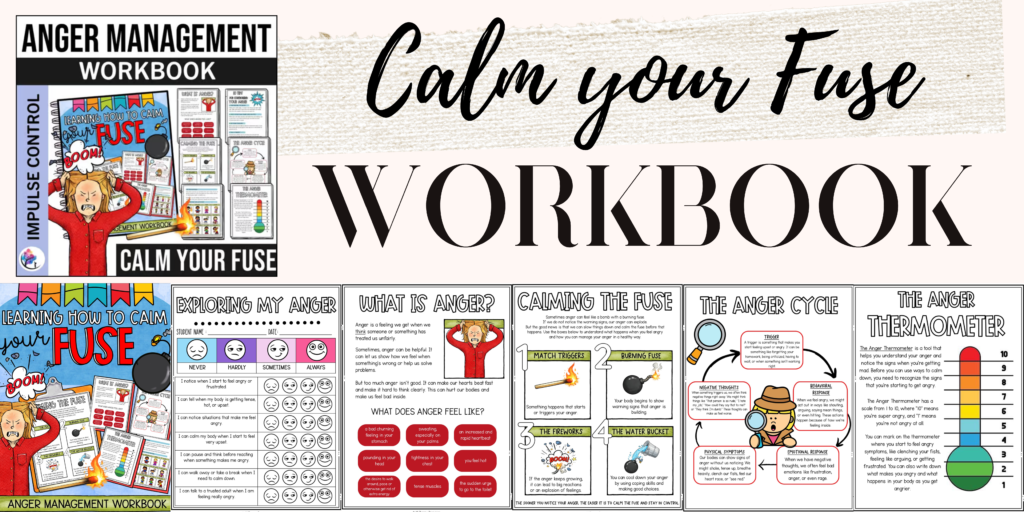
It gives students:
- A visual way to understand escalation
- A concrete way to notice warning signs
- A language to describe what’s happening inside their body
I’ve seen students say things like:
“My fuse is getting shorter.”
“I’m about to explode.”
“I need to cool down before I say something I regret.”
And that right there—that awareness—is the first step toward regulation.
What This Looks Like in Practice (From My Counseling Room)
Let me give you a real snapshot of how this plays out.
I was working with a small group of upper elementary students who were quick to react—big emotions, fast escalation, and a lot of regret afterward.
Instead of jumping straight into “fixing behavior,” we slowed it down.
First, we explored:
What does anger actually feel like in your body?
Students began identifying:
- Tight fists
- Faster breathing
- Hot face
- Racing thoughts
And honestly, this part is powerful. Because many students have never been taught to notice their internal cues.
Next, we moved into understanding triggers.
Not just “what happened,” but:
- What did you think?
- What did you feel?
- What made it harder to stay calm?
And here’s where it gets interesting…
Students started realizing:
“It wasn’t just what they said—it was what I thought they meant.”
“I thought I was being laughed at.”
“I felt like I had no control.”
That insight is everything.
Breaking Down the Anger Cycle (So Students Can Interrupt It)
One of the most important pieces of this work is helping students understand that anger follows a pattern.
Not random. Not unpredictable.
A cycle.
When students can see the sequence, they can start to interrupt it.
We guide them to recognize:
- Triggers
- Thoughts
- Physical sensations
- Emotional build-up
- Reactions
- Consequences
And then we ask the powerful question:
Where could you pause?
Even identifying one small moment where they could pause begins to build control.
Teaching Regulation Before Reaction
Here’s something I always say:
We don’t teach calm in the middle of chaos.
We teach it before the moment.
Students need repeated, low-pressure opportunities to practice strategies so that when they are overwhelmed, the skill is already there.
Some of the most effective strategies I’ve seen students genuinely use include:
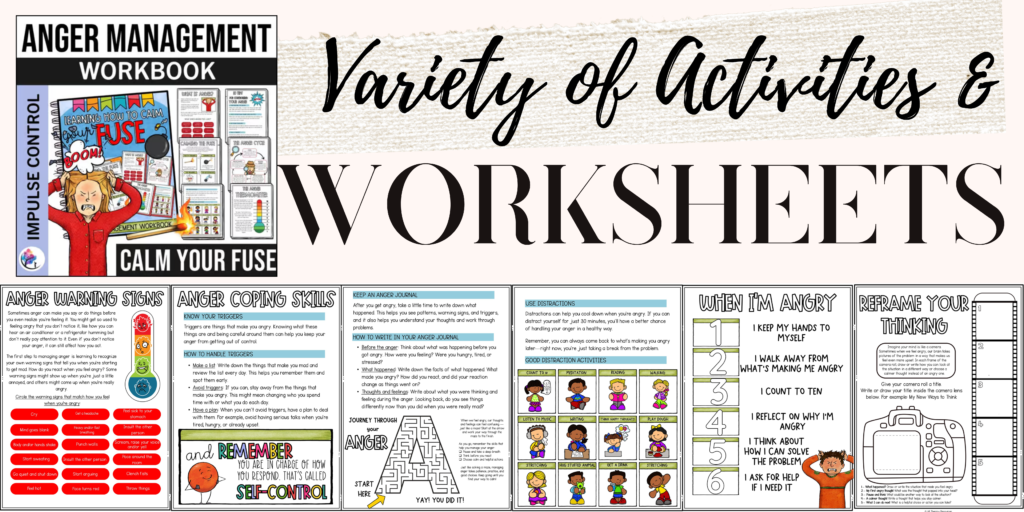
- Deep breathing with structure (not just “take a breath”)
- Pausing and stepping away
- Using visual supports like an anger thermometer
- Naming the feeling instead of acting it out
- Choosing a response instead of reacting impulsively
And yes—this takes practice.
But when it clicks, the shift is noticeable.
The Power of Reflection (This Is Where Growth Happens)
One of my favorite parts of this kind of work is what happens after the moment.
Not punishment. Not shame.
Reflection.
When students are calm, we explore:
- What happened?
- What were you feeling?
- What did you do?
- What could you try next time?
I’ve had students go from:
“I don’t know why I did that…”
To:
“Next time I’m going to walk away before I get too angry.”
That is emotional intelligence developing in real time.
Why This Approach Is Backed by Research
Everything in this approach aligns with evidence-based practices in:
- Cognitive Behavioral Therapy (CBT)
- Social Emotional Learning (SEL)
- Trauma-informed education
Research consistently shows that when students:
- Build emotional awareness
- Learn to identify triggers
- Practice regulation strategies
- Reflect on behavior
They demonstrate:
- Improved self-control
- Reduced behavioral incidents
- Increased problem-solving ability
- Stronger peer relationships
And importantly—they begin to feel more in control of themselves.
What I Love About Teaching “Calm Your Fuse”
Let me be real for a moment—this is one of those areas I’m deeply passionate about.
Because I’ve seen what happens when students don’t have these skills.
They get labeled.
They get misunderstood.
They start believing they’re “the problem.”
But they’re not.
They just haven’t been taught how to regulate yet.
And I love resources, lessons, and approaches that:
- Break things down simply
- Give students language
- Build awareness step-by-step
- Actually stick in real-life moments
Because when a student pauses instead of reacting…
When they take a breath instead of lashing out…
When they choose differently…
That’s powerful.
That’s life-changing.
Final Thoughts: Small Skills, Big Impact
Helping students “calm their fuse” isn’t about eliminating anger.
Anger is normal. Healthy. Human.
It’s about helping them:
- Recognize it early
- Understand it
- Respond to it safely
Because when students learn that they can pause, regulate, and choose their response…
Everything changes.
Behavior shifts.
Confidence grows.
Relationships improve.
And they begin to see themselves differently.
FAQs
What age is appropriate to start teaching anger management skills?
Children can begin learning basic emotional awareness and regulation skills as early as preschool, with strategies becoming more structured and reflective in upper elementary and middle school.
Why do some students struggle more with anger than others?
Differences in temperament, life experiences, trauma, executive functioning, and emotional development all play a role in how students experience and express anger.
What is the best way to teach emotional regulation?
The most effective approach includes explicit teaching, modeling, visual supports, repeated practice, and reflection in a safe and supportive environment.
How long does it take for students to improve emotional regulation?
It varies, but with consistent teaching and practice, many students begin to show noticeable improvements in awareness and response within weeks to months.
How can teachers support students during moments of anger?
Stay calm, reduce language, offer space, and guide students toward regulation strategies rather than immediate problem-solving or consequences.