

Are you noticing an increase in late arrivals, frequent absences, or students who seem disengaged from school altogether? You’re not alone. School counselors, teachers, and school psychologists across all grade levels are seeing growing challenges with student attendance, motivation, and school readiness. For some students, attendance difficulties stem from anxiety or avoidance. For others, it’s a lack of routine, executive functioning skills, or understanding of how daily habits impact long-term success.
Improving school attendance is no longer just about tracking data or sending reminders home. It requires explicit teaching, supportive interventions, and engaging activities that help students understand why attendance matters and how their daily choices influence their success. When we move beyond punitive approaches and instead teach school success skills, we begin to see meaningful change in student mindset, motivation, and responsibility.
Over time, when students are supported to build strong attendance habits and school routines, educators often report increased engagement, improved confidence, and a noticeable shift in how students approach their learning and daily responsibilities.
Why Attendance Skills Must Be Taught — Not Assumed
Many students who struggle with attendance are not intentionally disengaging from school. Instead, they may lack organizational skills, morning routines, coping strategies, or motivation. Some experience anxiety around school transitions or academic demands. Others simply have not been taught how consistent attendance connects to their future goals and success.
When attendance and school success skills are explicitly taught, we often begin to hear students using language such as:
- “I know being here helps me learn.”
- “I’m trying to get here on time this week.”
- “I packed my bag last night so I wouldn’t be late.”
- “Missing school makes things harder to catch up.”
Teachers frequently report:
- Improved punctuality
- Increased morning readiness
- More consistent attendance patterns
- Greater student accountability
- Improved engagement once at school
These small but significant shifts show that students are beginning to internalize the value of attendance and develop ownership of their routines.
Moving Beyond Punishment to Supportive Attendance Strategies
Traditional attendance interventions often focus on consequences rather than skill-building. However, students are far more responsive when they understand the “why” behind attendance and are given practical strategies to succeed.
Within our Attendance Lessons Bundle, we take a supportive, skills-based approach. Rather than simply telling students that attendance matters, these interactive lessons help them explore how daily choices, routines, and mindset influence their success.
Through structured scenarios and guided discussions, students practice:
- Decision-making around school attendance
- Morning and organizational routines
- Coping strategies for challenging days
- Goal setting and motivation
- Understanding long-term impacts of attendance
This approach supports students who are experiencing mild attendance concerns as well as those needing targeted intervention.
Engaging Students Through Interactive Attendance Activities
One of the most effective ways to teach attendance and school success skills is through interactive, scenario-based learning. Students engage more deeply when they can explore realistic situations and reflect on their own choices.
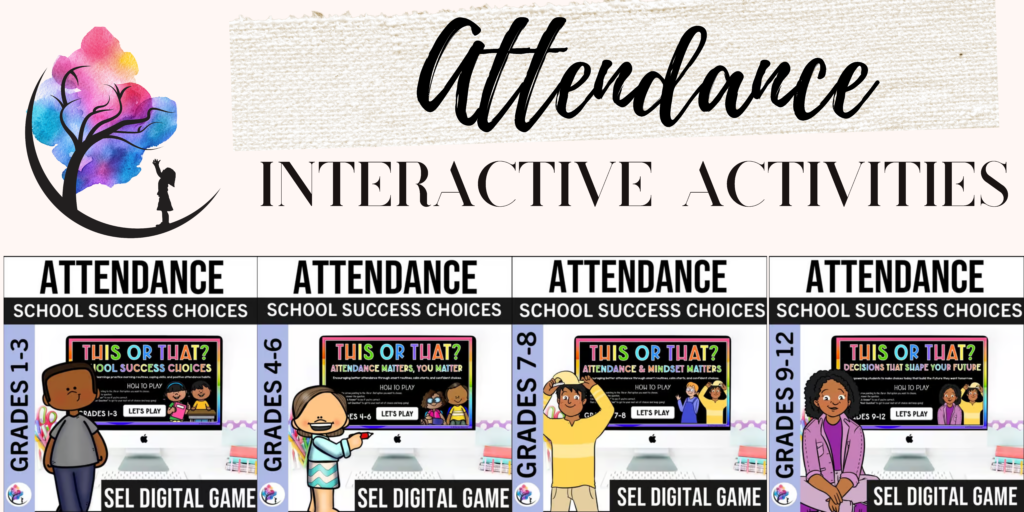
Within our attendance-focused digital games for Grades 1–12, students explore real-life scenarios related to school routines, punctuality, motivation, and responsibility. These “This or That” decision-making activities encourage students to think critically about how daily habits affect their learning and future opportunities.
Educators using these activities often report:
- Increased student participation in discussions about school habits
- Greater awareness of personal responsibility
- Students identifying barriers to attendance and problem-solving solutions
- Improved morning routines and preparation
- Increased willingness to attend and engage
Because the activities feel interactive and supportive rather than corrective, students are more open to reflecting on their behavior and making positive changes.
Supporting Younger Students to Build Strong Attendance Foundations
For younger students, attendance skills often begin with simple routines and understanding expectations. Within our Grades 1–3 attendance activities, students explore:
- Morning routines and preparation
- Being ready to learn
- Coping strategies for transitions
- Understanding why school is important
After implementing these activities, many educators notice students becoming more independent with morning preparation and more confident in discussing school expectations.
By Grades 4–6, students begin connecting attendance to responsibility, organization, and academic success. Upper elementary lessons focus on building executive functioning skills, helping students understand how routines and planning support consistent attendance.
Supporting Middle and High School Attendance and Motivation
As students move into middle and high school, attendance challenges often become more complex. Motivation, mindset, and personal responsibility play a larger role. Students may struggle with time management, stress, or disengagement.
Within our middle and high school attendance resources, students explore:
- Long-term impacts of attendance
- Goal setting and future planning
- Managing stress and motivation
- Decision-making and accountability
- Building consistent routines
Educators frequently report that older students begin reflecting more deeply on how attendance connects to their goals. Some begin setting personal attendance targets, while others show improved readiness and engagement once at school.
One counselor shared that after implementing attendance-focused lessons, a student commented, “I didn’t realize missing days was making everything harder.” This type of insight is often the turning point toward improved attendance patterns.
What Changes Can You Expect When Students Develop Attendance Skills?
When attendance is approached as a teachable life skill rather than simply a rule, meaningful change begins to occur. Schools using structured attendance activities often report:
- Improved punctuality
- Increased consistency in attendance
- Stronger morning routines
- Greater student ownership of choices
- Improved classroom engagement
- Reduced avoidance behaviors
- More positive conversations about school
While attendance challenges may not resolve overnight, consistent, supportive instruction helps students build habits that support long-term success.
Practical Tips for Strengthening Attendance in Your School
If you are looking to improve student attendance and engagement, consider these practical strategies:
- Teach attendance and routine skills explicitly
- Use scenario-based discussions to build awareness
- Help students connect attendance to personal goals
- Provide visual reminders and checklists for routines
- Celebrate improvements in attendance and punctuality
- Collaborate across staff to maintain consistent messaging
When students feel supported rather than judged, they are more likely to engage positively and take ownership of their school experience.

Supporting Attendance Success with Ready-to-Use Resources
Our attendance-focused SEL resources were created to support school counselors, teachers, psychologists, and attendance teams with engaging, ready-to-use activities that build real-life school success skills.
Many educators begin by introducing attendance concepts through our interactive digital games and then continue reinforcing routines and decision-making skills through ongoing SEL lessons. This layered approach helps students not only understand why attendance matters but also develop the skills needed to maintain consistent routines and engagement.
You can also explore the All Therapy Resources membership for ongoing access to a growing library of social-emotional learning, behavior, and school success resources designed for real-world school settings.
Frequently Asked Questions
Why is school attendance important for students?
Consistent attendance supports academic progress, social development, and confidence. Students who attend regularly are more likely to stay engaged, build relationships, and achieve long-term success.
How can schools improve student attendance?
Schools can improve attendance by teaching routines, executive functioning skills, and motivation strategies while creating supportive environments that encourage engagement rather than punishment.
What causes attendance problems in students?
Attendance challenges may stem from anxiety, lack of routines, organizational difficulties, disengagement, or external stressors. Addressing underlying skills and support needs can improve outcomes.
Can attendance skills be taught in SEL lessons?
Yes. Attendance habits, routines, and responsibility can be taught through SEL and executive functioning lessons that help students understand and practice school success behaviors.
What grade levels should attendance lessons target?
Attendance skills can be taught from early elementary through high school. Younger students focus on routines and readiness, while older students explore motivation, responsibility, and long-term goal setting.