
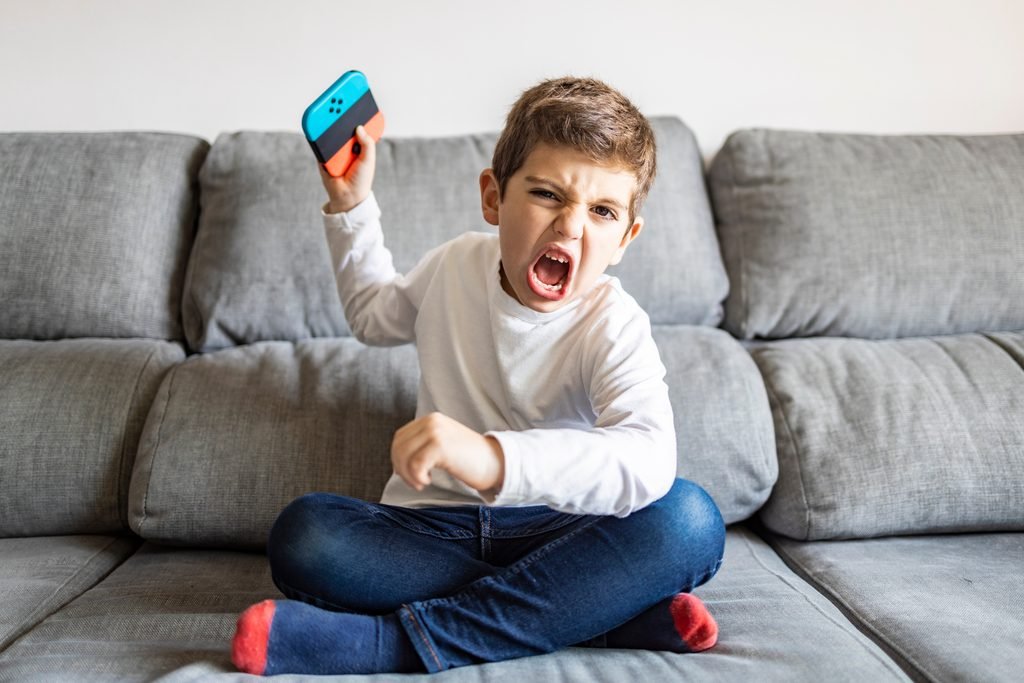
A child who calls out before hearing the question, grabs the preferred marker, or rushes into a peer conflict is not necessarily choosing to be defiant. Often, the gap is between having a reaction and having enough time, language, and regulation to choose a response. Well-chosen impulse control games for children make that gap visible and practiceable without turning support into a lecture.
For busy school counselors, therapists, educators, and caregivers, games offer a useful advantage: they create repeated opportunities to stop, notice a cue, wait, shift attention, and recover after a mistake. Those are the small, functional behaviors that support safer choices in classrooms, groups, sessions, and at home.
Why games are useful for impulse control practice
Impulse control is part of executive functioning and self-regulation. It involves inhibiting an immediate action long enough to consider what is happening, what is expected, and what might help. A child may understand a rule during a calm conversation yet struggle to use it when excited, disappointed, overstimulated, or worried.
Games allow adults to lower the stakes while keeping the skill demands real. A child can practice waiting for a signal, tolerating an unexpected change, or restarting after an error in a setting where the consequence is simply another turn. This is especially valuable for children who have experienced frequent correction. The message becomes, “We are practicing a brain skill,” rather than, “You keep making bad choices.”
The game itself is not the intervention. The learning comes from how the adult structures it: naming the target skill, adjusting the demand, observing patterns, and connecting practice to a situation that matters to the child.
Impulse control games for children in real settings
The most effective activities are usually simple, brief, and easy to repeat. A complicated game may be engaging once, but a familiar format gives children more cognitive space to practice the actual regulation skill.
Red Light, Green Light with added regulation cues
This classic movement game is a strong fit for younger children and can be adapted well beyond early elementary grades. On “green light,” children move. On “red light,” they stop. Add “yellow light” for slow movement, “blue light” for one deep breath, or “purple light” for a quiet body pose.
The value is not just stopping quickly. Pause after several rounds and ask what helped their bodies stop. Some children may notice that looking at the adult, planting their feet, or putting hands together made the stop easier. That reflection turns movement into a transferable strategy.
For a small counseling group, invite children to take turns calling the cues. For a child who becomes dysregulated by competition, remove elimination entirely. Everyone simply returns to the last spot when a cue is missed.
Freeze and Go with music or rhythm
Freeze games practice response inhibition in a playful, body-based way. Play a short section of music or clap a rhythm, then stop suddenly. Children freeze until the sound starts again. To increase the challenge, ask them to freeze in a specific pose or listen for two different cues: one means freeze, while another means switch movements.
This format can also support children who benefit from sensory and motor input before seated work. Keep the instructions brief and predictable. A child with difficulty processing auditory cues may do better with a matching visual card or hand signal.
Building Self-Control and Problem-Solving Skills Through Structured Activities
While games provide valuable opportunities to practice impulse control, some children benefit from more structured instruction that helps them understand why impulsive reactions occur and how to respond differently. Developing self-control involves several interconnected skills, including emotional awareness, calming strategies, flexible thinking, problem-solving, and decision-making.
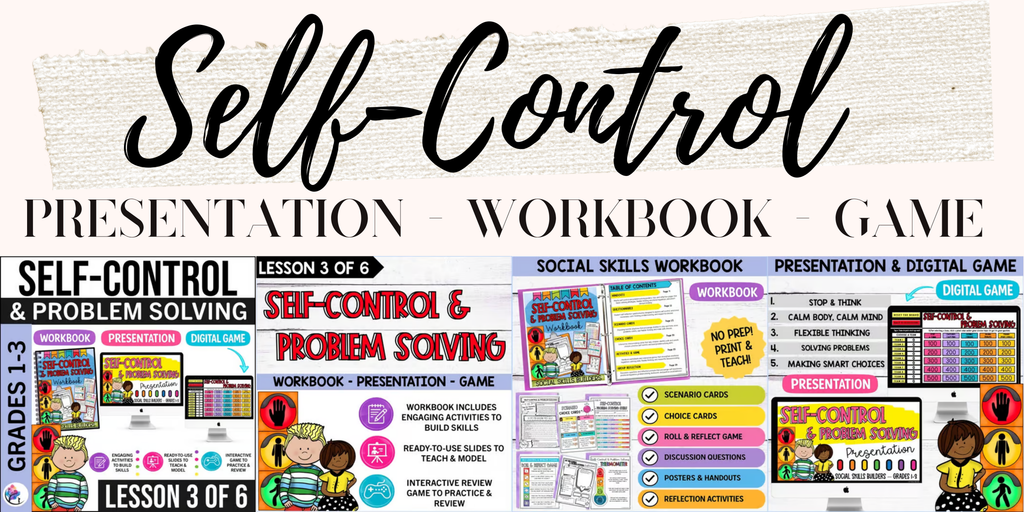
Our Self-Control & Problem Solving Lesson at All Therapy Resources® brings these skills together through a comprehensive approach that combines a psychoeducational PowerPoint presentation, interactive workbook activities, real-world scenarios, guided reflection, and a digital review game. Students explore five key areas: Stop and Think; Calm Body, Calm Mind; Flexible Thinking; Solving Problems; and Making Smart Choices.
By combining direct instruction with experiential activities and opportunities for reflection, the lesson helps children move beyond simply knowing what they should do toward practicing how to respond when situations become challenging. The digital review game reinforces learning in an engaging format, while the workbook and discussion activities allow students to explore their thoughts, feelings, and choices more deeply.
This lesson is also part of our six-part Social Skills Group Activities Bundle, which extends learning into friendship skills, emotional regulation, respecting boundaries, and navigating tricky social situations. These areas are closely connected to impulse control, particularly when children are managing peer disagreements, waiting their turn, coping with disappointment, or responding to unexpected changes. Together, the lessons offer school counselors, therapists, and educators a structured way to support social-emotional development through psychoeducation, practical activities, and game-based learning.
Simon Says for listening before acting
Simon Says works because children must pause long enough to decide whether the instruction includes the required phrase. It targets listening, working memory, and inhibition at the same time.
Use actions connected to settings the child knows: “Simon says put your hands in your lap,” “Simon says take one step back,” or “Touch your shoulder.” After a round, normalize mistakes. You might say, “Your body was ready to move before your brain checked the whole direction. What could help you wait for the first few words next time?”
For older children, shift from silly body actions to social scenarios. The leader reads a response, and players act only when the response shows a thoughtful pause. For example, “Simon says take a breath before sending an angry message.” This keeps the activity developmentally respectful while practicing the same skill.
Stop-and-Think card challenges
A set of simple visual cards can turn everyday impulse-control moments into a quick tabletop game. Present a situation such as, “Someone bumps into you in line,” “You want to be first,” or “You see an answer you know.” The child draws a card that prompts one step: Stop, Name the Feeling, Think of Choices, or Choose a Safe Next Step.
Rather than looking for one perfect answer, guide children to generate two or three workable options. This matters because impulse control is often harder when a child believes there is only one way to respond. A child might say, “I could tell the teacher,” “I could ask for space,” or “I could use a calm voice and say, ‘Please stop.’”
This activity is especially useful in individual counseling, social skills groups, and special education settings because the scenarios can be matched to the child’s developmental level and daily environment. Keep examples emotionally realistic, but avoid reenacting highly distressing experiences unless that work fits the child’s individualized plan and clinical context.
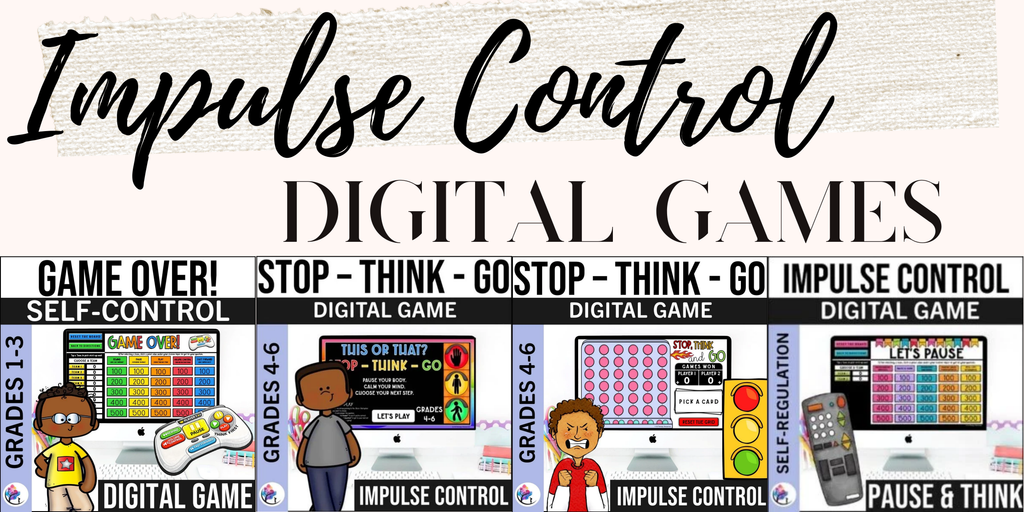
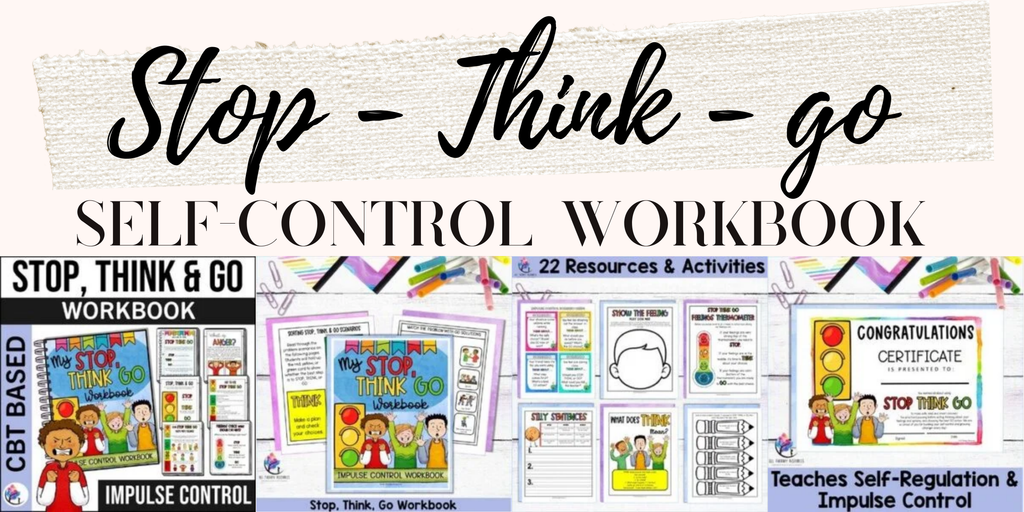
To help children put these steps into practice, our STOP, THINK & GO Impulse Control Workbook uses a familiar traffic light framework to teach self-regulation and thoughtful decision-making. Students learn to STOP and pause before reacting, THINK about their feelings and available choices, and GO with a safe, responsible response. Through relatable scenarios, role-play activities, interactive worksheets, and guided reflection, children have opportunities to rehearse these skills in a supportive environment. The visual framework also gives school counselors, therapists, and educators a simple, consistent language they can reinforce beyond the activity, helping children connect what they practice during sessions with everyday situations in the classroom, playground, and home.
Don’t Pop My Bubble! Teaching Impulse Control Through Play
Helping children develop impulse control involves more than reminding them to stop and think. They also need opportunities to recognize what triggers their reactions, understand their emotional and physical warning signs, and practice choosing a response before emotions take over.
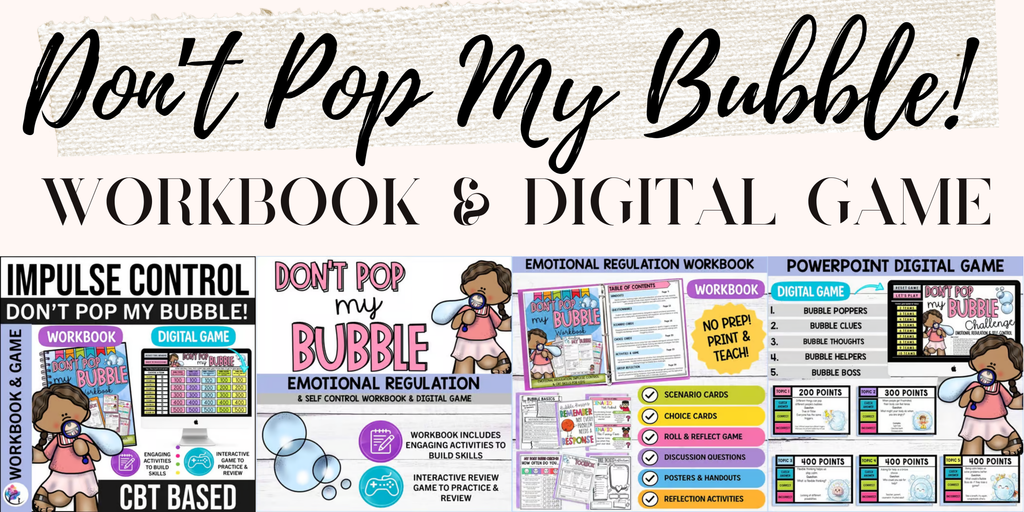
Our Don’t Pop My Bubble! – Be a Bubble Boss workbook and interactive digital game uses a playful, CBT-informed approach to help children explore these skills. Through the Bubble Boss Framework, students learn to identify their “Bubble Poppers” (everyday frustrations and triggers), notice their “Bubble Clues” (early emotional and physical signals), examine their thoughts, and discover coping strategies that support more thoughtful choices.
The resource combines scenario cards, guided reflection, coping skills activities, and interactive gameplay to reinforce emotional regulation, frustration tolerance, problem-solving, and self-control. Rather than expecting children to manage difficult emotions perfectly, the activities encourage them to recognize when they need to pause, consider their options, and practice responding in ways that feel safe and manageable.
For school counselors, therapists, and educators, the workbook and digital game can be used together or independently during individual counseling, small groups, SEL lessons, and behavior interventions. The familiar Bubble Boss theme provides a consistent, child-friendly language for practicing impulse control skills and applying them to everyday situations.
Pass the Object for waiting and turn-taking
In a circle, pass a small object while a timer, music, or visual signal is active. The child holding the object when the cue changes completes a brief prompt, such as naming a coping skill, sharing a favorite activity, or choosing the next category. The central task is waiting for the object to arrive without reaching, calling out, or taking another child’s turn.
This game is useful because it exposes the social side of inhibition. Many children can wait when alone but struggle when peers are talking, moving, or receiving attention. Adults can reinforce observable effort: “You wanted to answer, and you held your thought until it was your turn.” Specific feedback is more useful than broad praise because it identifies the behavior the child can repeat.
Copycat Switch
One person leads a repeated movement pattern, such as clap-clap-tap, and the group copies. On a switch signal, children must do the opposite movement, change leaders, or follow a new pattern. The goal is cognitive flexibility as well as inhibition: stopping one response and shifting to another.
This can be a helpful bridge for children whose impulsivity appears when routines change. If a child becomes upset when rules shift, begin with predictable switches and prepare them in advance: “The change is part of the game. We can use a pause, look, and try again.”
How to make a game therapeutic rather than merely entertaining
A few intentional choices make a significant difference. Begin by naming one skill in child-friendly language, such as “pause before you act,” “wait for the whole direction,” or “give your body a brake.” Avoid trying to target every challenge at once. A child who is working on stopping their body may not also be ready to manage losing, complex rules, and peer negotiation in the same activity.
Build in a short reflection before and after play. Before starting, ask what situations make it hard to wait or stop. Afterward, ask what their brain or body did when the game became tricky. These conversations help children connect practice with real-life moments, including lining up, joining a game, responding to teasing, or asking for help.
Also consider the child’s regulation needs. Fast-paced games can be motivating for one child and overwhelming for another. Some children benefit from a clear visual schedule, fewer players, a slower pace, or movement breaks. Trauma-informed practice means offering choice where possible, keeping expectations predictable, and treating dysregulation as information rather than a reason for shame.
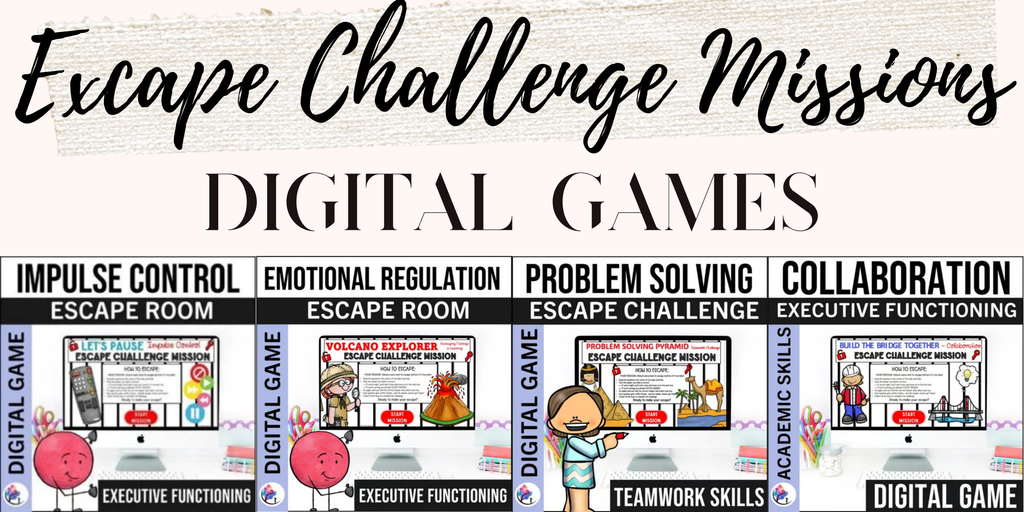
Interactive escape room challenges offer another way to turn games into meaningful learning experiences. At All Therapy Resources®, our Escape Challenge Missions combine psychoeducation, real-world scenarios, and collaborative problem-solving to help students develop essential social-emotional skills. Whether exploring impulse control, emotional regulation, problem-solving, or teamwork, students work together to navigate challenges, discuss possible responses, and make thoughtful decisions to progress through each mission. These activities encourage students to pause, consider different perspectives, communicate their ideas, and reflect on the consequences of their choices. For school counselors, therapists, and educators, escape room activities provide an engaging way to reinforce self-regulation, executive functioning, and social-emotional learning while creating opportunities for discussion, reflection, and shared success.
Carrying the skill beyond the game
Generalization rarely happens automatically. Use the same brief cue across settings when possible: “Pause, look, choose,” or “Stop, breathe, think.” A teacher might use it before transitions, a counselor during a role-play, and a caregiver before a challenging routine. Consistency helps the cue become familiar when the child needs it most.
It can also help to send a simple practice idea home without expecting families to run a formal intervention. A caregiver can play a two-minute freeze game before dinner, practice waiting during a board game, or notice one moment when the child paused before reacting. Small repetitions often matter more than a long activity completed once.
More Ways to Support Impulse Control and Self-Regulation
At All Therapy Resources, we believe that meaningful learning happens when children have opportunities to explore, practice, and apply new skills in ways that feel engaging and achievable. Our growing membership library brings together practical, thoughtfully developed counseling resources, interactive games, social-emotional learning activities, and therapeutic interventions to support the important work you do every day.
Whether you’re helping children strengthen impulse control, develop emotional regulation skills, or build confidence in their choices, you’ll find resources designed to make those teaching moments a little easier.