
This article was written by Dr. Jack Dikian, an Australian-based psychiatry registrar, researcher, and writer who contributes to All Therapy Resources as a Clinical Contributor. Drawing on psychological research and clinical perspectives, Dr. Dikian explores the often-overlooked emotional struggles of children who appear to be coping in the classroom, highlighting the importance of recognizing distress that may remain hidden beneath outward compliance and academic achievement. Dr. Dikian’s contributions to All Therapy Resources reflect our shared commitment to fostering greater understanding of mental health, psychological wellbeing, and the complex factors that shape human behavior.
_____________________________________________________________________________________
Introduction
Literature increasingly highlights a problem that can be difficult for teachers to recognise some of the children who are struggling most are not disruptive, defiant or difficult to manage.
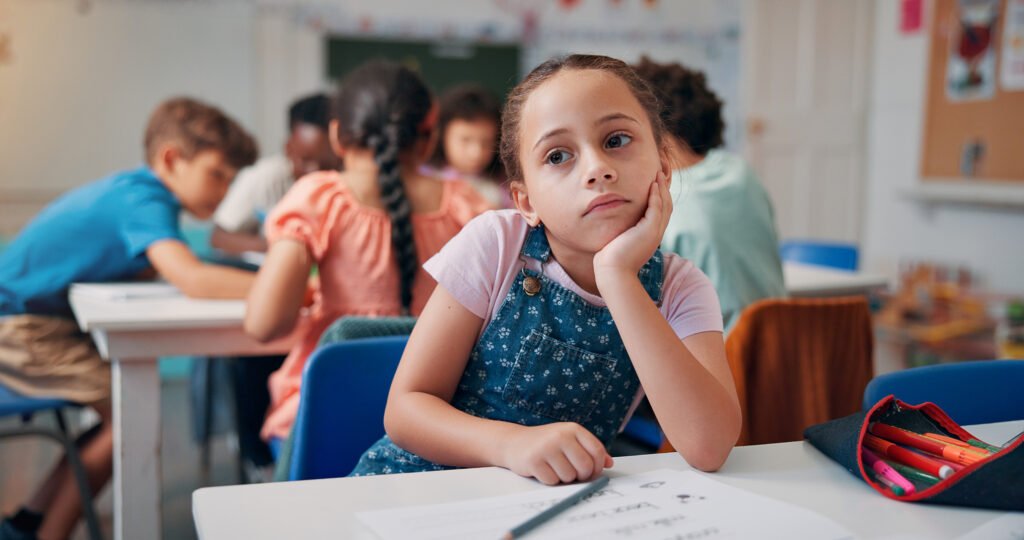
They are the children who sit quietly, follow instructions, complete their work and appear to be coping — while experiencing considerable emotional distress beneath the surface.
A significant challenge in the recognition of childhood mental health difficulties is the relative invisibility of internalising symptoms within the classroom environment. Research literature examines this problem through several overlapping concepts: internalising disorders, somatic symptoms, emotional withdrawal, masking, school belonging, perfectionism, adverse childhood experiences and unmet mental health needs.
These factors may interact in complex ways, influencing how psychological distress manifests, how readily it is recognised by teachers and other adults, and whether affected children receive timely assessment and appropriate support.
Children experiencing these difficulties may remain compliant, academically engaged and outwardly well-adjusted, while experiencing substantial psychological distress that is neither readily observable nor readily disclosed.
The central issue is the difference between what a teacher can observe and what a child may, a priori, be experiencing internally.
- A child may be academically successful but struggling with severe anxiety.
- A well-behaved student may be afraid of making even a minor mistake.
- A child who rarely speaks may be experiencing loneliness or social fear.
- A student who appears independent may be reluctant to ask for help because they fear appearing incapable.
Schools naturally notice behaviour that interrupts learning, but internal emotional distress can be much harder to detect. A child who acts out may attract immediate attention; a child who withdraws, becomes unusually compliant or silently stops participating may not.
An important qualification is that quietness itself is not evidence of mental illness. The concern is a persistent or significant change in a child’s emotional state, behaviour, relationships or functioning.
Factors
There are several factors that can explain why a child’s psychological distress develops, how it presents in the classroom, and why it may remain unrecognised. We have grouped these factors into two broad categories: those associated with the school environment, and those arising from the child’s individual psychological, developmental, familial and social circumstances.
These factors span both the home and school environments, with the interaction between the two often playing a significant role in shaping a child’s emotional wellbeing.
For the purposes of this discussion, we have placed particular emphasis on school-related factors, given the central role teachers and educational environments can play in recognising emerging distress, understanding its possible contributing influences, and facilitating timely support.
Outside class
Developmental and psychological factors influence how children experience distress and whether they can communicate it. Difficulty identifying, understanding or articulating feelings (alexithymia) often delay access to appropriate support.
Attachment difficulties — insecurity in relationships with family and teachers influence emotional regulation, trust and help-seeking, while persistent low self-esteem and negative self-concept beliefs about being inadequate, unlovable or incapable.
Developmental differences such as with age, cognitive maturity, language ability and emotional development may affect how distress is expressed.
Even when a child is experiencing significant emotional distress, the signs are not always recognized or understood. Limited mental health awareness among adults and children can make it difficult to identify when additional support is needed. Another barrier is diagnostic overshadowing, which occurs when a child’s emotional or behavioral difficulties are attributed to an existing diagnosis or disability rather than explored as potential signs of an underlying mental health concern.
Gender-related differences in presentation and recognition, influenced by expectations and possible referral biases. Cultural differences in emotional expression and in how families understand psychological distress.
School-based factors
1. Bullying and victimisation
A systematic review and meta-analysis published in 2017 examined 165 studies and found strong evidence linking bullying victimisation with anxiety, depression, poor mental health, self-harm and suicidal thoughts or behaviours.
The significance of bullying and peer victimisation extends beyond the immediate experience of being mistreated: persistent peer victimisation can affect a child’s emotional security, self-esteem, social development and sense of belonging, while contributing to anxiety, depressive symptoms and social withdrawal.
2. Perfectionistic classroom cultures
Classroom environments that place disproportionate emphasis on achievement, error-free performance, competition and external evaluation may contribute to heightened anxiety, fear of failure and maladaptive perfectionism.
When mistakes are interpreted as evidence of inadequacy rather than as an integral part of learning, children may develop an excessive fear of criticism, negative self-evaluation and an entrenched belief that their worth is contingent upon academic success.
3. Low school connectedness
A child’s perceived lack of acceptance, inclusion or meaningful connection with teachers and peers may adversely affect emotional wellbeing, self-esteem and psychological security.
When children feel socially marginalised, misunderstood or disconnected from their school community, they may experience loneliness, heightened social anxiety, reduced confidence and an increased vulnerability to depressive symptoms.
The absence of a trusted relationship with a teacher or supportive peer group may further limit opportunities to disclose distress, seek assistance or develop a sense of safety within the classroom.
Over time, perceived rejection or exclusion may contribute to social withdrawal, reduced classroom participation, disengagement from learning and a diminished sense of personal worth.
Importantly, these difficulties may remain largely invisible to teachers, particularly when children respond by becoming quiet, compliant or increasingly isolated rather than displaying disruptive behaviour.
4. Teacher–student relationship difficulties
The relationship between a teacher and student plays an important role in shaping a child’s sense of emotional safety, belonging and trust within the classroom. When children feel respected, understood and supported by their teachers, they are more likely to communicate their concerns, seek assistance and express emotional difficulties.
However, when that relationship lacks psychological safety or interpersonal trust, children may become hesitant to share their struggles, particularly if they fear being judged, dismissed or misunderstood.
When children perceive a teacher as unapproachable, dismissive, excessively critical or unpredictable, they may become reluctant to communicate their concerns, seek assistance or acknowledge difficulties for fear of embarrassment, rejection or negative consequences.
Where emotional concerns are minimised, behaviour is misinterpreted or academic performance takes precedence over individual wellbeing, children may come to believe that their difficulties are neither understood nor worthy of attention.
In response, some may withdraw, suppress their emotions, become excessively compliant or attempt to conceal their struggles to avoid attracting unwanted attention.
Such responses can inadvertently reinforce the perception that the child is coping adequately, allowing underlying distress to remain unrecognised.
5. Unrecognised learning difficulties
Undiagnosed or inadequately supported learning difficulties can contribute to persistent academic frustration, diminished self-esteem and psychological distress, particularly when a child’s difficulties are interpreted as a lack of effort, motivation or ability.
Children who struggle repeatedly with reading, writing or mathematics may become increasingly aware of the discrepancy between their performance and that of their peers, potentially developing feelings of shame, inadequacy and fear of negative evaluation
Others may compensate through perfectionism, excessive effort or rigid compliance to prevent their difficulties from becoming apparent. These compensatory behaviours can obscure the underlying problem, particularly when a child appears attentive, well behaved or motivated.
Over time, the interaction between unmet learning needs and repeated negative academic experiences may contribute to school-related anxiety, depressive symptoms, social withdrawal and reduced educational engagement.
Importantly, these outcomes are not inevitable consequences of dyslexia or dyscalculia; they are more likely to become concerns when learning difficulties remain unidentified, appropriate adjustments are absent, or the child develops a persistent perception of being incapable or unsuccessful.
6. Discrimination, stigma and cultural or linguistic barriers
Experiences of discrimination, prejudice, social marginalisation or cultural misunderstanding can adversely affect a child’s psychological wellbeing, sense of identity and perception of personal safety within the school environment.
Children who experience racism, religious intolerance, cultural exclusion or discrimination relating to disability, neurodivergence or socioeconomic circumstances may develop heightened vigilance, anxiety, diminished self-esteem and a reduced sense of belonging.
Repeated exposure to such experiences can contribute to feelings of rejection, helplessness and social isolation, particularly when the child perceives that adults are unwilling or unable to recognise or address the underlying problem.
Children from culturally and linguistically diverse backgrounds may also experience difficulties when teachers misinterpret culturally influenced communication styles, emotional expression or help-seeking behaviour.
Consequently, distress may be overlooked, incorrectly attributed to language proficiency or behavioural problems, or inadequately addressed. These factors can be particularly significant for children who remain outwardly compliant and reluctant to draw attention to themselves.
Culturally responsive teaching, access to appropriate language support, clear responses to discrimination and an environment in which differences are respected can help reduce these barriers and facilitate earlier recognition of psychological difficulties.
7. Inadequate school-based mental health resources and unclear referral pathways
Limited access to school counsellors, psychologists and other appropriately qualified mental health professionals can impede the early identification, assessment and management of psychological distress among students.
When school-based support services are insufficiently resourced, difficult to access or constrained by lengthy waiting periods, children experiencing emotional difficulties may remain without timely intervention.
These challenges can be compounded by unclear referral procedures, poorly defined responsibilities and uncertainty among teachers about how to respond when a student’s behaviour, emotional state or functioning raises concerns.
Teachers may recognise that a child is struggling but lack the training, time or institutional support necessary to determine the appropriate next steps. In such circumstances, concerns may be managed informally, referred inconsistently or left unaddressed until symptoms become more pronounced.
Furthermore, fragmented communication between schools, families, primary healthcare providers and specialist mental health services can interrupt continuity of care and leave important concerns unresolved.
8. Exclusionary disciplinary practices and their psychological consequences
Disciplinary approaches that rely heavily on suspension, expulsion, removal from the classroom or social exclusion may inadvertently intensify psychological distress, particularly among children experiencing underlying emotional, behavioural, developmental or psychosocial difficulties.
When a child’s behaviour is interpreted primarily as wilful defiance, disengagement or misconduct, the underlying factors contributing to that behaviour—including anxiety, trauma, learning difficulties, neurodevelopmental differences or difficulties with emotional regulation—may remain unidentified and inadequately addressed.
Punitive responses can reinforce feelings of rejection, shame, inadequacy and alienation, particularly when children perceive that they are being punished for difficulties, they do not fully understand or know how to manage.
Conclusion: Looking Beyond What We See
Recognizing psychological distress in children requires us to look beyond academic achievement, classroom behavior, and outward compliance. A student who follows instructions, completes their work, and rarely draws attention to themselves may still be experiencing significant emotional difficulties that remain unnoticed by the adults around them.
For educators and mental health professionals, this highlights the importance of creating environments where emotional wellbeing is valued alongside academic success. Meaningful relationships, psychological safety, early recognition, and accessible support can all play an important role in ensuring that children do not have to reach a point of crisis before their difficulties are acknowledged.
Perhaps the most important reminder is that a child does not need to be visibly struggling to be deserving of our attention, understanding, and support.
About the Author – Dr. Jack Dikian | Clinical Contributor
Dr. Jack Dikian is an Australian-based psychiatry registrar and writer with an interest in child and adolescent mental health, psychological wellbeing, and the complex relationship between emotional development and educational environments.
As a contributing author to All Therapy Resources, Dr. Dikian brings a clinical and research-informed perspective to conversations surrounding mental health, student wellbeing, and the experiences of children whose emotional difficulties may otherwise go unrecognized.
To learn more about Dr. Dikian’s professional background, research interests, and published work, visit his personal website. Readers can also explore his wider collection of research papers and writings through his Academia.edu profile.