

A student may tell you, “I’m fine,” while their unfinished work, frequent nurse visits, rigid perfectionism, or sudden withdrawal tells a different story. Anxiety in adolescence rarely stays neatly contained in one setting. It can show up before a presentation, during a friendship conflict, at bedtime, or in the moment a teen opens a school portal. Well-designed teen anxiety coping skills worksheets give young people a concrete way to notice what is happening, practice a response, and carry that learning beyond the counseling office.
Worksheets are most useful when they are not treated as paperwork. A page alone will not regulate a stressed nervous system or resolve the pressure behind a teen’s anxiety. But a thoughtful activity can slow down a difficult moment, create language for an experience that feels confusing, and give the adult and teen a shared starting point for skill practice.
What makes a worksheet useful for teen anxiety?
Teens tend to engage when a resource respects their growing independence. A worksheet that sounds overly cheerful, asks them to “just think positive,” or requires long written answers may feel disconnected from their actual experience. A stronger approach is brief, visually clear, and specific enough to use during a real school day.
The most effective materials connect three pieces: the situation, the internal response, and a manageable next action. For example, a student might identify that seeing multiple unread messages triggers thoughts such as “Someone is mad at me,” along with a racing heart and an urge to avoid their phone. The next action might be two slow breaths, a reality-check question, and choosing whether to respond now or after a short pause.
This structure supports insight without suggesting that every anxious thought is irrational. Sometimes a teen is responding to a genuinely stressful circumstance, such as academic overload, peer conflict, family instability, or a difficult transition. The goal is not to argue them out of their feelings. It is to help them identify what they can influence and choose a response that is safe, values-aligned, and workable.
Core teen anxiety coping skills worksheets to use
Anxiety signals and body cues
Many teens recognize anxiety only after it has become overwhelming. A body-cue worksheet helps them identify early signals such as a tight chest, headache, nausea, muscle tension, restless legs, irritability, zoning out, or difficulty concentrating. Include emotional and behavioral cues alongside physical ones, since anxiety does not look the same for every student.
In a counseling session, invite the teen to mark where they notice stress in their body and rate how early they typically catch it. Follow with one practical question: “What is a small sign that tells you it is time to use a coping skill?” This shifts the worksheet from description to prevention.
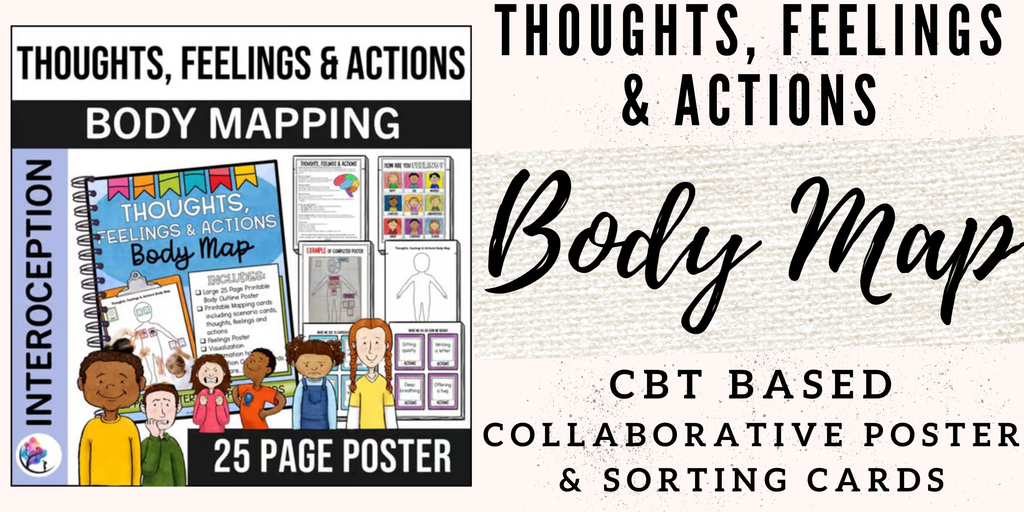
One resource we use to explore this connection is our Thoughts, Feelings & Actions Body Map, which helps students recognize how thoughts, emotions, physical sensations, and behaviors influence one another. Through visual body mapping and guided reflection, students can begin identifying their individual stress responses and developing greater awareness of the early signs of anxiety. This can be particularly helpful for teens who find it difficult to put their emotional experiences into words.
The anxiety cycle map
A simple cycle map can make anxiety feel less mysterious. The teen identifies a trigger, their first thought, body sensations, feelings, urges, and what happens next. They can then consider whether their response brings short-term relief but makes the worry stronger later.
For instance, avoiding a class presentation may lower distress for the afternoon, while increasing fear of the next presentation. This is not a reason to push a teen into an exposure task before they are ready. It is a way to notice the pattern and collaboratively consider gradual, supported steps. In school settings, the next step could be practicing the first two sentences with a trusted adult, presenting to a small group, or using an accommodation that supports participation without removing every opportunity to build confidence.
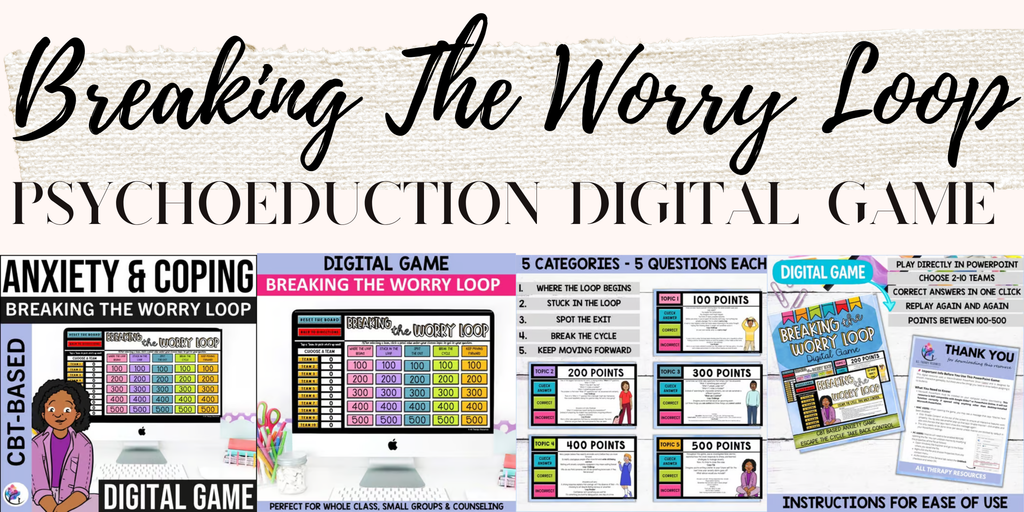
Our Breaking the Worry Loop digital game offers an interactive way to explore these patterns with students. Through guided questions and discussion, it encourages teens to recognize recurring worries, reflect on how their thoughts and responses influence anxiety, and consider healthier ways to interrupt the cycle. It can be a useful alternative to traditional worksheets, particularly for students who engage more readily through games and collaborative activities.
Coping menu and regulation plan
A coping menu is often more useful than a single “calm down” strategy. What helps before a test may not help during an argument or after an upsetting social media interaction. Ask teens to sort strategies by time and setting: skills they can use in under one minute, skills that take five to ten minutes, and supports they can access when they need more help.
Possible options include paced breathing, grounding through the five senses, cold water, a brief walk, music, stretching, writing a few thoughts down, asking for clarification, or sending a prepared support message. The purpose is not to create the longest possible list. It is to identify several strategies the teen is realistically willing and able to use.
A regulation plan works best when it includes context. Rather than writing “take a break,” a student might write, “If I feel my heart racing before fourth-period math, I will ask for a two-minute water break, use paced breathing, and return with the first problem circled.” The plan is specific, observable, and easier to practice.
Thought check worksheets
Cognitive coping activities can help teens examine anxious predictions, especially when worry quickly becomes certainty. A balanced thought check might ask: What am I predicting? What facts support this worry? What facts do not support it? What would I say to someone else in this situation? What is a more balanced statement?
Use this tool carefully. It is not appropriate to insist that a teen replace a difficult thought with a positive one. A more credible replacement often sounds like, “I may feel awkward, but I have handled uncomfortable conversations before,” or “I do not know the outcome yet, and I can prepare for the part I control.” Teens are more likely to use language that feels believable.
Worry sorting and problem-solving
Some worries call for action; others require tolerance of uncertainty. A worry-sort worksheet can divide concerns into three categories: something I can act on now, something I can plan for later, and something outside my control. This distinction is particularly helpful for teens who spend long periods mentally rehearsing possibilities without reaching a decision.
When there is a solvable problem, guide the teen through a short plan: define the concern, name one next step, identify support needed, and choose when they will do it. If a concern cannot be solved immediately, pair the acknowledgment of uncertainty with a coping response. This keeps the activity from becoming a list of worries with no path forward.
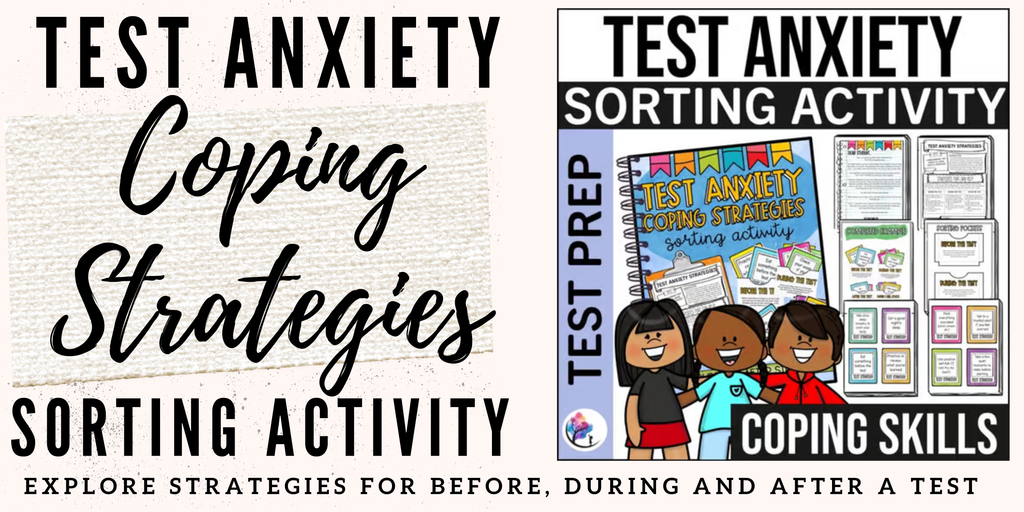
Our Test Anxiety Coping Strategies Sorting Activity provides a practical way to help students identify strategies they can use before, during, and after a test. By sorting different coping responses into these three stages, students can explore how preparation, in-the-moment regulation, and post-test reflection each play a role in managing anxiety. This activity also creates opportunities for meaningful discussion about which strategies feel realistic, helpful, and appropriate for their individual needs.
How to use worksheets without making sessions feel like school
Introduce the worksheet as a conversation tool, not an assignment. You might say, “We can use this page to figure out what happens right before anxiety takes over. You decide what feels useful to write down.” Giving choices about format, examples, and how much to share can reduce resistance and support emotional safety.
Complete part of the resource together before asking the teen to work independently. Modeling matters. If the worksheet asks for body signals or coping options, offer neutral examples and let the student reject what does not fit. Some teens prefer checkboxes, rating scales, or drawing; others may respond to a notes-style format that feels more private and age-appropriate.
Keep the focus on rehearsal. A teen who selects a grounding skill benefits from practicing it during a calm moment, then considering when they might use it during the week. A worksheet can also support brief check-ins in small groups, advisory settings, or home-based routines when privacy and scope are appropriate.
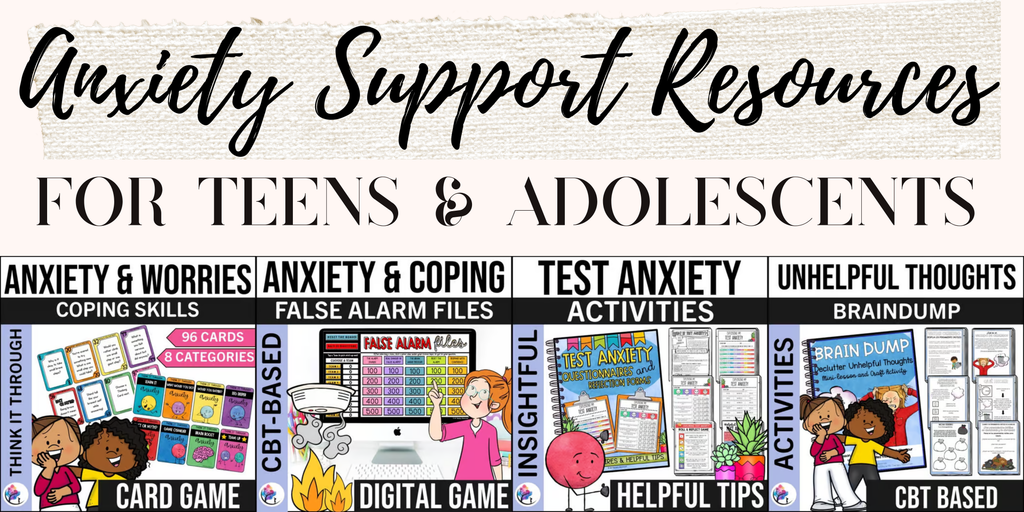
For students who benefit from a more interactive approach, our Anxiety Support Resources for Teens & Adolescents offer additional ways to explore anxiety, coping skills, and emotional regulation. From card games and digital activities to thought-based interventions and test anxiety strategies, these resources can help professionals introduce meaningful conversations and practice coping skills without relying solely on traditional worksheets.
Adapt the tool to the setting and the teen
A middle school student may need fewer prompts, more visuals, and concrete examples tied to transitions, lunch, tests, and peer interactions. Many high school students prefer more autonomy, nuanced language, and space to connect anxiety with workload, future planning, relationships, identity development, or online pressure.
Neurodivergent teens, students with communication differences, and teens affected by trauma may need additional adaptation. Avoid assuming that eye contact, verbal sharing, or stillness are signs of engagement. Offer choices in response format, use plain language, and consider sensory needs when teaching regulation. Trauma-informed practice also means avoiding pressure to disclose personal experiences before trust and readiness are present.
Consistency across adults can make the worksheet more effective. When appropriate and with attention to confidentiality, a counselor, teacher, caregiver, or related service provider can use the same language for a coping plan. The teen should know who can offer support and what that support will look like.
Keep clinical judgment at the center
Teen anxiety coping skills worksheets are educational and therapeutic supports, not a substitute for individualized assessment or clinical care. If a teen reports thoughts of self-harm, feels unsafe, shows a marked change in functioning, or has anxiety that significantly interferes with attendance, eating, sleep, relationships, or daily participation, follow your organization’s safety procedures and appropriate referral pathways.
For everyday intervention, the most meaningful worksheet may be the one a teen actually uses: a short plan kept in a binder, a coping card saved in a phone note, or a single sentence they can remember when anxiety starts to rise. The page is only the beginning. The real work is helping a young person experience, through repeated practice, that they can notice anxiety and still take the next manageable step.
Looking for Practical Counseling Resources?
At All Therapy Resources®, we believe professionals deserve practical, thoughtfully developed tools that make supporting students a little easier. Our ATR Membership gives you access to a growing library of over 1,700 resources, including coping skills activities, anxiety interventions, counseling worksheets, social-emotional learning materials, and so much more. Spend less time searching for resources and more time doing the meaningful work that matters.