

Are your students still confusing digraph sounds, guessing when reading, or struggling to articulate blends clearly? Teaching digraphs can be one of the most challenging parts of early literacy and speech development. Whether you are a classroom teacher, reading interventionist, or speech-language pathologist, helping students master digraphs like ch, sh, th, wh, ph, and kn is essential for building confident readers and communicators.
Digraph instruction plays a crucial role in phonics development, speech clarity, decoding skills, and early reading success. When students fully understand digraphs, they begin to read more fluently, pronounce words more clearly, and feel more confident participating in literacy tasks. However, traditional worksheets and repetitive drills often fail to engage students or support long-term retention.
This is where interactive, meaningful digraph activities make all the difference. By using engaging, discussion-based, and choice-driven learning tools, educators can transform digraph instruction into something students genuinely enjoy — while strengthening phonological awareness, articulation, and reading comprehension at the same time.
Why Digraphs Are So Important for Early Reading and Speech Development
Digraphs are a foundational phonics skill that directly impacts reading accuracy, decoding, spelling, and speech clarity. When students understand that two letters can work together to create one sound, they develop stronger phonemic awareness and begin to recognize patterns in language.
Students who master digraphs often demonstrate:
- Improved decoding and word recognition
- Increased reading fluency and confidence
- Stronger spelling and writing skills
- Clearer articulation of target sounds
- Better comprehension through accurate word reading
However, when digraphs are not taught explicitly or practiced consistently, students may:
- Guess unfamiliar words
- Omit or substitute sounds
- Struggle with blending and decoding
- Avoid reading aloud
- Lack confidence in literacy tasks
As educators and therapists, we know that explicit instruction combined with meaningful practice is key. Students need opportunities to see, hear, say, and apply digraphs in engaging contexts that reinforce understanding.
Why Many Students Struggle With Digraphs
Even when digraphs are introduced in phonics programs, students often need far more practice than a single lesson or worksheet provides. Digraphs can be confusing because they break early phonics rules — two letters creating one sound can feel abstract for young learners.
Common challenges include:
- Confusing similar digraphs (sh vs ch, th vs f)
- Difficulty hearing the digraph sound within words
- Weak phonological awareness
- Articulation challenges
- Limited opportunities for repetition and application
Students benefit most when digraph practice is:
- Explicit and structured
- Repeated in multiple contexts
- Interactive and engaging
- Supported with visuals and discussion
- Connected to real reading and speaking tasks
This is why many educators are moving toward game-based phonics instruction that allows students to actively think, respond, and explain their reasoning.
Using Interactive Digraph Games to Strengthen Reading and Speech Skills
One of the most effective ways to teach digraphs is through structured interactive games that encourage students to:
- Listen carefully for target sounds
- Compare and analyze word choices
- Practice articulation
- Explain their thinking using complete sentences
- Apply decoding skills in real time
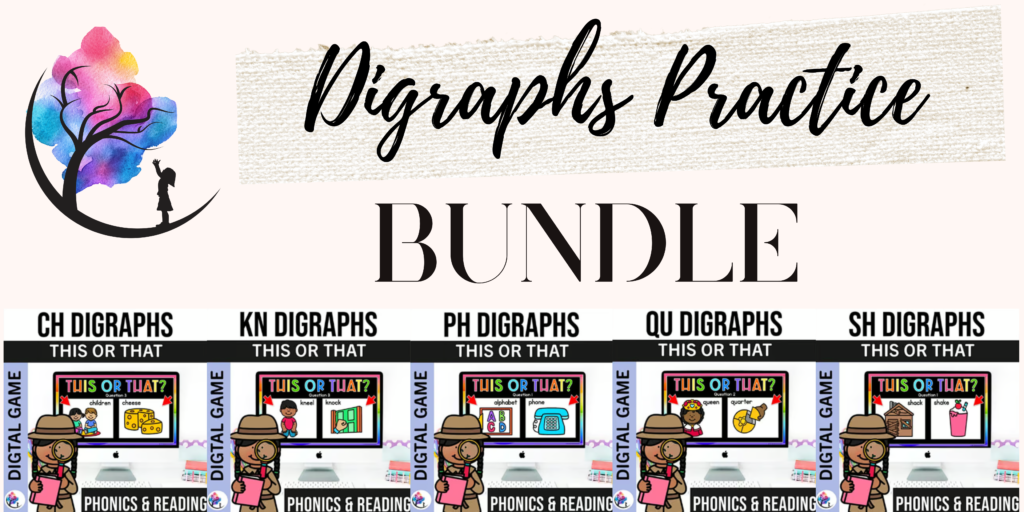
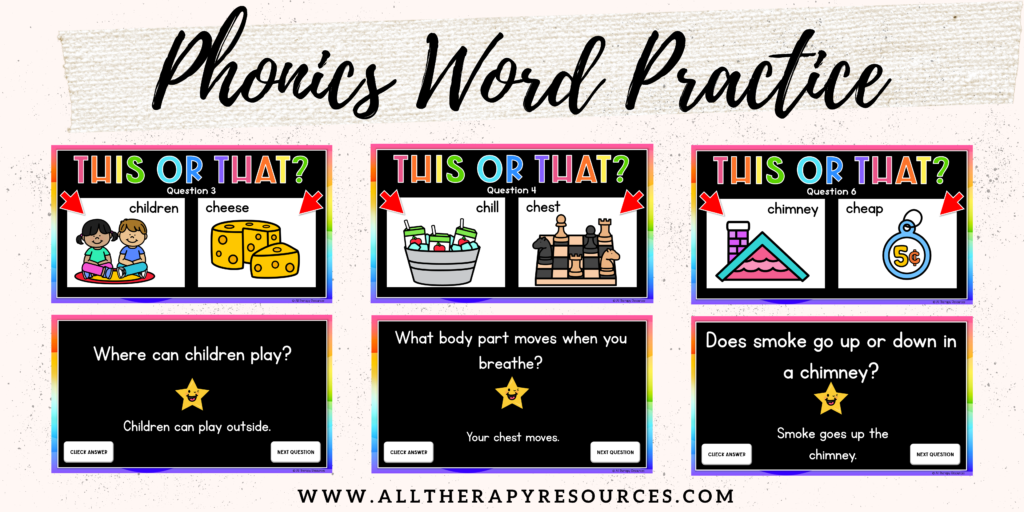
Within our Digraph Detectives Digital Games Bundle, students engage in highly structured “This or That” phonics activities designed to strengthen articulation, phonological awareness, vocabulary, decoding, and comprehension simultaneously.
Each game focuses on a specific digraph, including:
- CH
- SH
- TH
- WH
- PH
- KN
- WR
- QU
Students analyze words, identify digraph sounds, and choose correct responses while building confidence in a supportive, engaging format. The interactive structure encourages students to speak in full sentences, justify their answers, and actively engage with phonics concepts rather than passively completing worksheets.
What We Notice When Students Truly Understand Digraphs
When digraph instruction becomes interactive and meaningful, the changes in students are often noticeable very quickly.
Educators frequently observe:
- Students correctly identifying digraph sounds in reading tasks
- Increased willingness to read aloud
- Clearer pronunciation of target sounds
- Improved confidence during literacy lessons
- Stronger decoding accuracy
- Students using full sentences to explain their thinking
In speech therapy and literacy intervention settings, we often see students begin to generalize digraph knowledge into everyday reading and speaking. For example, a student who once struggled with “sh” may begin independently identifying the sound in new words, while another student may correct their own pronunciation during reading.
These small but significant shifts build the foundation for long-term literacy success.
Supporting Speech Therapy, Phonics, and Reading Intervention Together
One of the most powerful aspects of digraph instruction is its crossover between speech therapy and literacy development. Digraph-focused activities naturally support:
- Articulation and sound production
- Phonological awareness
- Vocabulary development
- Sentence formation
- Early reading decoding
- Comprehension and language processing
Within our digraph games, students are encouraged to:
- Say words aloud
- Listen for target sounds
- Compare similar words
- Explain their reasoning
- Practice expressive language
This integrated approach allows speech therapists, classroom teachers, and reading interventionists to target multiple goals simultaneously without needing separate materials.
Making Digraph Practice Engaging and Low-Prep for Educators
We know that educators and therapists need resources that are both effective and easy to use. That’s why our digraph digital games were designed to be low-prep, highly engaging, and flexible across settings.
These activities work beautifully for:
- Speech therapy sessions
- Literacy intervention groups
- Small-group phonics instruction
- Whole-class phonics lessons
- RTI and MTSS support
- Early intervention and special education
The digital format allows for immediate interaction, discussion, and feedback, keeping students engaged while reinforcing key phonics and speech concepts.
Supporting Confident Readers and Communicators
When students feel confident with digraphs, everything changes. Reading becomes less stressful, articulation improves, and students begin participating more willingly in literacy tasks. They move from guessing words to decoding them with confidence.
Within our digraph activities, we regularly see students:
- Volunteer to read aloud
- Self-correct pronunciation
- Identify digraph patterns independently
- Show pride in their reading progress
- Engage more actively in literacy lessons
These are the moments that remind us why explicit, engaging phonics instruction matters so deeply.
Explore Our Digraph Activities and Phonics Games
If you are looking for engaging, structured, and effective ways to teach digraphs while supporting speech and reading development, our Digraph Detectives Digital Games Bundle was created with real classrooms and therapy sessions in mind.
Designed for both educators and speech-language pathologists, these interactive activities provide meaningful practice that builds articulation, phonics understanding, decoding skills, and reading confidence in a format students genuinely enjoy.
You can explore the full bundle and individual digraph games to support your students’ literacy and communication growth in a fun, supportive, and effective way.
Frequently Asked Questions
What age group are digraph activities best suited for?
Digraph instruction typically supports students in PreK–2nd grade, but many older students benefit from targeted intervention if they struggle with decoding or articulation.
Can digraph games be used in speech therapy sessions?
Yes. Digraph activities are excellent for speech therapy because they support articulation, phonological awareness, expressive language, and vocabulary development all at once.
How often should students practice digraphs?
Consistent, short practice sessions are most effective. Interactive games used multiple times per week often lead to stronger retention than occasional worksheet-based practice.
Are digraph games suitable for small groups and classrooms?
Absolutely. Digraph activities can be used in small groups, literacy centers, whole-class lessons, and intervention settings.
What makes interactive digraph games more effective than worksheets?
Interactive games encourage discussion, reasoning, and active participation. Students are more engaged, which leads to better understanding, retention, and confidence in applying digraph skills.