

Have you ever worked with a child who knows the rule… but still blurts out, pushes ahead in line, melts down quickly, or makes the same reactive choice again?
Impulse control can feel frustrating — for educators, therapists, parents, and especially for the child.
But here’s something important to remember: impulsivity is rarely about defiance. It’s often about developing executive functioning skills, emotional regulation capacity, and nervous system maturity.
Impulse control is not a personality trait. It’s a skill set. And like any skill, it can be taught, practiced, and strengthened over time.
In my work across classrooms, therapy sessions, and small groups, I’ve seen that the most effective impulse control interventions are the ones that match the child’s developmental stage and offer concrete, repeated practice.
Let’s walk through what truly helps — from early learners to upper elementary and beyond.
For Younger Learners: Making Impulse Control Concrete and Visual
For little learners, impulse control needs to be tangible. Telling a 5-year-old to “think before you act” is simply too abstract.
That’s why visual metaphors and stories work beautifully at this age.
Story-based executive functioning lessons, like using an engaging character who learns to pause before reacting, help children externalize the concept. When children see impulse control modeled in a story, mirror neuron systems activate, allowing them to mentally rehearse the behavior before attempting it themselves.
Hands-on crafts paired with the story deepen retention because experiential learning activates multiple areas of the brain simultaneously. This strengthens neural pathways associated with self-regulation.
In early elementary settings, I often use:
• Story and craft-based executive functioning lessons
• Simple stop-and-think visuals
• Hands-on sorting and role-play
• Movement breaks paired with reflection
When impulse control is playful, visual, and repeated consistently, younger children begin to internalize the concept more naturally.
Teaching the Brain to Pause: Stop, Think, Go in Action
As children grow, they benefit from structured, step-based models.
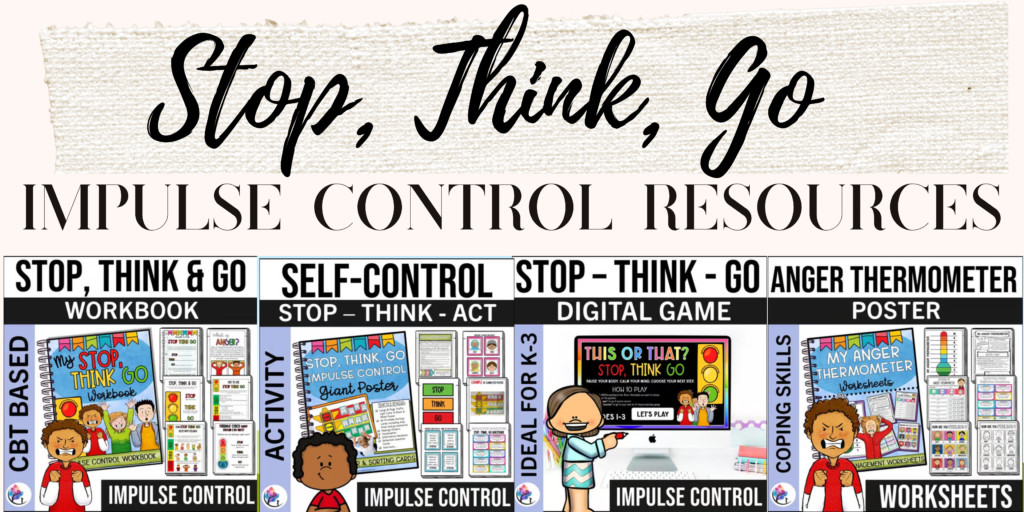
The “Stop, Think, Go” or “Stop, Think, Act” framework gives students a clear mental sequence. Instead of reacting automatically, they begin building a pause between stimulus and response.
From a neuropsychology perspective, this pause is everything.
Impulse control lives in the prefrontal cortex — the part of the brain responsible for decision-making, planning, and inhibition. When children practice pausing before acting, they are strengthening that pathway.
Interactive activities like:
• Digital games where students must choose STOP, THINK, or GO
• Collaborative poster activities that categorize responses
• Scenario cards that require reflection before answering
help students practice the pause in a safe environment.
Over time, repetition builds neural efficiency. What once required conscious effort becomes more automatic.
Reflection Builds Self-Awareness: Why Questionnaires Matter
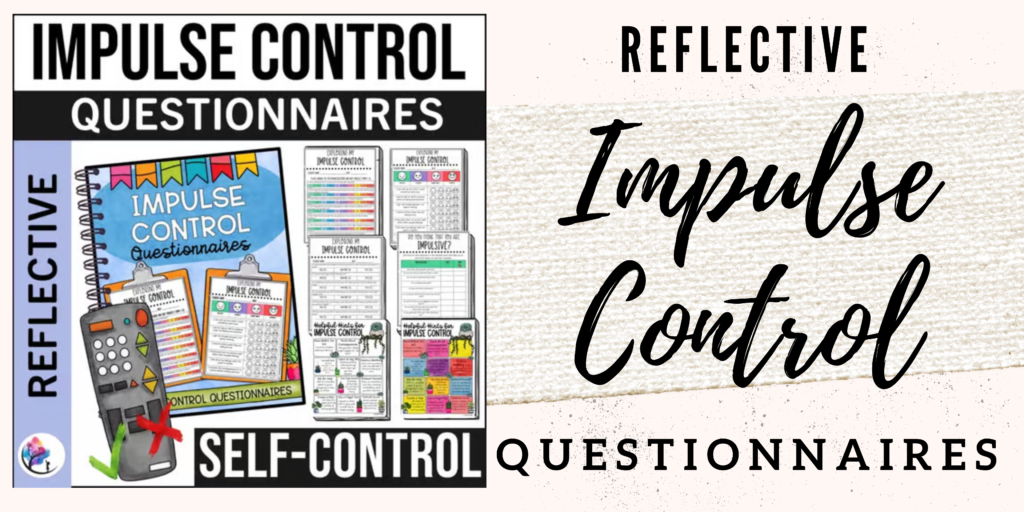
One of the most underrated impulse control tools is structured reflection.
When students complete impulse control questionnaires or reflective prompts, they are engaging metacognition — thinking about their thinking.
This strengthens self-awareness and helps children:
• Identify triggers
• Recognize patterns
• Understand consequences
• Develop personal regulation strategies
I love using impulse control questionnaires because they provide insight without shame. They open conversation rather than create defensiveness.
And for professionals, they offer valuable data to guide interventions.
If you’re working with students who struggle with impulsivity, reflective tools are powerful — and they don’t need to be complicated to be effective.
Supporting Emotional Regulation Through Play and Creative Expression
Impulse control is deeply tied to emotional regulation.
If a child cannot regulate anger, frustration, excitement, or disappointment, impulsive behavior often follows.
Creative interventions — like coloring-based emotional literacy activities or expressive anger projects — give students a low-pressure way to process big feelings.
For some children, verbal processing feels overwhelming. Structured coloring prompts, emotion-based activities, and guided play provide an accessible entry point into regulation.
These tools:
• Lower anxiety
• Increase emotional vocabulary
• Build body awareness
• Create calm moments for reflection
When emotional regulation improves, impulse control improves alongside it.
CBT-Informed Workbooks and Structured Skill Building
For older elementary students, direct skill-building becomes incredibly effective.
CBT-based workbooks that explore thoughts, actions, and consequences help students see the connection between impulse and outcome.
Structured activities that walk students through:
• What impulse control is
• How impulsive choices affect others
• Practical STOP and THINK strategies
• Emotional regulation tools
• Real-life scenario practice
help bridge the gap between knowledge and behavior.
These students are ready for deeper cognitive processing, and when we give them structured frameworks, they often rise to the occasion.
Small Group Counseling: Where Deeper Change Happens
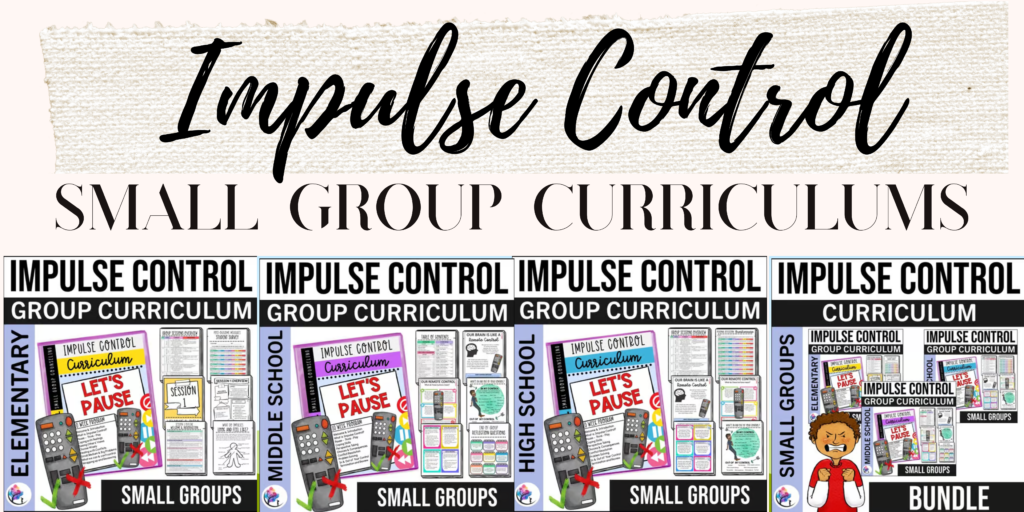
While classroom lessons are powerful, small group counseling allows for repetition, discussion, and role-play in a safe setting.
Impulse control small group curricula — whether elementary, middle, or high school — provide:
• Sequential skill-building sessions
• Role-play opportunities
• Goal setting and reflection
• Pre- and post-measures
• Caregiver communication tools
Group settings also normalize the struggle. Students quickly realize they are not the only ones who find pausing difficult.
That normalization reduces shame and increases motivation.
Bringing It All Together
Impulse control is not solved with one worksheet or one conversation.
It improves through:
• Repeated practice
• Developmentally appropriate tools
• Emotional regulation support
• Reflection and self-awareness
• Safe relationships
And most importantly — patience.
Children’s brains are still developing. The prefrontal cortex continues maturing into early adulthood. What looks like stubbornness is often simply an underdeveloped executive functioning system.
With the right tools and consistent support, growth happens.
Get the Tea with Angie: What Actually Works
Let’s pause here for a moment.
If you are supporting a child with impulse control challenges, you are doing meaningful work — even on the hard days.
Impulse control growth is rarely dramatic. It’s subtle. It’s gradual. It’s often invisible until one day you notice a child paused for two seconds longer than usual.
That matters.
Here’s what I see again and again in real settings:
- Impulse control takes repetition. If students need reminders, that’s normal. The brain wires through practice.
- Dysregulation is not defiance. When a nervous system is overwhelmed, the thinking brain goes offline. Calm first. Skills second.
- Visuals and metaphors stick. Children remember characters, colors, and stories long after lectures fade.
- Reflection builds ownership. When students identify their own triggers, they begin to take responsibility in healthier ways.
- Small wins count. A shorter outburst. A quicker repair. A single pause. These are signs of growth.
- Play lowers resistance. Games and creative tools often open doors that direct instruction cannot.
- Belonging changes behavior. Children regulate better when they feel safe and connected.
- Repair is more important than perfection. Teaching students how to try again is more powerful than demanding flawless behavior.
- Modeling matters. Children are constantly watching how we handle frustration and delay.
- You are shaping executive functioning in developing brains. That is profound work.
If impulse control feels slow to improve, remember — development is not linear.
Keep going.
The pause you are teaching today becomes the regulation skill they carry tomorrow.
Ready-to-Use Impulse Control Tools for Every Age
If you’re looking for developmentally appropriate impulse control resources across early childhood, elementary, and small group settings, All Therapy Resources includes:
• Story-based executive functioning lessons
• STOP, THINK, GO digital games
• Collaborative impulse control posters
• CBT-based workbooks
• FREE impulse control questionnaires
• FREE emotional regulation coloring pages
• Anger and emotion-focused activities
• Full small group counseling curricula (elementary, middle, and high school)
Inside the All Therapy Resources Membership, you’ll find a growing library of structured, evidence-informed SEL and counseling materials designed to support real behavioral change — not just surface compliance.
These are the same types of resources I use in practice to support self-regulation, executive functioning, and emotional growth.
You don’t have to reinvent the wheel.
Frequently Asked Questions
What causes impulse control problems in children?
Impulse control challenges are often related to developing executive functioning skills, emotional regulation capacity, ADHD, stress, trauma exposure, or simply brain immaturity.
At what age does impulse control improve?
Impulse control develops gradually throughout childhood and adolescence as the prefrontal cortex matures. Skills can be strengthened intentionally at any age.
How can teachers improve impulse control in the classroom?
Using structured pause frameworks (like Stop-Think-Go), visual reminders, reflective prompts, and repeated practice helps build self-regulation over time.
Are impulse control worksheets effective?
Worksheets are most effective when paired with discussion, modeling, and real-life practice. Reflection strengthens metacognitive awareness.
Do small group interventions help with impulse control?
Yes. Small groups allow for structured skill-building, repetition, and normalization — all of which support executive functioning growth.