

If you’ve spent any time working with teenagers, you’ve probably noticed something interesting.
Very few adolescents walk into a counseling office asking for help with cognitive distortions, psychological flexibility, or emotional regulation. They don’t usually describe their struggles using the language we find in textbooks or professional development workshops. Instead, their questions are often much simpler.
“Why do I keep overthinking everything?”
“Why do I always compare myself to everyone else?”
“Why do I worry so much?”
“What if I make the wrong decision?”
“I don’t even know who I am anymore.”
Although these concerns appear completely different on the surface, they often lead back to the same place.
Teenagers aren’t simply trying to solve today’s problem.
They’re trying to build tomorrow’s identity.
That realization changed the way I began thinking about adolescent counseling. Instead of seeing anxiety, comparison, difficult emotions, or decision making as isolated concerns, I started recognizing them as different parts of one much bigger developmental journey. Every challenge was helping shape the kind of adult that young person was gradually becoming. Every difficult conversation became an opportunity to strengthen the foundations they would continue building upon long after they left high school.
Adolescence Is Less About Growing Up and More About Becoming
When people think about adolescence, they often picture change.
Changing schools.
Changing friendships.
Changing bodies.
Changing responsibilities.
All of those changes certainly matter, but I believe something even more significant is happening beneath the surface.
Adolescence is one of the most important periods of identity development. It’s the stage of life where young people gradually begin answering questions that many adults continue exploring well into later life.
Who am I?
What do I believe?
What kind of person do I want to become?
What matters most to me?
Those questions don’t arrive all at once.
Instead, they’re answered slowly through everyday experiences. A friendship that ends unexpectedly. A difficult decision that tests personal values. A moment of failure that challenges confidence. A teacher who believes in them. A part-time job. A sporting team. Successes, disappointments, relationships, social media, family life, and thousands of ordinary moments that quietly shape identity over time.
Looking back, it’s remarkable how many of the experiences teenagers describe as “problems” are actually part of this much larger process of becoming.
Teenagers Aren’t Just Solving Problems—They’re Building a Life
One of the biggest shifts in my own counseling practice happened when I stopped focusing solely on helping teenagers solve immediate problems and started thinking about the life they were gradually building.
At first, that might sound like a small difference.
In reality, it changes almost every conversation.
Imagine a teenager who constantly compares themselves to other people on social media. It’s tempting to focus only on reducing comparison. Yet beneath that behaviour often sits a much deeper developmental question about identity, belonging, confidence, and self-worth.
The same is true for anxiety.
A teenager worrying about exams isn’t only trying to manage stress. They’re also learning how to cope with uncertainty, tolerate discomfort, persevere through challenges, and develop confidence in their ability to navigate difficult situations.
Even everyday decisions carry far more significance than they first appear.
Choosing friends.
Responding to peer pressure.
Managing disappointment.
Setting goals.
Learning from mistakes.
Every one of those experiences becomes another brick in the life they’re building.
Once I began seeing adolescence through that lens, counseling felt different.
Instead of asking,
“How do we fix today’s problem?”
I found myself asking,
“What kind of adult is this young person becoming through the way they respond to today’s problem?”
That question continues to shape almost everything I do.
Every Decision Becomes Part of the Foundation
One of my favorite metaphors when working with teenagers is the image of building a house.
Imagine someone spending months choosing beautiful furniture before the foundations have even been poured.
It wouldn’t make much sense.
Yet many teenagers naturally focus on the visible parts of life.
Grades. Followers. Appearance. Popularity. Relationships. Achievements.
Those things certainly matter.
But underneath them sits something much more important.
Foundations. Values. Healthy thinking. Emotional regulation. Resilience. Purpose. Self-awareness.
Without those foundations, life’s inevitable challenges can begin to shake everything built above them.
Strong foundations don’t remove storms.
They simply help the house remain standing when the storms eventually arrive.
The same is true for teenagers.
Life will always include disappointment, uncertainty, rejection, failure, and change. Our role isn’t to remove every challenge from their path. It’s to help them build the emotional and psychological foundations that allow them to navigate those challenges with confidence, flexibility, and hope.
One of the things I’ve come to appreciate most about working with adolescents is that presenting problems are rarely the whole story.
A teenager overwhelmed by anxiety may actually be learning how to tolerate uncertainty.
A student who constantly compares themselves to others may be searching for a stronger sense of identity.
Someone who struggles with decision making may still be discovering the values they want to live by.
Another who reacts impulsively during conflict may simply be developing emotional regulation skills that will continue growing well into adulthood.
When we begin looking beneath the presenting concern, counseling becomes about much more than symptom management.
It becomes about development.
It becomes about helping teenagers build the emotional, cognitive, and relational skills they’ll continue using long after high school has ended.
And perhaps that’s one of the most hopeful ways we can think about adolescence.
Teenagers aren’t simply trying to survive these years.
Whether they realise it or not…
They’re building the person they’re becoming.
Every Challenge Is Quietly Teaching Something
One of the things I’ve grown to appreciate about adolescence is that every challenge is teaching something, even when teenagers can’t see it at the time.
The student who is learning to manage anxiety is also learning how to tolerate uncertainty. The teenager navigating friendship conflict is discovering how to communicate, repair relationships, and understand another person’s perspective. Even setbacks, disappointments, and mistakes become opportunities to strengthen resilience, flexible thinking, and emotional regulation. Although these experiences rarely feel positive in the moment, they’re often shaping the very qualities young people will rely upon throughout adulthood.
This perspective has changed the way I think about counseling. Rather than seeing every challenge as something to remove, I find myself asking what the experience might be teaching. Of course, we want to reduce unnecessary suffering and provide support when students are overwhelmed. At the same time, we don’t want teenagers to leave counseling believing the goal is to avoid every uncomfortable emotion. Instead, we want them to discover that they can experience difficult thoughts and feelings while continuing to move toward the life they want to build.
That’s one of the reasons I believe adolescence is less about avoiding storms and more about learning how to navigate them.
Identity Isn’t Something Teenagers Find—It’s Something They Build
When teenagers say they’re trying to “figure themselves out,” they’re often describing one of the most important developmental tasks of adolescence.
Identity isn’t discovered all at once.
It isn’t hidden somewhere waiting to be found.
It’s built gradually through choices, experiences, relationships, setbacks, and moments of reflection. Every decision a young person makes quietly answers the question, “What kind of person do I want to become?” Whether they realise it or not, they’re laying another brick in the foundation of their future.
This is one of the reasons social media, friendships, academic success, and peer relationships can feel so emotionally significant during adolescence. They’re no longer simply events happening around teenagers. They become experiences through which teenagers begin defining themselves. A difficult friendship may influence how someone sees trust. A sporting achievement may strengthen confidence. A negative comment online may quietly shape self-worth if it goes unchallenged.
Helping teenagers understand that identity is something they actively build, rather than something that simply happens to them, is one of the most empowering conversations we can have.
Healthy Thinking Creates Strong Foundations
One of the most valuable lessons teenagers can learn is that thoughts are not always facts.
Our brains constantly interpret experiences, predict outcomes, and create stories about what is happening around us. Sometimes those stories are balanced and helpful. Other times they become distorted by anxiety, comparison, perfectionism, or fear of failure.
Imagine a student who receives constructive feedback on an assignment.
One teenager thinks,
“I have something to improve next time.”
Another immediately concludes,
“I’m just not smart enough.”
The situation is identical.
The emotional experience is completely different.
The difference lies in the interpretation.
This is one of the reasons Cognitive Behavioral Therapy (CBT) has become such a valuable approach when working with adolescents. Rather than teaching teenagers to ignore difficult thoughts, CBT helps them become curious about those thoughts. They learn to ask questions, examine evidence, recognise thinking traps, and develop more balanced ways of interpreting everyday situations.
That curiosity creates freedom.
Instead of automatically believing every thought their mind produces, teenagers begin recognising that they have choices in how they respond.
Emotional Regulation Helps Teenagers Respond Rather Than React
Emotions become particularly intense during adolescence, not because teenagers are choosing to be dramatic, but because their brains are undergoing extraordinary development.
They’re experiencing greater independence, more complex friendships, increasing academic expectations, changing family relationships, and constant social comparison. At the same time, the areas of the brain responsible for planning, impulse control, and long-term decision making are still maturing.
It’s hardly surprising that emotions sometimes feel overwhelming.
One of the most helpful things we can teach teenagers is that emotions are not problems to eliminate.
They’re information.
Anxiety may tell us something feels uncertain.
Disappointment reminds us that something mattered.
Anger often points toward unmet needs or perceived unfairness.
The goal isn’t to stop feeling.
The goal is learning how to respond thoughtfully rather than react automatically.
When teenagers develop emotional regulation skills, they begin creating space between what they feel and what they choose to do next. That space is often where some of life’s most important decisions are made.
Values Give Teenagers Direction When Life Feels Uncertain
One of the things I love most about Acceptance and Commitment Therapy (ACT) is that it shifts the conversation away from simply feeling better and toward living better.
Life will always include uncertainty.
There will be setbacks.
Difficult relationships.
Unexpected disappointments.
Moments where teenagers aren’t sure what to do next.
Values provide direction during those moments.
Instead of asking,
“What feels easiest?”
teenagers begin asking,
“What choice reflects the person I want to become?”
That question changes everything.
Values become the compass that continues pointing in the right direction even when emotions, peer pressure, or uncertainty make the path ahead feel unclear. They remind teenagers that confidence isn’t built by making perfect decisions. It’s built by repeatedly making decisions that align with who they want to be.
Building a Life Happens One Decision at a Time
The more I work with adolescents, the more convinced I become that adulthood doesn’t suddenly begin on someone’s eighteenth birthday.
It begins much earlier.
It begins every time a teenager chooses courage instead of avoidance.
Every time they challenge an unhelpful thought.
Every time they repair a friendship instead of walking away.
Every time they stay true to their values when peer pressure encourages something different.
Those decisions may seem small.
Yet together they become the life that teenager is gradually building.
That’s why counseling during adolescence feels so meaningful.
We’re not simply helping young people manage today’s challenges.
We’re helping themWe develop the emotional, cognitive, and relational foundations that will continue shaping their future long after they leave school.
Why We Created These Resources
People occasionally ask me where ideas for my teenage counseling resources come from.
The answer is almost always the same.
They come from conversations.
Not one conversation, but hundreds of them.
Conversations with teenagers who felt overwhelmed by anxiety but didn’t understand why. Students who believed every negative thought their mind produced. Young people who desperately wanted to make good decisions but felt pulled in different directions by peer pressure, social media, and uncertainty about the future. Teenagers who quietly wondered if everyone else had life figured out while they were still trying to understand themselves.
Although each student’s story was different, I kept noticing the same developmental themes appearing again and again.
They weren’t simply asking for solutions to today’s problems.
They were trying to build the emotional foundations for the adults they were becoming.
That’s when I stopped thinking about creating individual lessons and started thinking about building resources that supported different parts of that journey.
Helping Teenagers Understand Their Thoughts
One of the first patterns I noticed was how many teenagers believed every thought that entered their mind.
A single comment on social media became evidence that they weren’t good enough.
One disappointing mark convinced them they were going to fail.
A friendship disagreement quickly became, “Nobody likes me.”
The problem wasn’t that these teenagers lacked intelligence.
The problem was that nobody had ever taught them that thoughts can be questioned.
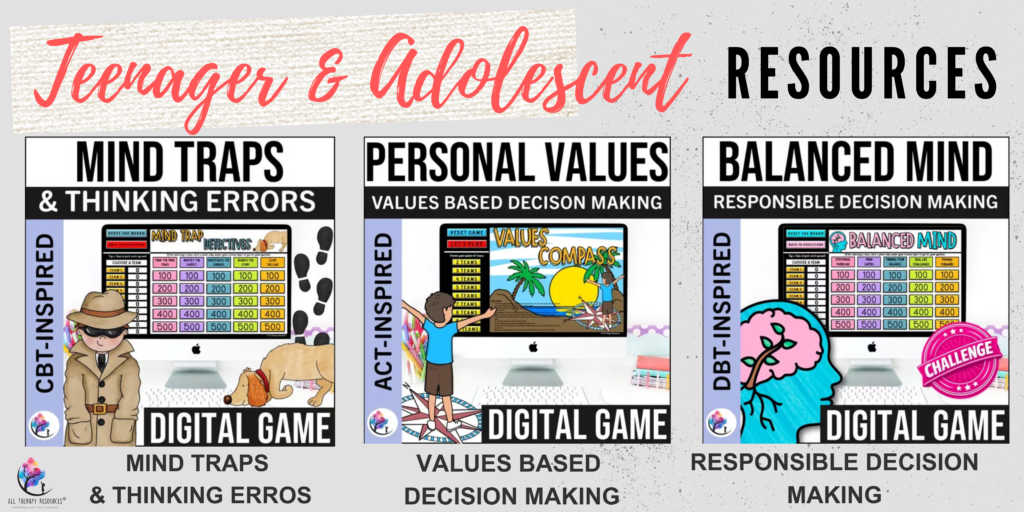
That realisation became the foundation for The Comparison Trap and Breaking the Worry Loop.
Although one resource focuses on social comparison and the other explores anxiety, both are grounded in the same principle from Cognitive Behavioral Therapy: our thoughts influence our emotions, and our thoughts are not always accurate reflections of reality.
Rather than simply telling teenagers to “think positively,” I wanted them to become investigators of their own thinking. I wanted them to recognise thinking traps, gather evidence, ask better questions, and discover that healthier thinking isn’t about pretending everything is perfect. It’s about learning to see situations more accurately and more compassionately.
Helping Teenagers Respond Rather Than React
Another pattern appeared in almost every counseling conversation.
Teenagers weren’t usually making poor decisions because they didn’t know the right thing to do.
More often, emotions were simply louder than their thinking in that moment.
Stress.
Peer pressure.
Embarrassment.
Fear.
Excitement.
Disappointment.
All of those emotions can temporarily narrow our perspective and make immediate reactions feel like the only option available.
That’s one of the reasons I created Balanced Mind.
I wanted teenagers to understand that emotional regulation isn’t about getting rid of difficult emotions.
It’s about learning how to notice those emotions, slow the moment down, and create enough space for thoughtful decisions to become possible.
One of my favourite messages within that resource is that emotions provide information, but they don’t always need to make our decisions.
That single idea often becomes incredibly freeing for teenagers.
Helping Teenagers Discover What Truly Matters
As counseling conversations became deeper, I noticed another question quietly appearing underneath many of the challenges students were bringing.
“Who do I want to become?”
Teenagers don’t always ask that question directly.
Instead, it often appears disguised as uncertainty about friendships, future careers, social media, relationships, or making difficult decisions.
That’s where Values Compass was born.
I wanted students to realise that life feels very different when decisions are guided by values instead of momentary emotions.
When young people understand what truly matters to them, they no longer need to feel certain about every situation before making a decision. Their values become a compass that continues pointing them forward, even when life feels confusing or uncertain.
For me, that may be one of the most empowering conversations we can have with adolescents.
Helping Teenagers Build a Life They Love
One resource probably represents my philosophy more than any other.
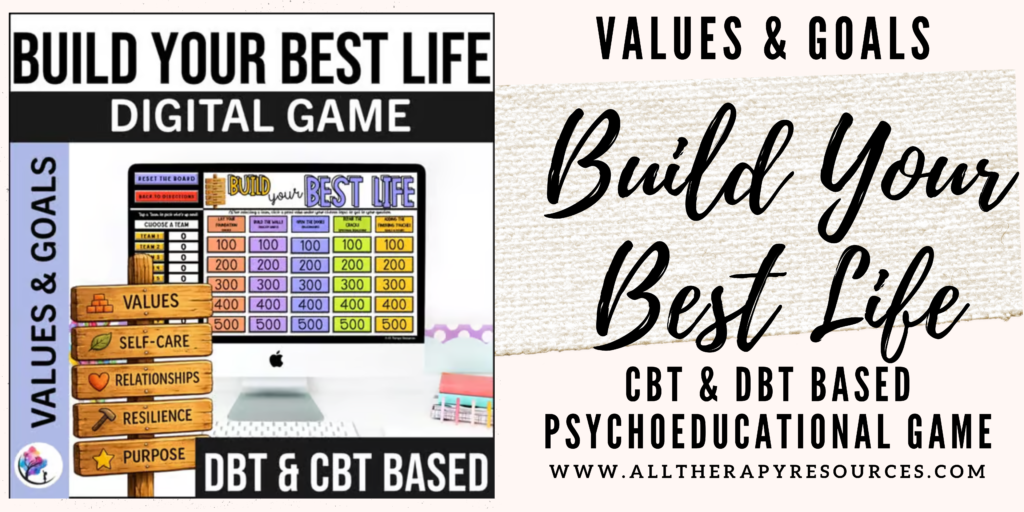
Build Your Best Life.
I created it because I wanted teenagers to stop seeing their future as something that simply happens to them.
Instead, I wanted them to recognise that they’re already building it.
Every healthy habit becomes another brick.
Every value strengthens the foundation.
Every supportive relationship opens another door.
Every challenge they overcome reinforces the walls.
I chose the metaphor of building a house because it reminds teenagers that meaningful lives aren’t built overnight.
They’re built one decision at a time.
Just as no one would expect a beautiful home to appear without strong foundations, we shouldn’t expect confidence, resilience, healthy relationships, or purpose to suddenly appear without intentionally developing the skills that support them.
That message feels especially important during adolescence because so many teenagers believe they need to have their future completely figured out.
They don’t.
They simply need to keep building.
Before You Go…
Before you leave this article, I’d encourage you to think about one teenager you’ve worked with recently.
Perhaps they’re constantly comparing themselves to other people.
Maybe anxiety has begun shaping every decision they make.
Perhaps they’re struggling to discover what matters to them, or they’re simply trying to work out who they are becoming.
Instead of asking,
“How do I fix this problem?”
perhaps we might begin asking,
“What foundation is this young person building right now?”
That single question has changed the way I approach adolescent counseling.
Because when we help teenagers strengthen healthy thinking, emotional regulation, values, resilience, and purposeful decision making, we’re doing much more than helping them survive high school.
We’re helping them build the life they’ll continue living long after graduation.
Featured Resources for Teen Wellbeing and Identity Development
The teenage years are filled with questions about identity, purpose, relationships, emotions, and the future. Rather than focusing on isolated concerns, the following resources were intentionally designed to support different aspects of adolescent development while helping students strengthen the emotional and psychological foundations they’ll continue building throughout adulthood.
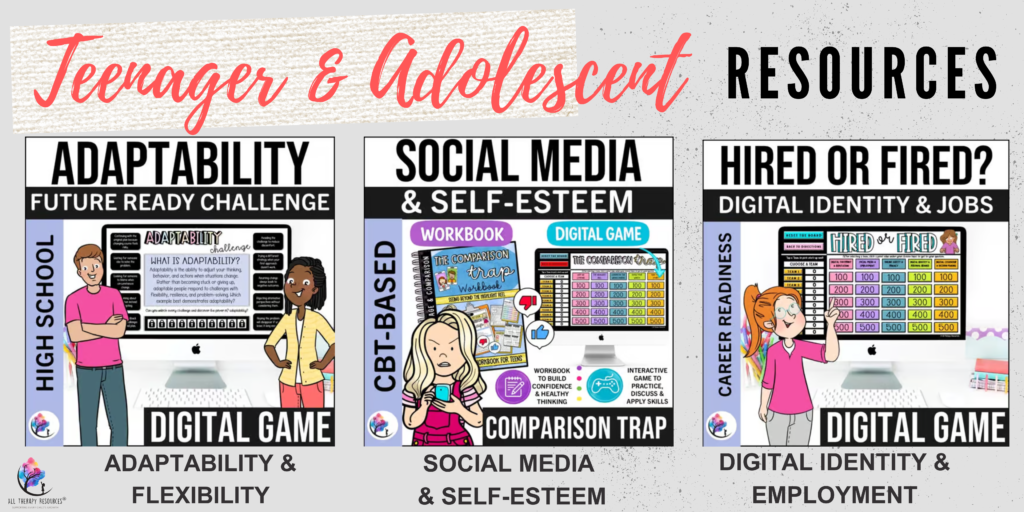
- The Comparison Trap helps teenagers recognise how social media and comparison influence self-esteem while developing healthier thinking patterns through CBT.
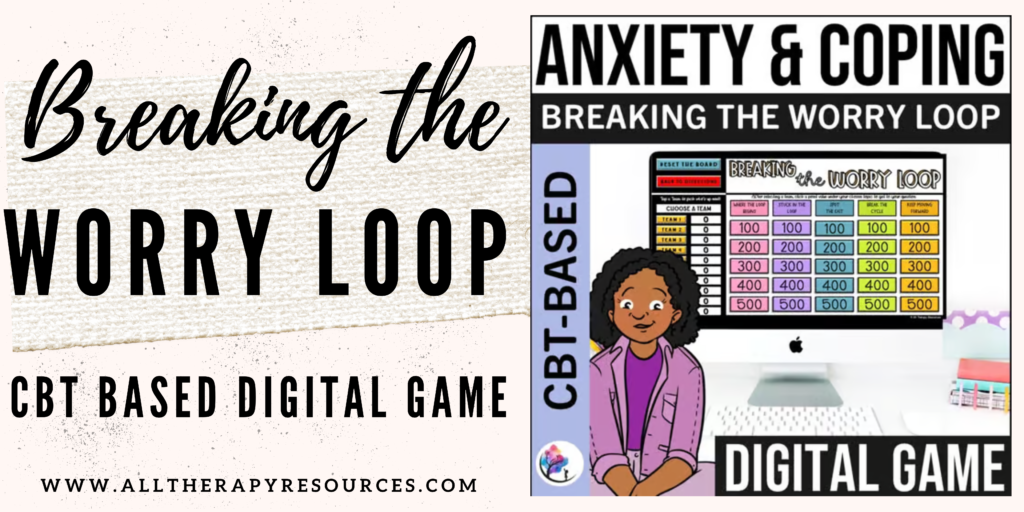
- Breaking the Worry Loop teaches students how anxiety develops, why worry persists, and practical Cognitive Behavioral Therapy strategies for interrupting unhelpful worry cycles.
- Balanced Mind combines principles from CBT and DBT to help adolescents understand emotions, regulate responses, and make thoughtful, values-consistent decisions.
- Values Compass introduces ACT-inspired principles that help teenagers identify what truly matters, strengthen identity, and make decisions guided by personal values rather than momentary emotions.
- Build Your Best Life encourages students to think beyond today’s challenges and begin intentionally building a future grounded in healthy habits, meaningful relationships, resilience, purpose, and self-awareness.
Together, these resources encourage teenagers to move beyond simply managing problems and begin intentionally creating the kind of life they hope to live.
A Final Reflection
One of the greatest privileges of working with teenagers is being invited into a season of life where almost everything feels possible.
They’re discovering who they are.
Questioning what they believe.
Learning what matters.
Making mistakes.
Repairing relationships.
Dreaming about the future while simultaneously trying to make sense of the present.
It’s a messy, beautiful, complicated stage of development.
Our role isn’t to build their future for them.
It’s to help them build the foundations that future will stand upon.
Because adolescence has never really been about preparing for adulthood.
It’sabout becoming the person they’ll one day be.
Adolescence isn’t simply a season of surviving challenges. It’s a season of becoming.
If you’re looking for research-informed counseling resources that help teenagers strengthen emotional regulation, healthy thinking, resilience, identity, and purposeful decision making, the All Therapy Resources® Membership provides access to an ever-growing library of workbooks, digital counseling games, classroom lessons, small group curricula, and evidence-informed interventions designed specifically for secondary students.
ATR Family: If you’re already an ATR Member, these adolescent counseling resources are already waiting for you inside your membership, ready to support meaningful conversations that help teenagers build the emotional foundations they’ll carry into adulthood.