

Have you ever had a student say:
“I don’t know what my goal is…”
“I just want to do better…”
“I’ll try harder…”
But then… nothing really changes?
You’re not alone.
The truth is, most students aren’t struggling with motivation—they’re struggling with clarity.
They don’t know:
• What they’re working toward
• How to break it down
• Or how to actually follow through
And this is where SMART goals come in.
Because when we teach students how to set clear, structured goals… everything shifts.
Why Goal Setting Is So Important for Students
Let’s be real for a moment…
Telling students to “try harder” or “do your best” is not a strategy.
It’s vague.
It’s overwhelming.
And for many students—it leads to shutdown.
What students actually need is:
✔️ Structure
✔️ Clarity
✔️ A step-by-step way forward
From a research perspective, goal setting is strongly linked to:
• Increased motivation
• Improved academic performance
• Greater self-efficacy (belief in their ability)
• Stronger executive functioning skills
When students can see a clear path forward, their brain shifts from:
“I can’t do this” → to “I know what to do next.”
And that’s powerful.
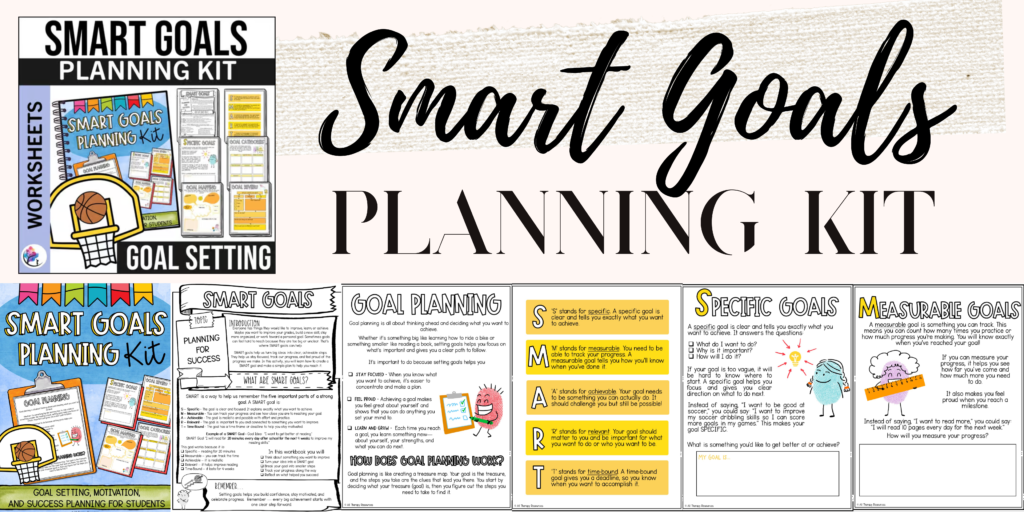
What Are SMART Goals (And Why They Work So Well)?
SMART goals give students a framework to turn big, overwhelming ideas into something manageable and achievable.
SMART stands for:
• Specific – What exactly am I working toward?
• Measurable – How will I know I’ve made progress?
• Achievable – Is this realistic for me right now?
• Relevant – Does this matter to me?
• Time-bound – When will I complete this?
Now here’s what I love about SMART goals…
They take something abstract and make it concrete.
Instead of:
“I want to get better at reading”
Students begin to say:
“I will read for 15 minutes every night for the next two weeks.”
That shift?
That’s where progress begins.
Get the Tea with Angie ☕
I remember working with a student who kept saying:
“I just want to be better at school.”
That was her goal.
And honestly… she meant it.
But every time we came back to it, nothing had changed.
So we slowed it right down.
We broke it apart.
We turned it into:
“I will complete my homework 4 out of 5 days this week before I watch TV.”
Suddenly:
• She knew exactly what to do
• She felt more in control
• She started following through
And the biggest shift?
She started believing:
“I can do this.”
That’s what structured goal setting does.
The Brain Science Behind Goal Setting
This is where it gets really interesting.
When students set clear, achievable goals:
• The brain releases dopamine when progress is made
• This reinforces motivation and positive behavior
• Small wins build momentum
From a neuroscience perspective, SMART goals support:
• Activation of the prefrontal cortex (planning, decision-making)
• Improved executive functioning
• Reduced overwhelm and cognitive load
In simple terms?
Clear goals help students feel:
✔️ More in control
✔️ More capable
✔️ More motivated
And when students feel capable… they engage.
Why Students Struggle With Goal Setting
Before we teach SMART goals, it’s important to understand why students struggle in the first place.
Many students:
• Set goals that are too big or unrealistic
• Don’t know how to break tasks into steps
• Lose motivation when progress feels slow
• Struggle with planning and organization
And sometimes…
They’ve experienced repeated failure—so they stop trying altogether.
This is where structured support makes all the difference.
Teaching SMART Goals Step-by-Step
When introducing SMART goals, I always recommend a gradual, scaffolded approach.
Start With Big Ideas
Let students brainstorm goals freely:
• “I want to get better at math”
• “I want to make more friends”
• “I want to stay calm in class”
This helps students feel heard and engaged.
Break It Down Together
Guide students to refine their goals:
Ask:
• What exactly does that look like?
• How will you know you’re improving?
• What steps can you take?
This is where the teaching really happens.
Make It Measurable and Realistic
Support students to:
• Set achievable timeframes
• Identify specific actions
• Track their progress
This reduces overwhelm and builds confidence.
Add Reflection (This Is Key)
Reflection is often the missing piece.
Encourage students to ask:
• What worked well?
• What was challenging?
• What will I try next?
This builds:
• Self-awareness
• Problem-solving
• Resilience
Why Structured Goal-Setting Resources Make a Huge Difference
Now I’ll be honest…
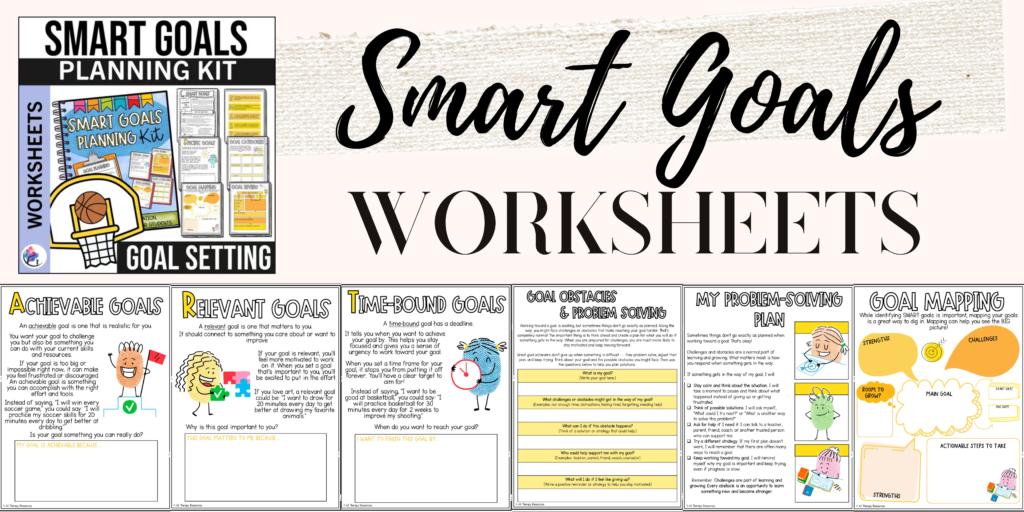
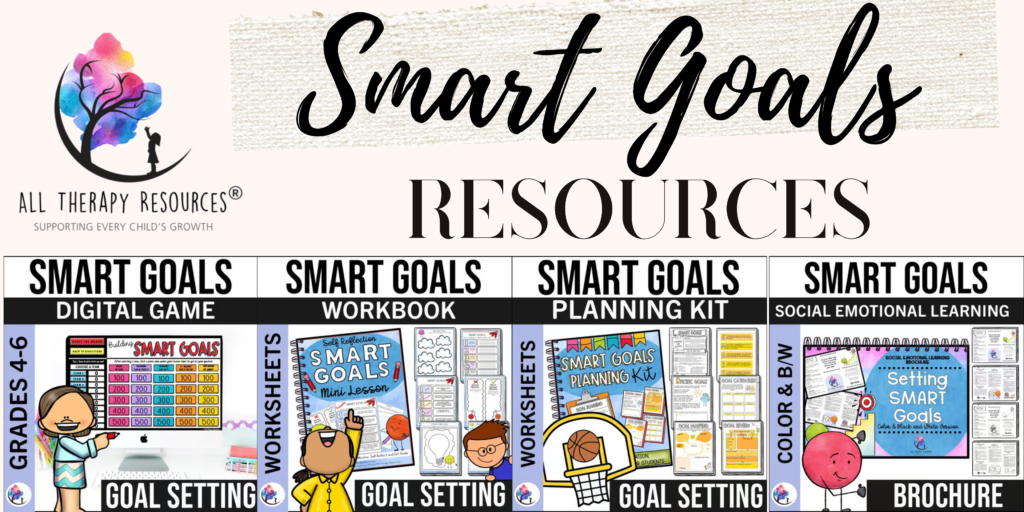
This is exactly why we created our SMART Goals Planning Kit.
Because we wanted something that didn’t just explain SMART goals…
But actually walked students through the process step-by-step.
This resource supports students to:
• Understand each part of SMART goals clearly
• Break big goals into manageable steps
• Track progress over time
• Reflect on successes and challenges
• Build motivation and accountability
And the feedback I hear again and again?
Students feel:
“I know what to do.”
“I can actually do this.”
That’s the goal.
Supporting Executive Functioning Through Goal Setting
SMART goals are not just about motivation.
They directly support executive functioning skills, including:
• Planning
• Organization
• Time management
• Task initiation
• Self-monitoring
These are the exact skills many students struggle with.
And when we explicitly teach them?
We’re giving students tools they will use for life.
Helping Students Stay Motivated
Even with strong goals, students can lose momentum.
Here’s what helps:
• Celebrate small wins (this builds dopamine and motivation)
• Keep goals visible (visual reminders are powerful)
• Check in regularly
• Adjust goals when needed (flexibility is key)
Motivation isn’t something students either have or don’t have.
It’s something we build.
From “I Can’t” to “I’m Making Progress”
If there’s one thing I want students to walk away with, it’s this:
Progress is built step by step.
When students:
• Know what they’re working toward
• Understand how to get there
• See their progress
Everything changes.
They move from:
“I can’t do this” → to “I’m getting there.”
And that shift?
That’s where confidence, resilience, and success begin.
Ready to Support Your Students With Goal Setting?
If you’re looking for a simple, structured, and engaging way to teach SMART goals, our SMART Goals Planning Kit is a powerful place to start.
It’s designed to take the guesswork out of goal setting and give students the tools they need to succeed.
And if you want ongoing access to research-based, trauma-informed resources, the All Therapy Resources® Membership is here to support you every step of the way.
Frequently Asked Questions
What are SMART goals for students?
SMART goals are a structured way to help students set clear and achievable goals. The acronym stands for Specific, Measurable, Achievable, Relevant, and Time-bound, which guides students to turn vague ideas into actionable steps.
Why is goal setting important for students?
Goal setting helps students build motivation, confidence, and independence. It supports executive functioning skills such as planning, organization, and self-monitoring, which are essential for both academic success and everyday life.
At what age should students start setting goals?
Students can begin learning simple goal-setting skills in early elementary years, with increasing structure and independence as they get older. By upper elementary and middle school, students are ready to use more formal frameworks like SMART goals.
Why do some students struggle with goal setting?
Many students struggle because goals feel too big, unclear, or overwhelming. Others may lack the skills to break goals into manageable steps or may feel discouraged from past experiences. Structured support and guided practice can make a significant difference.
How can I help students stay motivated to achieve their goals?
Students stay motivated when goals are realistic, broken into smaller steps, and regularly reviewed. Celebrating progress, providing encouragement, and helping students reflect on their growth all support ongoing motivation.
How does goal setting support social-emotional learning (SEL)?
Goal setting helps students develop self-awareness, self-management, and responsible decision-making. It encourages reflection, builds resilience, and supports students in understanding their strengths and areas for growth.