


Are you looking for effective, engaging fine motor skills activities that truly help children develop pencil control, hand strength, coordination, and confidence? Many educators, occupational therapists, and parents notice the same challenges: students struggling to hold a pencil correctly, fatigue during writing tasks, difficulty cutting, and reduced confidence in classroom or therapy activities. Fine motor development plays a crucial role in handwriting, independence, regulation, and academic success — yet finding meaningful, low-prep activities that actually build these skills can be a challenge.
Strong fine motor foundations support everything from writing and self-care to attention, coordination, and classroom participation. When children receive consistent, structured fine motor practice in playful and motivating ways, the progress can be remarkable. That is exactly why we created our Fine Motor Skills Programs and Activities Bundle — a comprehensive, occupational therapy-informed collection of hands-on tools designed to strengthen fine motor development across therapy, classroom, and home environments.
Why Fine Motor Skills Matter More Than We Realize
Fine motor development is not just about handwriting. It is deeply connected to independence, confidence, and regulation. When children struggle with fine motor control, they may avoid writing tasks, become frustrated easily, or appear disengaged during learning activities. Over time, this can impact both academic performance and emotional wellbeing.
Strong fine motor skills support:
- Pencil grip and handwriting development
- Scissor skills and classroom task completion
- Bilateral coordination and motor planning
- Self-care skills such as buttoning and dressing
- Attention, endurance, and task persistence
- Confidence and willingness to participate
In both occupational therapy sessions and classroom settings, targeted fine motor practice helps children feel capable and successful. We often see that when students begin to experience success with their hands, their confidence across learning areas improves as well.
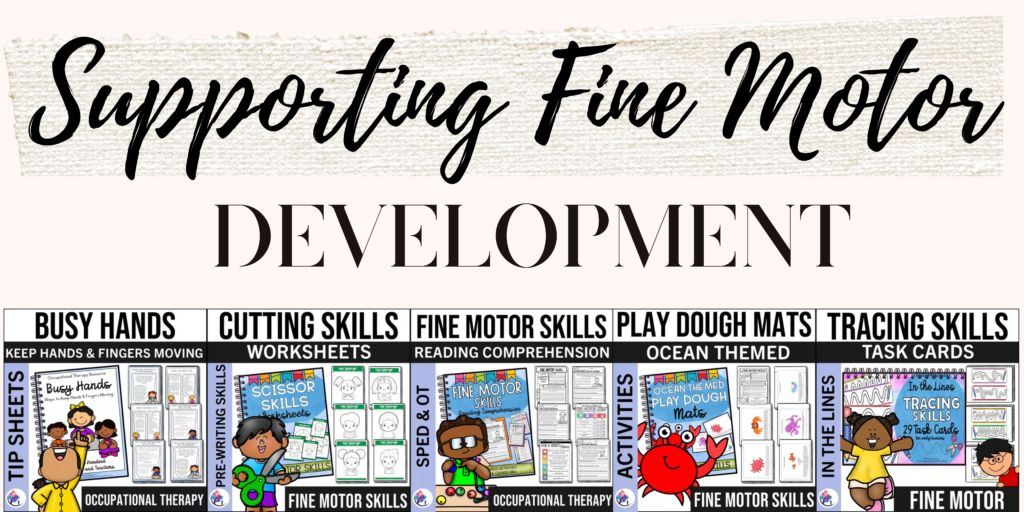
Signs a Child May Need More Fine Motor Support
Teachers, therapists, and parents frequently notice subtle signs that a child may benefit from structured fine motor activities. These might include:
- Avoiding writing, drawing, or cutting tasks
- Holding a pencil with excessive tension or fatigue
- Switching hands frequently due to tiredness
- Difficulty with scissors or cutting along lines
- Slow task completion or reduced endurance
- Messy handwriting or poor letter formation
- Frustration or low confidence during table work
When we begin to support these areas through structured, engaging activities, the changes can be significant. We often hear educators and therapists share that once fine motor foundations improve, students become more willing to write, participate, and persist with learning tasks.
Why Play-Based Fine Motor Activities Are So Effective
Children develop best through meaningful, hands-on experiences. Worksheets alone rarely build the strength, coordination, and motor planning needed for lasting fine motor development. Instead, playful and varied activities help build neural pathways and muscle strength in a natural and engaging way.
In our therapy and classroom work, we consistently observe that children show the most progress when fine motor activities are:
- Hands-on and interactive
- Varied and engaging
- Developmentally appropriate
- Embedded into play and movement
- Repeated consistently over time
- Designed with occupational therapy principles in mind
When fine motor practice feels like play rather than work, children are more motivated and confident. This is where structured programs and ready-to-use resources can make a significant difference.
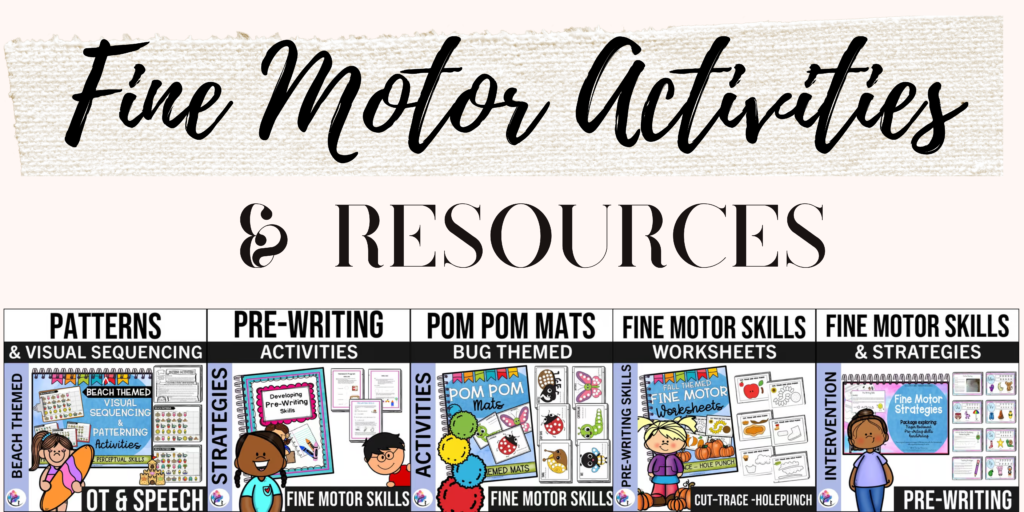
Supporting Fine Motor Development Across Settings
One of the biggest challenges for educators and therapists is finding resources that can be used flexibly across different environments. Fine motor development should not be limited to one session per week. Consistency across therapy, classroom, and home settings leads to the strongest outcomes.
Our Fine Motor Skills Programs and Activities Bundle was designed with this in mind. It provides a comprehensive collection of occupational therapy-informed activities that can be used across:
- Occupational therapy sessions
- Classroom fine motor stations
- Small-group intervention
- Early childhood settings
- Special education programs
- Home practice and homeschooling
Because the activities are ready to use and highly engaging, they support consistent skill-building without adding extra planning time for professionals or parents.
What Makes Our Fine Motor Skills Bundle Different
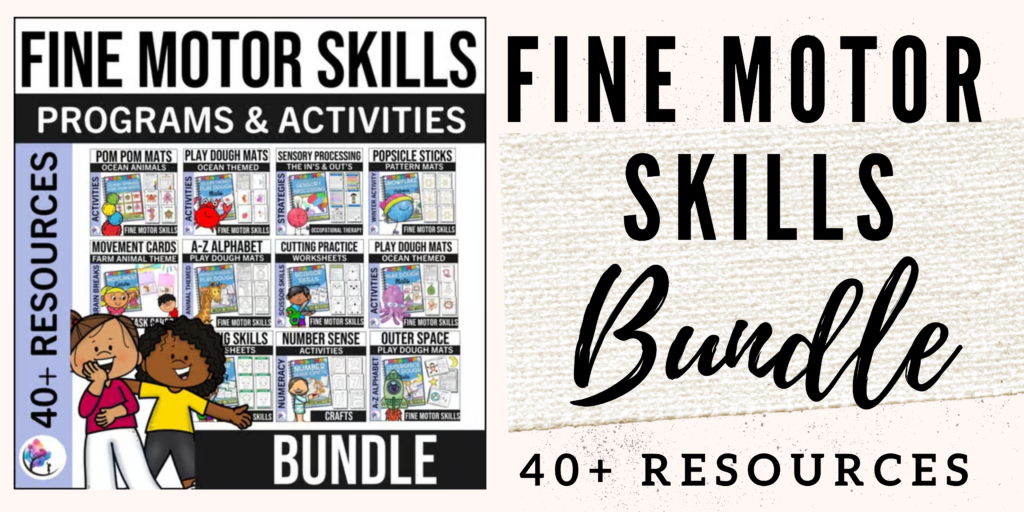
Within our Fine Motor Skills Programs and Activities Bundle, you will find over 40 carefully designed resources created to strengthen core fine motor foundations through play, movement, and structured practice. These tools were developed with real classrooms and therapy settings in mind, ensuring they are practical, engaging, and easy to implement.
Our bundle supports children in developing:
- Hand strength and finger isolation
- Pencil control and pre-writing skills
- Cutting accuracy and coordination
- Bilateral coordination and motor planning
- Visual-motor integration
- Sensory regulation and focus
We have seen children move from avoiding writing tasks to confidently completing them. Teachers often report improvements in pencil grip, stamina, and handwriting clarity. Occupational therapists frequently share that students demonstrate stronger hand muscles, improved coordination, and increased willingness to engage in table tasks.
For example, within our bundle, educators and therapists use:
- Play dough and sensory mats to build hand strength and finger control
- Pre-writing and tracing activities to support pencil readiness
- Cutting and craft tasks to improve scissor control and coordination
- Movement and fine motor cards to connect gross and fine motor development
- Sensory and motor planning activities to support regulation and focus
These structured yet playful activities allow children to build foundational skills in ways that feel achievable and motivating.
Observable Progress We See in Children
When fine motor practice is consistent and engaging, the changes in children can be both noticeable and encouraging. Educators and therapists using our Fine Motor Skills Bundle often report seeing:
- Improved pencil grip and reduced hand fatigue
- Increased willingness to attempt writing tasks
- Better cutting accuracy and control
- Stronger hand muscles and endurance
- Greater confidence during classroom activities
- Improved attention and task persistence
- More independence with daily classroom tasks
These small but meaningful changes often lead to larger academic and emotional gains over time. When children feel capable with their hands, they feel more confident in their learning overall.
Creating a Consistent Fine Motor Routine
Consistency is key when building fine motor skills. Rather than occasional activities, short daily or weekly practice sessions can lead to significant improvement.
Consider incorporating fine motor activities through:
- Morning fine motor tubs or stations
- Therapy warm-ups
- Small-group intervention blocks
- Calm corner or regulation stations
- Homework or home practice routines
- Play-based learning centers
Using structured, ready-to-go activities helps ensure that fine motor development becomes a natural and consistent part of a child’s learning experience.
Supporting Fine Motor Development With Confidence
Whether you are an occupational therapist, teacher, or parent, having access to engaging, effective fine motor activities can make a meaningful difference. Our Fine Motor Skills Programs and Activities Bundle was created to support children in building the foundational skills they need for writing, independence, and confidence — all through playful, purposeful learning.
If you are looking for ready-to-use fine motor activities that truly support development while keeping children engaged, this comprehensive bundle can help you confidently support every learner in your care.
Explore our Fine Motor Skills Programs and Activities Bundle to bring engaging, effective fine motor development into your classroom, therapy sessions, or home learning environment.
Frequently Asked Questions
What age group is best for fine motor activities?
Fine motor activities are beneficial for preschool, kindergarten, early primary, and students who need additional support with handwriting, coordination, or hand strength.
Can these activities be used in occupational therapy sessions?
Yes. Our Fine Motor Skills Bundle was designed with occupational therapy principles in mind and is ideal for individual sessions, small groups, and skill-building programs.
How often should children practice fine motor skills?
Short, consistent practice sessions several times per week are more effective than occasional activities. Even 10–15 minutes of targeted practice can lead to noticeable improvement.
Are fine motor activities helpful for handwriting development?
Absolutely. Strong fine motor foundations support pencil grip, control, endurance, and letter formation, all of which contribute to clearer and more confident handwriting.
Can teachers use these activities in the classroom?
Yes. These activities are perfect for fine motor stations, morning work, small groups, and intervention blocks. They are low-prep and easy to implement across settings.
Do fine motor activities support attention and regulation?
Many fine motor tasks also support sensory regulation, focus, and task persistence, helping children feel more organized and ready to learn.