
Have you ever noticed how quickly students jump to conclusions?
I mean… it happens all the time.
“He did it.”
“She’s lying.”
“That’s not fair.”
And before we’ve even had a chance to unpack what actually happened… the decision has already been made.
Now here’s the thing.
This isn’t because students don’t care.
It’s because they haven’t been taught how to think through situations in a structured, reflective, and fair way.
And this is exactly why I LOVE restorative practices.
Because when done well, they don’t just change behavior…
They change thinking.
Why We Created This Resource (and Why It Matters So Much)
I’m going to be honest with you…
I have always been drawn to resources that:
• Slow students down
• Encourage deeper thinking
• Build empathy naturally (not forced)
• And actually teach skills—not just talk about them
Because telling a child to “be fair” or “make good choices” isn’t enough.
They need a process.
They need structure.
They need experiences that guide them to discover what fairness, perspective, and responsibility actually look like.
That’s exactly what this restorative practices activity does.
And when I say this resource is thoughtfully designed… I truly mean it.
The Moment Students Lean In (And You See the Shift)
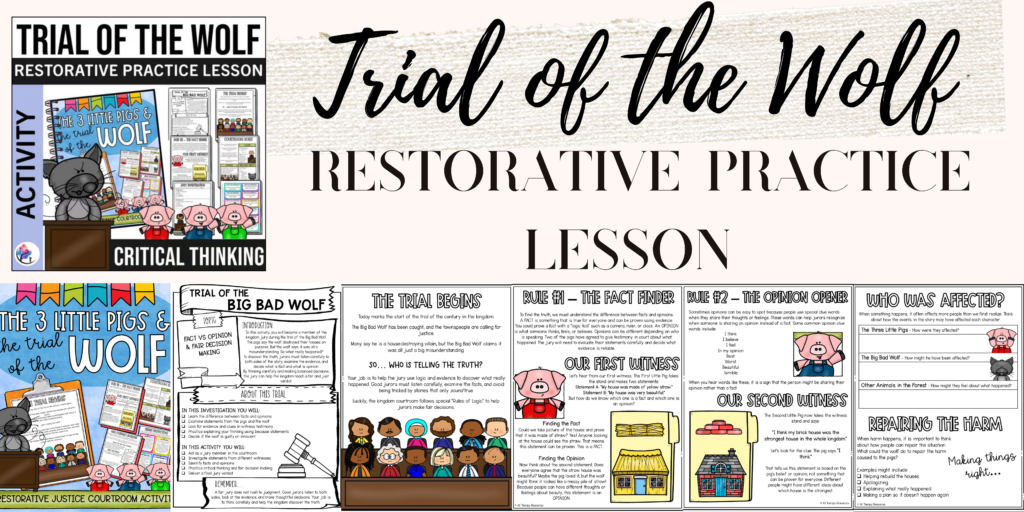
One of my favorite parts of this activity is how it begins.
Students are introduced to a familiar story… but with a twist.
Suddenly, they’re not just hearing The Three Little Pigs again.
They’re being asked:
“What if we don’t actually know the full story?”
And you can feel the shift.
They lean in.
They get curious.
They start questioning.
And this is where the learning begins.
Because curiosity is the gateway to critical thinking.
Teaching Students to Think Like Investigators (Not Reactors)
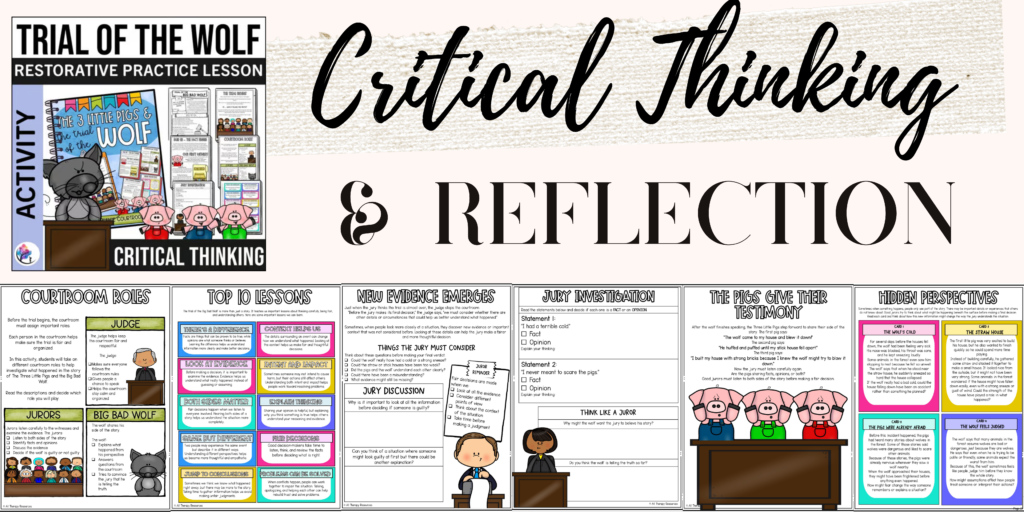
As the activity unfolds, students begin exploring the difference between fact and opinion.
And this is where things get really interesting.
Because when you ask students:
“Is this a fact or an opinion?”
At first… you’ll see hesitation.
Then discussion.
Then debate.
And then—those aha moments.
They start realizing:
👉 Not everything we hear is a fact
👉 People can see the same situation differently
👉 Opinions are shaped by feelings and experiences
From a research perspective, this is powerful.
Explicitly teaching fact vs opinion supports:
• Critical thinking
• Cognitive flexibility
• Decision-making skills
And it lays the foundation for everything that comes next.
The “Because Bridge” (And Why It’s a Game-Changer)
Now this is something I absolutely love.
Instead of students just saying what they think…
They are guided to explain why.
“I think the wolf is telling the truth because…”
Simple? Yes.
Powerful? Absolutely.
This strategy strengthens:
• Reasoning skills
• Language development
• Metacognition (thinking about thinking)
And what I’ve seen in practice is this:
Students go from giving one-word answers…
To forming thoughtful, evidence-based explanations.
And once they learn this skill?
They start using it everywhere.
When Students Step Into the Story (And It Becomes Real)
Now let’s talk about engagement—because this is where this resource really shines.
Students don’t just complete worksheets.
They take on roles.
They become:
• Jurors
• Judges
• Witnesses
• Evidence detectives
And something magical happens here.
They step into the story.
They start asking questions.
They challenge each other.
They defend their thinking.
From a therapeutic perspective, this is gold.
Role-based learning allows students to:
• Explore perspectives safely
• Build empathy naturally
• Practice communication in a structured way
And honestly?
They LOVE it.
The Part That Always Surprises Students (In the Best Way)
Here’s where things really deepen.
Just when students think they’ve figured it out…
New information is introduced.
And suddenly:
• The wolf may not be as “bad” as they thought
• The pigs may not be completely “right”
• There may have been misunderstandings
You can literally see students pause.
They rethink.
They reconsider.
And this is such an important moment.
Because this is where we move from:
👉 Judgment → to understanding
👉 Assumptions → to curiosity
This aligns strongly with trauma-informed practice, which reminds us:
Behavior is communication.
And context matters.
Teaching Students That Behavior Is Complex
One of the most powerful learning outcomes from this activity is this:
Students begin to understand that situations are not black and white.
They explore:
• Hidden perspectives
• External factors
• Emotional experiences
• Misunderstandings
And they start to ask deeper questions like:
“Why might this have happened?”
“What might we not know yet?”
This is advanced thinking.
And it’s exactly what we want.
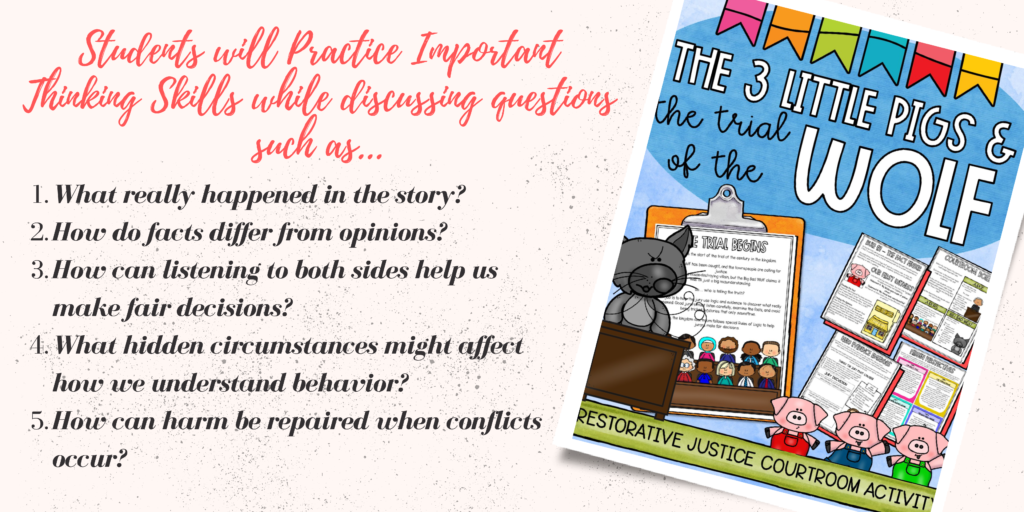
The Power of Slowing Down Decision-Making
As students move toward making their final decision, they are guided to:
• Review evidence carefully
• Listen to all sides
• Think before deciding
And this is huge.
Because in real life, poor decisions often come from:
• Rushing
• Emotional reactions
• Lack of reflection
This activity teaches the opposite.
It teaches intentional thinking.
From a neuroscience perspective, this supports activation of the prefrontal cortex—the part of the brain responsible for reasoning and impulse control.
Which means…
We’re not just teaching behavior.
We’re strengthening the brain.
From “Who’s Right?” to “How Do We Repair This?”
And this is my absolute favorite part.
The learning doesn’t stop at:
“Guilty or not guilty.”
Instead, students move into restorative thinking.
They begin to explore:
• Who was affected
• How people felt
• What could have been done differently
• How harm can be repaired
And this is where the real growth happens.
Because now we’re not just solving a problem…
We’re teaching responsibility, empathy, and repair.
Get the Tea with Angie ☕ (Real Talk From Practice)
I’ll be honest…
The first time I ran an activity like this, I was blown away.
Students who would usually:
• Shut down
• Blame others
• Rush decisions
Were suddenly:
• Listening
• Reflecting
• Thinking deeply
And one student said something I’ll never forget:
“Wait… maybe he didn’t mean to do it.”
That moment?
That’s the work.
That’s what we’re aiming for.
Why This Resource Works (From a Clinical + Educational Lens)
This resource works because it combines:
•Research-based teaching strategies
• Structured critical thinking frameworks
• Trauma-informed principles
• Experiential, hands-on learning
• Social-emotional skill development
It doesn’t just tell students what to do.
It shows them how to think.
And that’s what makes it so powerful.
How You Can Use This in Your Setting
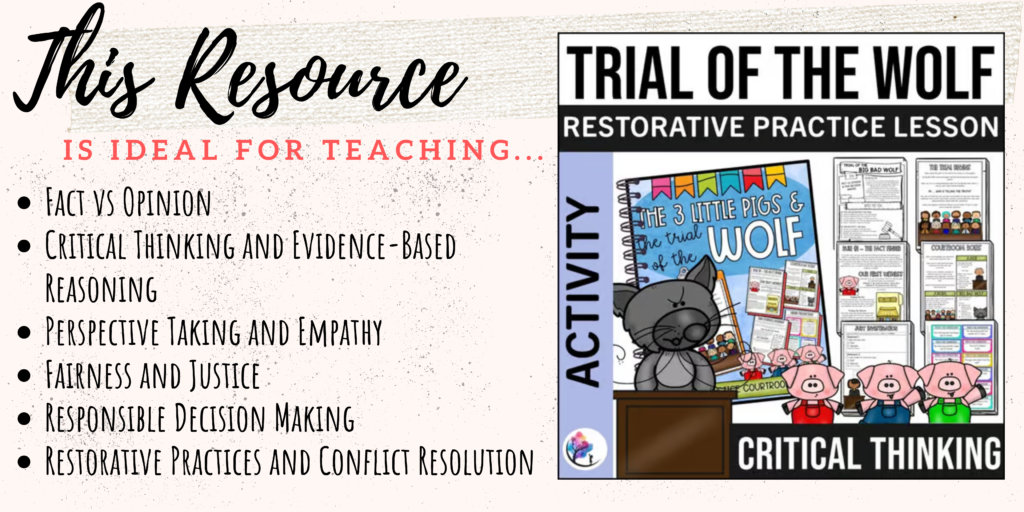
This resource is incredibly flexible and can be used in:
• Whole-class lessons
• School counseling sessions
• Small groups
• Restorative circles
• Behavior support programs
You can:
• Run it as a full unit
• Break it into smaller lessons
• Use specific components for targeted support
And no matter how you use it…
You will see the impact.
My Final Thoughts…. This Is the Work That Changes Everything
If there’s one thing I want students to walk away with, it’s this:
Understanding matters more than assumptions.
And when we teach students how to:
• Think critically
• Listen deeply
• Consider others
• Reflect before reacting
We are giving them skills that go far beyond the classroom.
We are shaping how they show up in the world.
Ready to Bring This Into Your Classroom or Practice?
If you’re looking for a resource that is:
✔️ Thoughtful
✔️ Engaging
✔️ Research-informed
✔️ Truly impactful
This restorative practices activity is something special.
And if you want to go even deeper, the All Therapy Resources® Membership gives you access to a full library of trauma-informed, research-based tools designed to support real change.
Frequently Asked Questions
What age group is this best suited for?
Upper elementary to early middle school works beautifully, but it can be adapted.
Can this be used in both classrooms and counseling settings?
Absolutely. It was designed for both.
How long does it take?
It can be delivered over several sessions or adapted into shorter lessons.
Is this aligned with SEL and restorative practices frameworks?
Yes. It supports empathy, perspective-taking, and responsible decision-making.
Do students stay engaged?
Yes—and this is one of the biggest strengths of the resource. The role-play and investigation elements keep students highly involved.