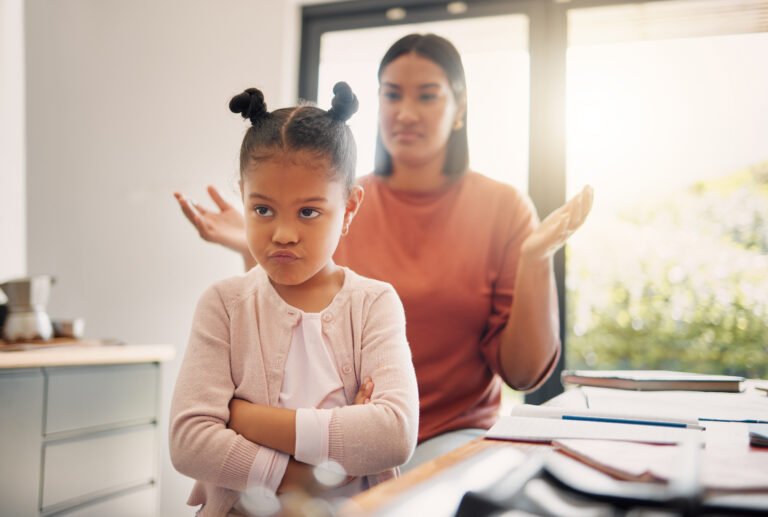

Are your students struggling with rude comments, peer conflict, or a lack of respect toward others? Many school counselors, teachers, and school psychologists are noticing the same challenge. Students are navigating complex social dynamics, emotional stress, and digital influences, yet many have never been explicitly taught what respectful behavior truly looks like, sounds like, and feels like.
Respect is one of the most foundational social-emotional skills we can teach. When students understand respect — and are given opportunities to practice it — we begin to see meaningful changes in classroom climate, peer relationships, and emotional regulation. Teaching respect is no longer about simply reminding students to “be kind.” It requires structured, explicit instruction and engaging activities that help students explore real-life scenarios and understand the impact of their words and actions.
Over the years, working alongside educators and school-based professionals, we have seen firsthand how intentional respect lessons can shift student behavior, strengthen relationships, and create calmer, more supportive learning environments.
Why Respect Must Be Explicitly Taught in Schools
Respectful behavior is not automatic for many students. Without direct instruction, students may struggle with tone of voice, impulsive comments, social awareness, and understanding the impact of their choices. Teaching respect helps students build empathy, self-awareness, and responsible decision-making skills that support both social and academic success.
When respect skills are taught consistently, educators often begin to notice clear changes in student language and behavior. Students start using phrases such as:
- “That wasn’t very respectful — let me try again.”
- “I can say that in a kinder way.”
- “I didn’t think about how that sounded.”
- “I want to fix what I said.”
Teachers frequently report:
- Fewer peer conflicts
- Reduced rude or impulsive comments
- Increased empathy and perspective-taking
- More cooperative group work
- Stronger classroom community
These are powerful shifts. When students begin reflecting on their words and choices independently, it shows that respectful thinking is becoming internalized.
Using Interactive Respect Activities to Increase Student Engagement
One of the most effective ways to teach respect is through interactive, scenario-based learning. Students need opportunities to explore real-life situations, discuss choices, and reflect on the impact of behavior in a safe and structured way.
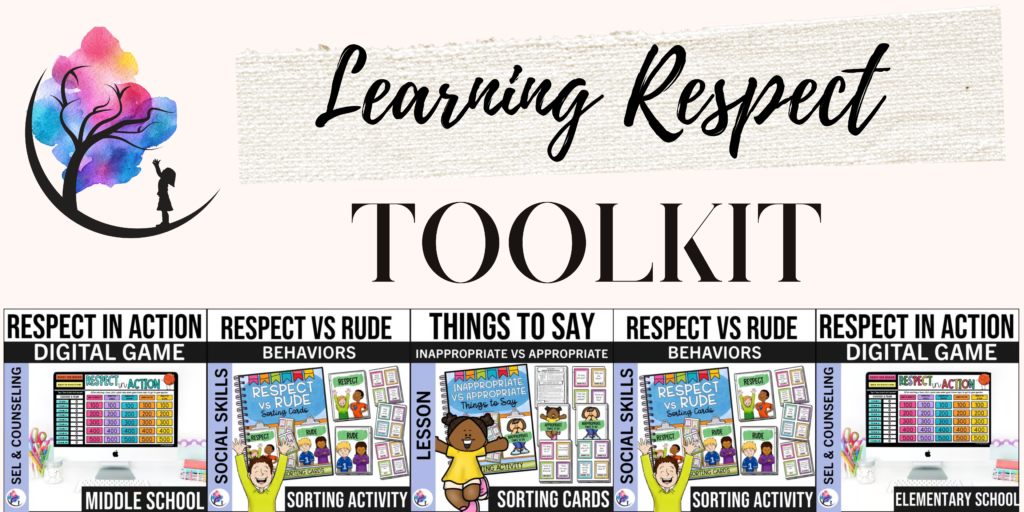
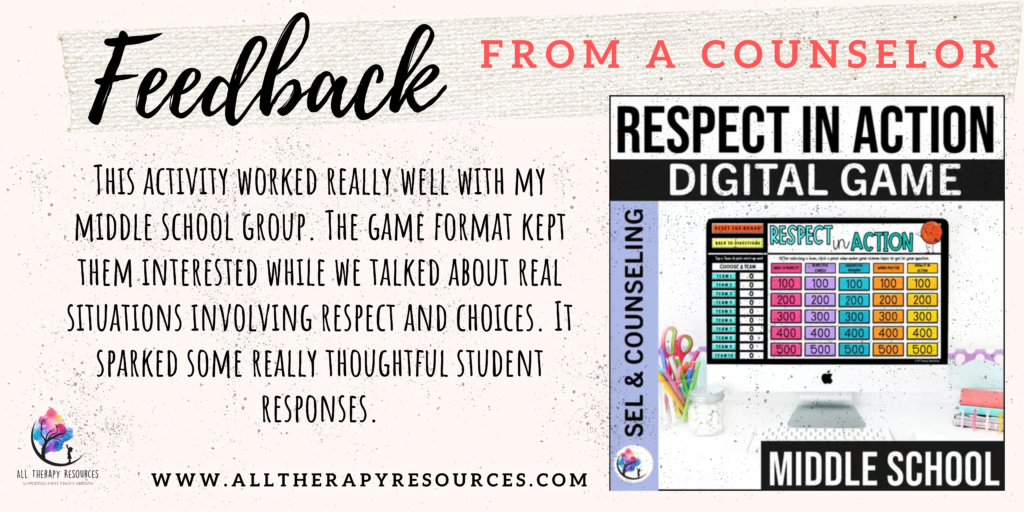
This is exactly why we created our Respect in Action Digital Games for elementary and middle school students. These interactive SEL games move beyond simple “be kind” reminders and instead help students actively explore respectful behavior, communication, and decision-making in everyday school scenarios.
Within our Respect in Action games, students:
- Analyze real-life social situations
- Identify respectful and disrespectful responses
- Discuss consequences of choices
- Practice empathy and perspective-taking
- Reflect on how their actions affect others
When educators implement these interactive respect activities, they often notice students becoming more thoughtful in their responses. Many report students pausing before speaking, rephrasing comments more respectfully, and even reminding peers to consider kinder choices.
These games work beautifully in:
- School counseling small groups
- Whole-class SEL lessons
- Advisory or wellbeing periods
- Behavior support sessions
- Morning meetings
Because they are interactive and discussion-based, they allow students to actively practice respectful thinking rather than passively listening to reminders.
Helping Students Understand Appropriate vs Inappropriate Communication
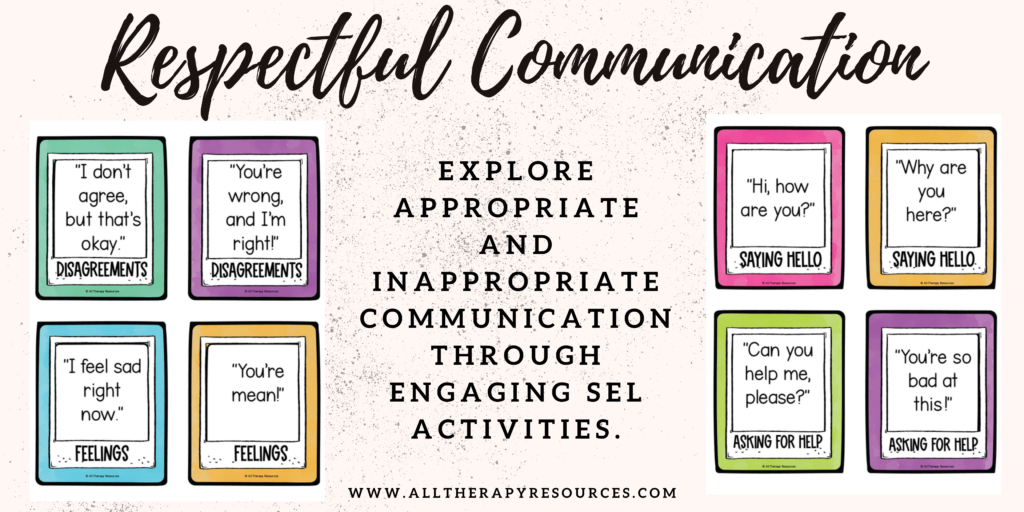
A key component of respect is understanding how words impact others. Many students genuinely do not realize how their tone or phrasing may come across. Explicitly teaching appropriate versus inappropriate language can be transformative.
For example, within our “Inappropriate vs Appropriate Things to Say” resource, students explore real-life communication scenarios and sort responses into respectful and disrespectful categories. Through structured discussion and reflection, they begin to recognize how small changes in wording can significantly affect relationships.
After using this type of activity, educators often notice:
- Students rephrasing comments more thoughtfully
- Increased awareness of tone and word choice
- Fewer impulsive or hurtful remarks
- Improved peer communication
One teacher shared that after implementing respectful language sorting activities, a student paused mid-sentence and said, “Wait — I can say that in a nicer way.” Moments like this show that respectful communication is becoming a conscious choice rather than an afterthought.
Creating Meaningful Respect Lessons Through Active Practice
Respect cannot be taught through lectures alone. Students need opportunities to actively practice respectful decision-making, teamwork, and empathy. Engaging, problem-solving activities help reinforce these skills in meaningful ways.
Within our Respect Escape Challenge activity, students work collaboratively to solve scenarios that require respectful choices, empathy, and cooperation. As they progress through challenges, they must demonstrate understanding of respectful behavior to move forward.
Educators using this activity often report:
- Increased teamwork and cooperation
- Students encouraging each other to make respectful choices
- Improved problem-solving discussions
- Greater accountability for behavior
When students practice respect within engaging activities, the learning becomes memorable and meaningful.
What Changes Can You Expect When Students Learn Respect Skills?
When respect is taught consistently and through engaging activities, the changes in classroom culture can be significant. Professionals frequently report:
- Students using respectful language independently
- Increased empathy toward peers
- Improved conflict resolution skills
- Reduced behavior referrals related to peer conflict
- Greater classroom cooperation
- Stronger sense of community
In many classrooms, students begin reminding one another about respectful choices — a clear sign that the learning has been internalized. Instead of relying solely on adult correction, students start self-monitoring and supporting each other.
Practical Tips for Teaching Respect in Schools
If you are looking to strengthen respect and kindness within your classroom or counseling program, consider these practical strategies:
- Teach respect explicitly rather than assuming students understand it
- Use interactive and scenario-based activities
- Model respectful communication consistently
- Encourage reflection after social conflicts
- Provide visual reminders of respectful language
- Reinforce positive respectful behaviors when observed
Consistency across staff and settings makes a significant difference. When students hear and see the same expectations modeled throughout the school day, respectful behavior becomes part of the school culture.
Supporting Respect Instruction with Ready-to-Use Resources
Teaching respect does not have to mean hours of preparation. Our respect-focused SEL resources were created to support busy school counselors, teachers, and psychologists with engaging, ready-to-use activities that build real social-emotional skills.
Many educators begin by introducing respect concepts using our interactive Respect in Action digital games, then deepen learning through respectful communication activities and team-based challenges. This layered approach allows students to explore, practice, and internalize respectful behavior in meaningful ways.
These resources are designed to:
- Save valuable planning time
- Increase student engagement
- Support positive classroom behavior
- Strengthen peer relationships
- Build emotional awareness and empathy
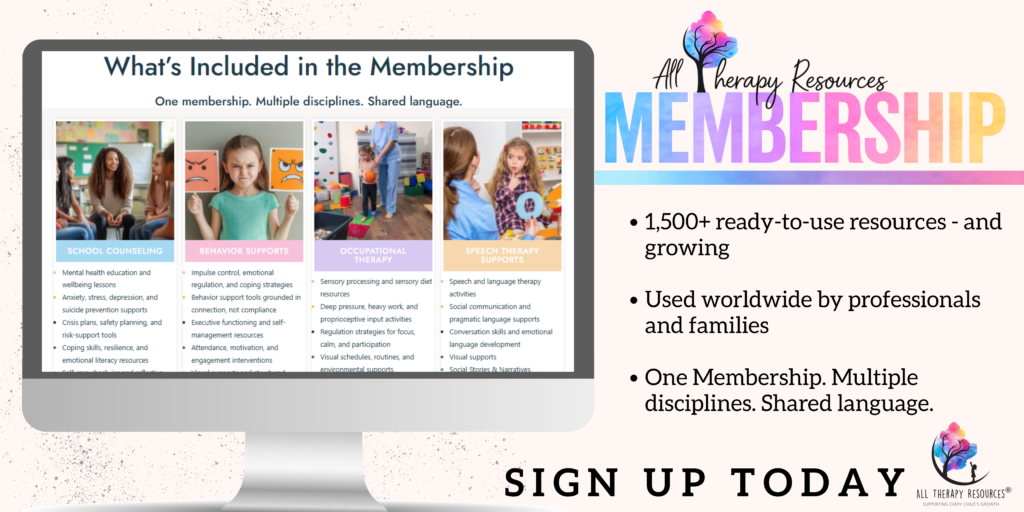
You can also explore the All Therapy Resources membership for ongoing access to a growing library of social-emotional learning, behavior, and wellbeing resources designed specifically for real-world school settings.
Frequently Asked Questions
What are respect activities for students?
Respect activities are structured lessons and interactive exercises that teach students how to communicate kindly, consider others’ perspectives, and make positive social choices. These activities help build empathy, responsibility, and strong relationships.
Why is teaching respect important in schools?
Teaching respect improves classroom behavior, reduces peer conflict, and strengthens relationships. Students who understand respectful communication are more likely to work cooperatively and manage social challenges effectively.
How can school counselors teach respect in small groups?
School counselors can use scenario-based discussions, role-play activities, sorting tasks, and interactive games to help students explore respectful choices and practice positive communication in a supportive setting.
How do respect lessons improve behavior?
When students understand the impact of their words and actions, they are more likely to pause, reflect, and choose respectful responses. This leads to fewer behavior incidents and stronger peer relationships.
Can respect be taught across different grade levels?
Yes. Respect can be taught from early elementary through high school using developmentally appropriate activities. Younger students focus on kindness and communication, while older students explore empathy, accountability, and social responsibility.