
ANXIETY & WORRY MANAGEMENT ACTIVITIES False Alarm Game High School Counseling
$3.99
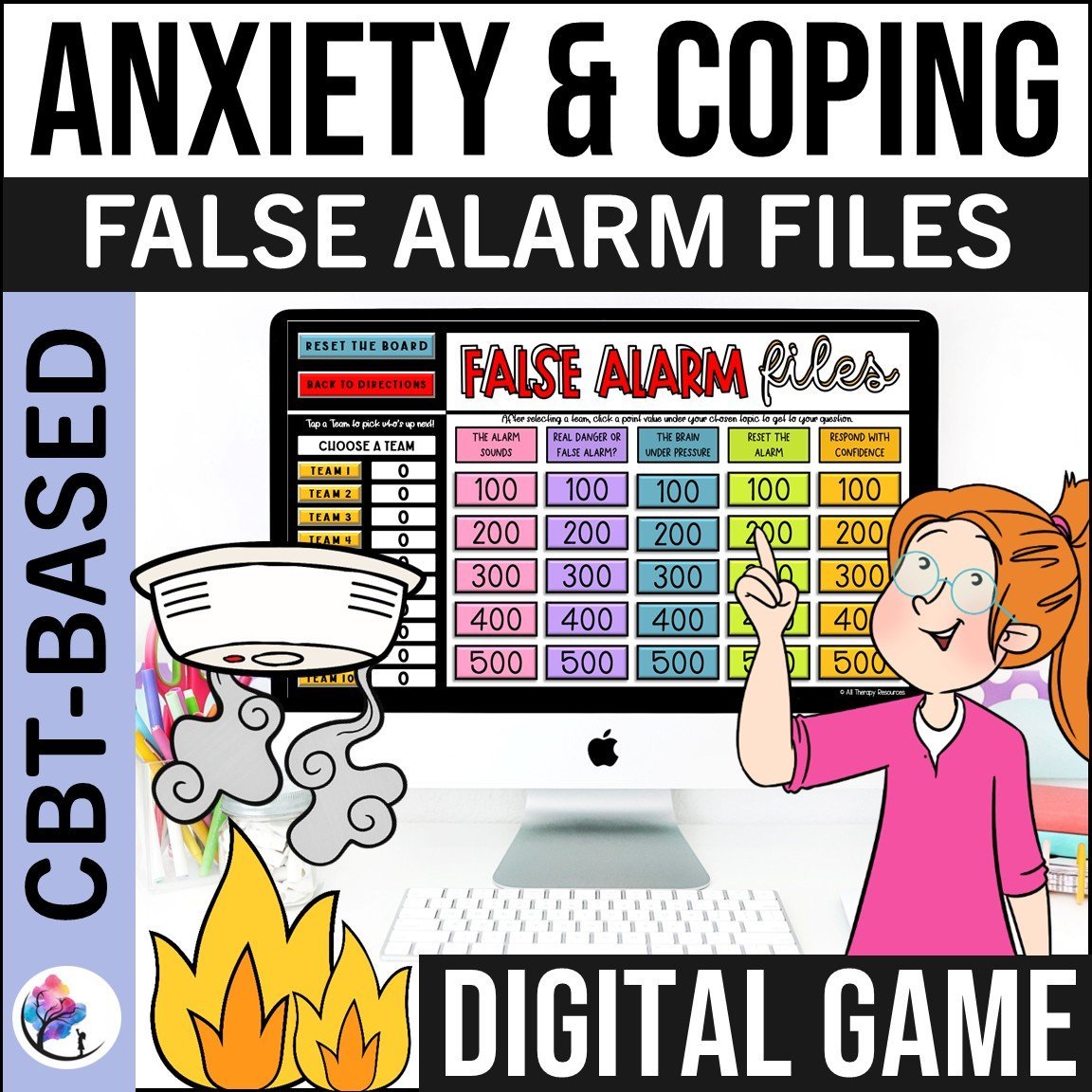
Are you looking for an engaging way to teach teenagers about anxiety, the brain’s alarm system, and healthy coping strategies? False Alarm Files is our interactive CBT-based digital PowerPoint game designed to help middle and high school students understand how anxiety develops, why the brain sometimes mistakes safe situations for danger, and how to respond using evidence-based cognitive behavioral strategies. Through an engaging game, students investigate “false alarms,” challenge anxious thinking, and develop practical skills for emotional regulation, resilience, and confidence.
Perfect for school counselors, psychologists, social workers, mental health professionals, health education, SEL lessons, advisory classes, psychology units, homeschool families, and wellbeing programs, our discussion-based game combines psychoeducation with real-world scenarios to make anxiety education meaningful, interactive, and memorable. Through guided discussion, critical thinking, and realistic case investigations, students learn that anxiety is not a weakness—it is the brain’s protective alarm system. Each question begins with a brief teaching point before students analyze scenarios, evaluate evidence, and apply CBT principles. Rather than simply answering questions, students strengthen anxiety management, emotional regulation, cognitive flexibility, resilience, self-awareness, self-confidence, critical thinking, growth mindset, and healthy decision-making—skills they can use both inside and outside the classroom.
GAME FEATURES:
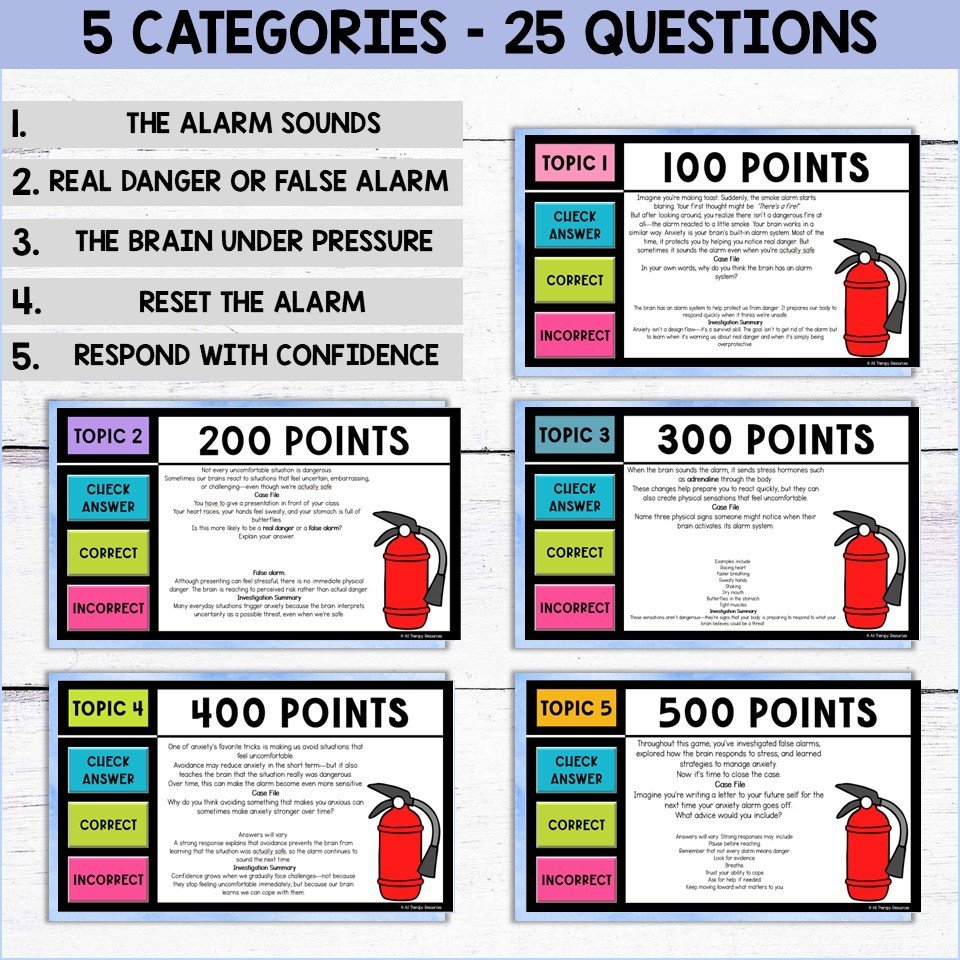
False Alarm Files includes 5 engaging discussion-based categories, each containing 5 questions with increasing point values (100–500).
THE FIVE CATEGORIES INCLUDE:
1. THE ALARM SOUNDS – Students explore why anxiety exists, how the brain’s alarm system is designed to keep us safe, the difference between fear and anxiety, and why anxious “false alarms” are a normal part of being human. They learn that anxiety is not the enemy—it is a protective system that can sometimes become overactive.
2. REAL DANGER OR FALSE ALARM? – Students investigate everyday situations and learn how to distinguish between genuine danger and perceived threat by gathering evidence rather than reacting automatically to anxious thoughts. They begin recognising common thinking errors and develop confidence in evaluating situations more realistically.
3. THE BRAIN UNDER PRESSURE – Students discover the neuroscience of anxiety, including the role of the amygdala, the fight-flight-freeze response, stress hormones, and the physical symptoms of anxiety. They also learn why it becomes harder to think clearly, solve problems, and make decisions when the brain believes they are under threat.
4. RESET THE ALARM – Students develop practical, evidence-based CBT coping strategies for calming the brain and nervous system. They explore slow breathing, grounding techniques, reducing avoidance, challenging anxious thinking, and responding to anxiety with curiosity, flexibility, and self-compassion rather than fear.
5. RESPOND WITH CONFIDENCE – Students apply everything they have learned to realistic teenage situations involving school, friendships, presentations, uncertainty, self-doubt, and everyday stress. They practise evaluating evidence, challenging anxious predictions, choosing helpful coping strategies, and responding with confidence, resilience, and balanced thinking.
HOW IT WORKS:
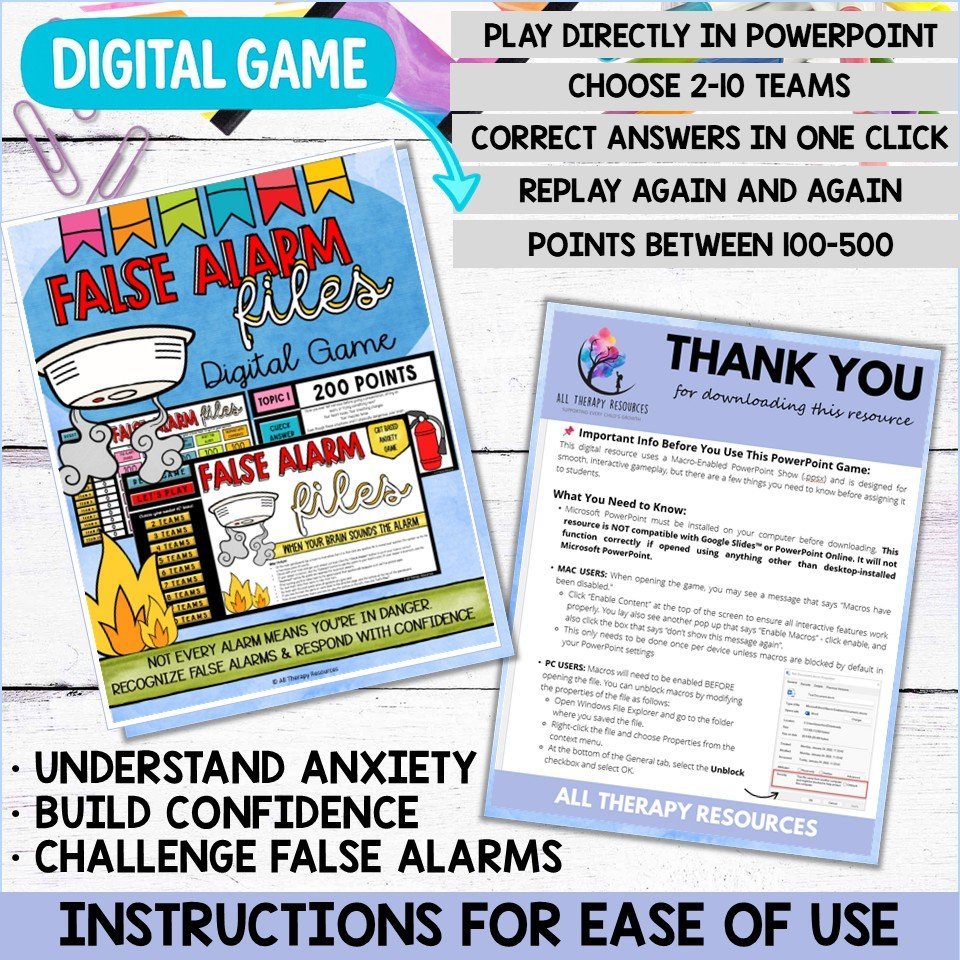
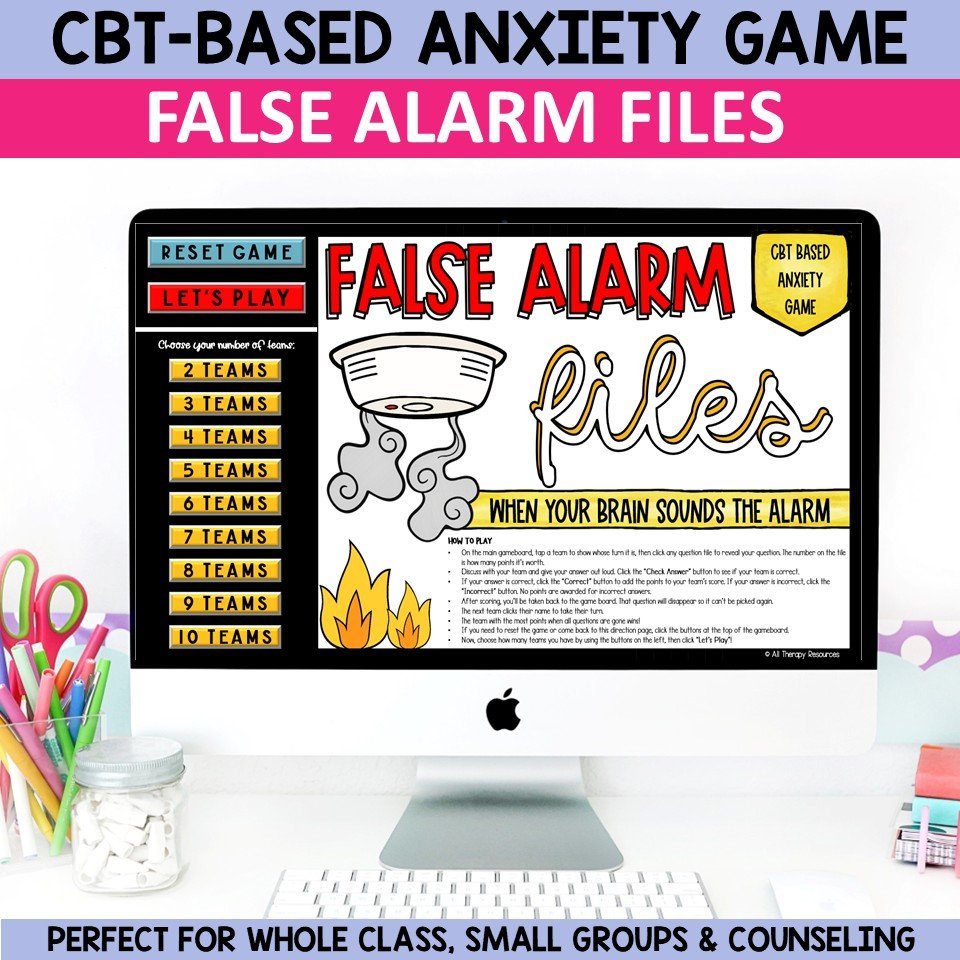
- Play directly in PowerPoint®—no special software required.
- Perfect for school counselors, psychologists, social workers, mental health professionals, health teachers, advisory classes, homeschool families, and SEL programs.
- Teams earn points by answering discussion-based questions.
- Every question begins with a brief psychoeducational teaching point grounded in CBT principles.
- Answers are revealed instantly with one click.
- Encourages meaningful discussion, critical thinking, emotional insight, and collaborative learning.
- Press RESET to replay again and again—unlimited classroom use.
False Alarm Files helps students understand that anxiety is not always a sign of danger—it is often the brain trying to keep them safe. Through engaging discussion, neuroscience, and evidence-based cognitive behavioral strategies, students learn to recognize anxious thinking, examine evidence, challenge false alarms, and build confidence in their ability to cope with life’s challenges.
IMPORTANT TECH NOTE
This resource requires the desktop version of Microsoft PowerPoint (Windows or Mac). It is not compatible with Google Slides, PowerPoint Online, or Chromebooks without PowerPoint installed.
You must be logged in to post a review.
Related products
-
Sale!

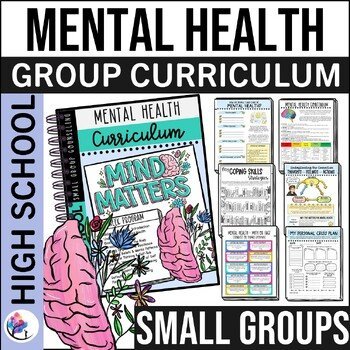
MENTAL HEALTH AWARENESS ACTIVITIES Small Group Counseling Curriculum HIGH SCHOOL
Original price was: $12.00.$6.00Current price is: $6.00. -
-
Sale!
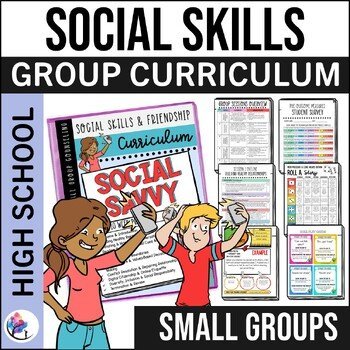
SOCIAL SKILLS ACTIVITIES Small Group Counseling Curriculum HIGH SCHOOL
Original price was: $12.00.$8.00Current price is: $8.00. -
Reviews
There are no reviews yet.