
Have you ever worked with a child who says, “I don’t know why I got so angry”… but you can see the pattern clearly?
The outburst.
The shutdown.
The regret afterwards.
And yet—when you try to unpack it, they simply don’t have the language or insight to explain what happened.
This is where many traditional anger management approaches fall short.
Because before children can regulate their anger, they first need to understand it.
And one of the most powerful, research-supported ways to do that… is through externalization.
Why Externalizing Anger Works (The Research Behind It)
In child-centered therapy and Cognitive Behavioral Therapy (CBT), externalization is a well-established technique used to help children separate themselves from their emotions.
Instead of:
“I am angry”
We shift to:
“I am experiencing anger”
This subtle but powerful shift reduces shame and increases a child’s sense of control.
From a psychological perspective:
• Externalization supports emotional awareness and labeling
• It reduces emotional overwhelm by creating psychological distance
• It helps children engage in reflective thinking rather than reactive behavior
• It aligns with CBT principles of identifying and understanding internal experiences
Neuroscience also supports this approach. When children can name and describe their emotions, it activates the prefrontal cortex—the part of the brain responsible for reasoning and self-regulation—helping to calm the emotional centers of the brain.
In simple terms… When children can see their anger, they can start to manage it.
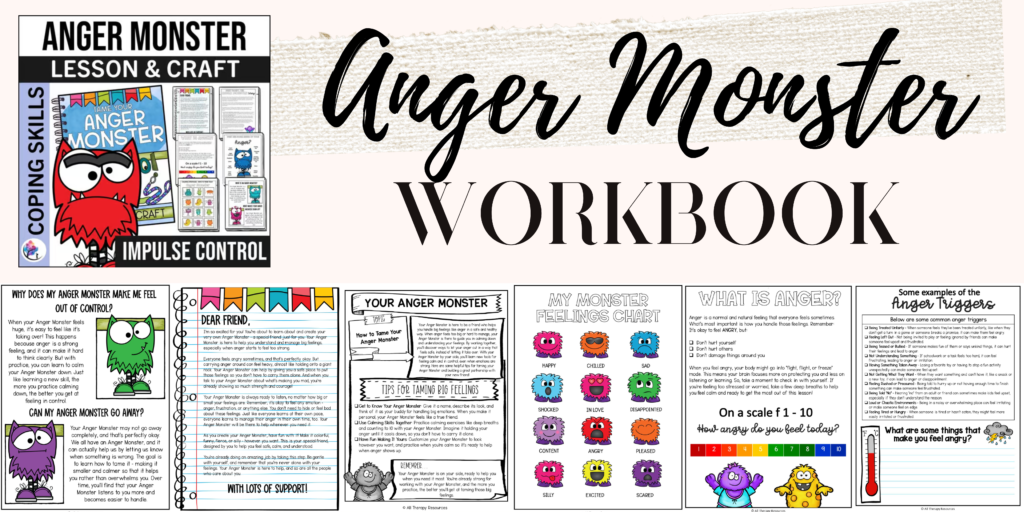
Meet the Anger Monster: Making the Invisible Visible
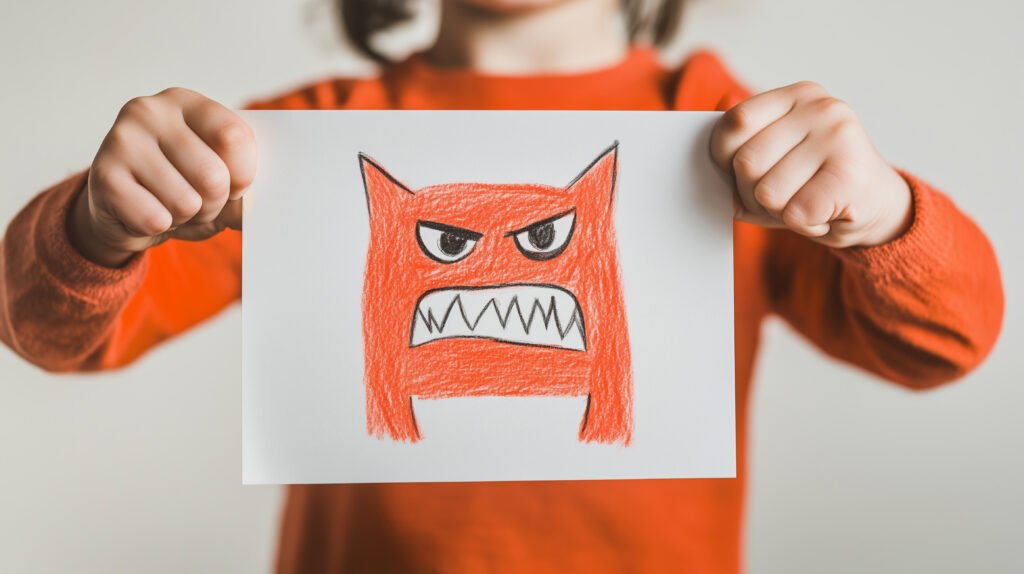
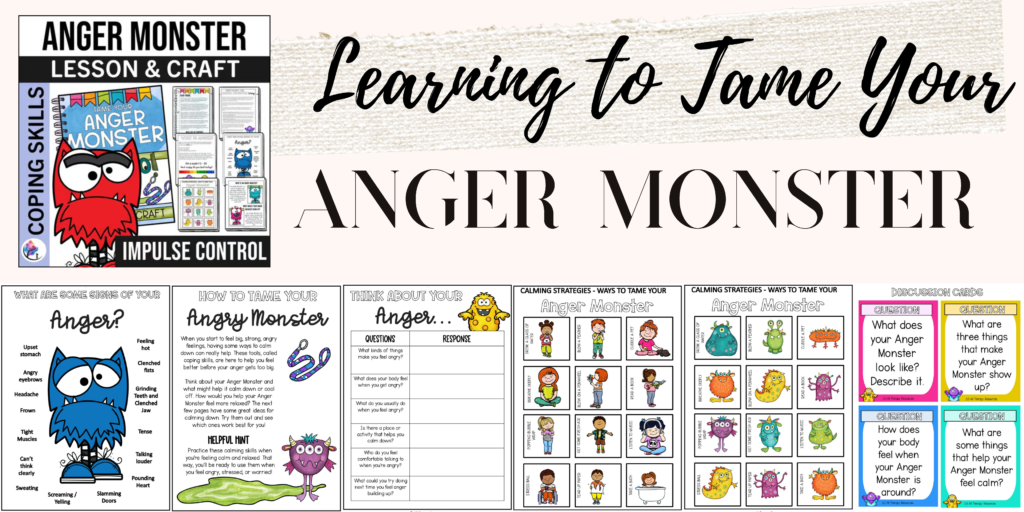
One of my absolute favorite ways to support this process is through what I call the “Anger Monster.”
Instead of talking abstractly about anger, students:
• Create their own “Anger Monster”
• Give it a name, personality, and traits
• Identify what makes it grow stronger
• Explore what helps calm or shrink it
And something really interesting happens.
The moment anger becomes something outside of them, children start to talk more openly.
They’ll say things like:
“My monster gets really big when people laugh at me.”
“My monster comes out when I feel left out.”
And just like that… we’ve moved from behavior to insight.
What I See in Practice (From My Counseling Room)
This is where I’ll be honest with you…
I love resources that take something complex and make it feel safe, engaging, and accessible for kids.
I remember working with a student who was constantly getting into conflict at recess.
Every time we tried to talk about it, he would shut down or say, “I don’t know.”
But when we introduced the idea of creating his “Anger Monster,” everything changed.
He drew it. Named it. Described it.
And then he said:
“My monster gets really loud when I think people are being mean… even if they’re not.”
That moment?
That’s therapeutic gold.
Because now we’re not just managing behavior—we’re building self-awareness, cognitive flexibility, and emotional insight.
Why This Approach Is So Effective for Emotional Regulation
The Anger Monster activity doesn’t just help children “talk about feelings.”
It builds core therapeutic skills, including:
• Emotional identification – recognizing triggers and internal states
• Cognitive awareness – understanding thoughts linked to anger
• Impulse control – creating space between feeling and reaction
• Coping strategy development – identifying ways to calm the “monster”
• Perspective-taking – recognizing that feelings can change and be managed
From a trauma-informed lens, this approach is also incredibly important.
Many children who experience heightened emotional responses are not choosing to “misbehave”—they are responding from a place of overwhelm or perceived threat.
By externalizing anger, we reduce defensiveness and create a safer pathway to explore those internal experiences.
Turning Insight Into Action: Helping Children “Tame” Their Anger
Once children understand their Anger Monster, the next step is empowering them with strategies.
This might include:
• Identifying early warning signs (when the monster is “growing”)
• Practicing calming strategies like deep breathing or movement
• Reframing thoughts that fuel the anger
• Building a plan for what to do in triggering situations
The key here is that strategies are no longer abstract.
They are directly connected to something the child understands.
Instead of:
“Calm down”
We now have:
“What helps your monster shrink?”
And that shift makes all the difference.
Why Engagement Matters (And Why This Works So Well in Schools)
Let’s be real—students don’t learn best from lectures about emotions.
They learn through:
• Interaction
• Creativity
• Personal connection
• Meaningful reflection
That’s why combining craft, creativity, and therapeutic insight is so powerful.
When students are actively involved, they’re more likely to:
• Stay engaged
• Retain information
• Apply strategies in real-life situations
And as educators, counselors, and therapists—that’s the goal.
Not just understanding in the moment… but lasting change.
Building Emotional Insight That Lasts
Anger isn’t the problem.
It’s a normal, human emotion.
But without the tools to understand and manage it, it can quickly lead to behaviors that impact relationships, learning, and wellbeing.
When we give children a way to see their anger, talk about it, and work with it…
We’re not just teaching anger management.
We’re teaching:
• Self-awareness
• Emotional intelligence
• Resilience
• And lifelong coping skills
And honestly?
Those are the skills that matter most.
Frequently Asked Questions
What age group is appropriate for teaching anger management concepts?
Anger management can be introduced as early as early elementary years, but the approach should be developmentally appropriate. Younger children benefit from visual, creative, and play-based strategies, while older students can engage in deeper reflection and cognitive strategies.
Why do some children struggle more with anger than others?
Children vary in temperament, emotional regulation skills, and life experiences. Factors such as stress, trauma, unmet needs, or difficulties with executive functioning can all impact how a child experiences and expresses anger.
What are the first signs that a child is becoming dysregulated?
Early warning signs may include changes in body language, tone of voice, facial expressions, or increased agitation. Teaching children to recognize these signs early is key.
How can adults respond effectively to angry behavior?
Calm, consistent, and non-judgmental responses are most effective. Co-regulation—where an adult helps a child regulate their emotions—is often more impactful than consequences alone.
Is anger something that should be “reduced” or “managed”?
Anger is a normal emotion and doesn’t need to be eliminated. The goal is to help children understand it, express it safely, and respond in ways that are constructive and respectful.
What role does emotional language play in anger management?
Emotional language is critical. When children can label and describe their feelings, they are better able to regulate them and communicate their needs effectively.
Ready to Support Deeper Emotional Insight?
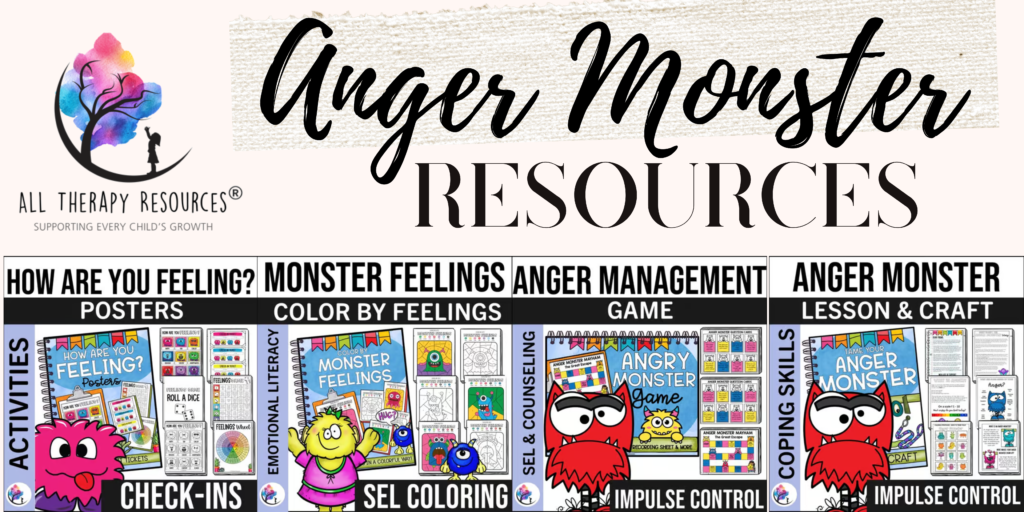
If you’re looking for engaging, research-based ways to help students understand and manage their anger, you can explore more tools inside the All Therapy Resources Membership.
These are the kinds of activities that don’t just “teach a lesson”…
They create real, lasting change.