


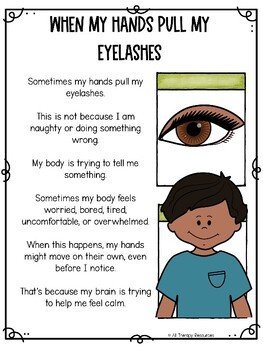
PULLING HAIR OUT – EYELASHES Social Narrative Story – Trichotillomania Support
$5.00
Are you supporting a child who pulls out their eyelashes and aren’t sure how to talk about it without causing shame or distress? Supporting a child with trichotillomania (focusing on eyelash pulling) can feel overwhelming for parents, teachers, and therapists — especially when traditional “just stop” approaches don’t work and may actually increase anxiety. Children often struggle to explain why the behavior happens, and adults are left searching for gentle, effective ways to help.
Our trauma-informed social story about eyelash pulling has been designed to help children understand their behavior, feel safe, and build insight – without blame, pressure, or punishment. Written in child-friendly language, our resource supports emotional awareness, nervous system regulation, and self-compassion.
What’s Included in This Resource:
- A child-friendly social story focused on eyelash pulling (trichotillomania)
- Built-in reflective questions to support insight and emotional awareness
- Coping strategy ideas for busy hands and big feelings
- Reassuring, strength-based messaging throughout
- An extended Frequently Asked Questions section for children, written in calming, supportive language
- Optional parent-facing explanations to support understanding and consistency
This Social Story Helps Children:
- Understand eyelash pulling as a body-based coping response, not a bad behavior
- Reduce shame, guilt, and self-blame
- Learn that urges can happen automatically and are not their fault
- Build awareness of feelings, body signals, and triggers
- Practice gentle alternatives for busy hands
- Feel supported by trusted adults at home or school
- Develop insight at their own pace, in a safe and respectful way
NOTE: Why We Use Body-Based Language in This Story
You may notice language such as “my hands pull my eyelashes” rather than “I pull my eyelashes.” This wording is intentional. It helps separate the child from the behavior, reducing shame and self-blame. Many body-focused repetitive behaviors happen automatically and are driven by the nervous system, not by conscious choice. Using body-based language helps children understand that their body is signaling a need for support, not doing something “wrong.”
🩷 Looking for more Speech Therapy resources?
- Advanced Phonics & Spelling Cards
- Camping Theme OT & Speech Activities
- Daily Cooking Visual Supports
- Digraphs Digital Games Bundle
- Facial Expressions Emotion Matching
- Flipping Your Lid Social Narrative
- Meet the SLP Game
- Mystery Code Words – Alphabet Practice
- Patterns & Sequencing Bundle
- Pirate Articulation Mystery Words
- R Blends Worksheets
- Read & Match CVC Worksheets
- Resilience Reading Passages
- Short Vowels CVC Digital Games Bundle
- Social Skills – Conflict & Body Language
- Space Directed Drawing – OT
- Speech & OT Therapy Kits – 8 Themes
- Spring Reading Comprehension
- Use of Time Trackers Bundle
- Who Am I? Animal Inference Game
© All Therapy Resources. For personal classroom and therapy use only. Please read our Terms of Use regarding personal and commercial use of All Therapy Resources.
Love this resource? It’s included in the All Therapy Resources Membership, along with our whole collection of counseling, SEL, speech and OT resources. Join the Membership →
Want new resources and freebies in your inbox? Sign up for our newsletter.
| Practice Area | Mental Health Support, Trauma-Informed Care |
|---|---|
| Grade Level | Not Grade Specific |
| Topic | Anxiety & Stress, Social Stories & Narratives, Trichotillomania, ✨ Recently Added |
Only logged in customers who have purchased this product may leave a review.


Reviews
There are no reviews yet.