
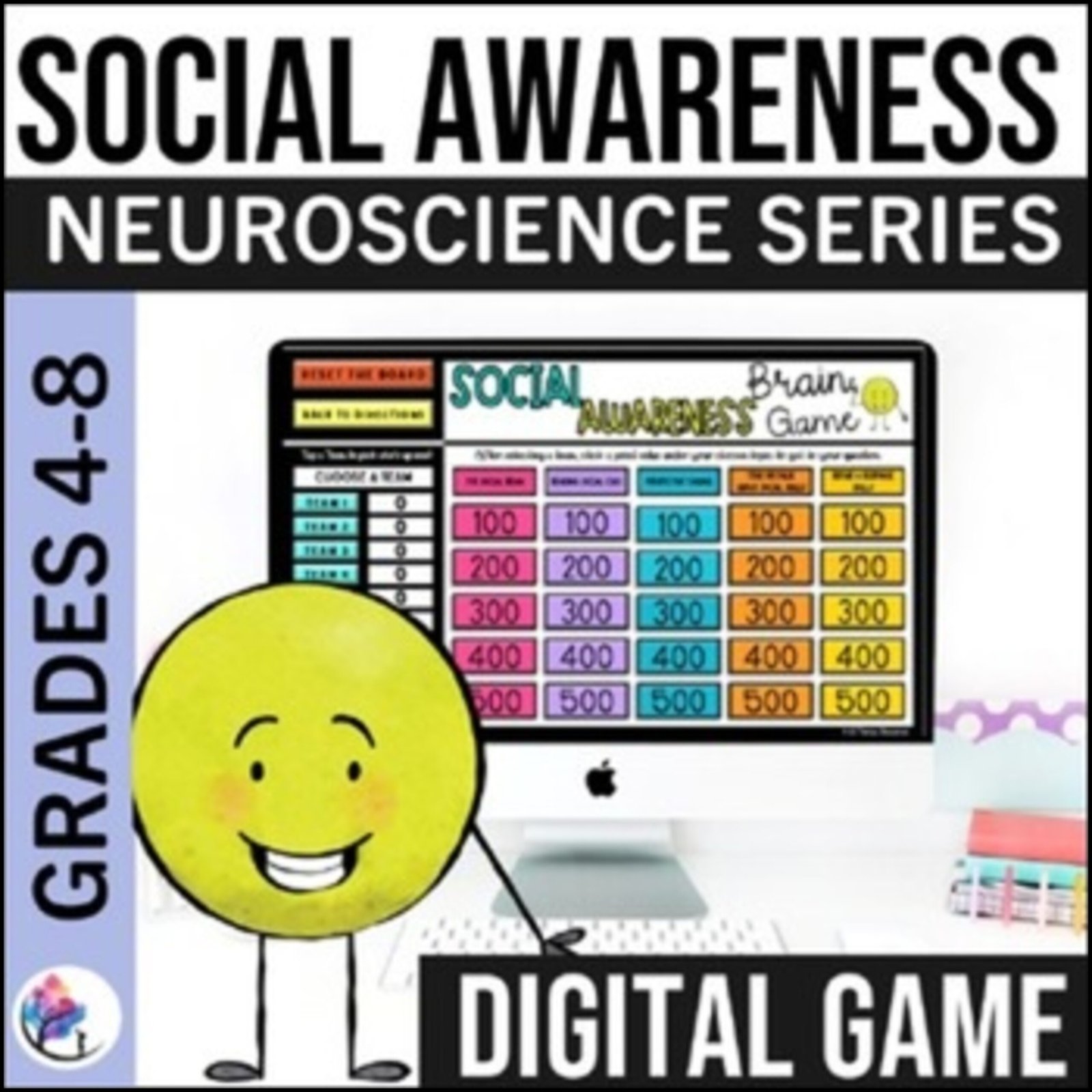
SOCIAL AWARENESS BRAIN GAME – Neuroscience Whole Brain – Emotional Regulation
$7.00
Are you looking for an engaging way to help students understand social awareness, perspective taking, and the brain skills behind positive social interactions?
Are you looking for an engaging way to help students understand social awareness and thinking, perspective taking, and the brain skills that support positive social interactions? Social Awareness Brain Game is our interactive digital PowerPoint game designed to help students explore how the brain helps us understand others, read social cues, and respond appropriately in social situations. Through interactive questions, team collaboration, and guided discussion, students learn how their “social brain” helps them notice facial expressions, body language, tone of voice, and the thoughts and feelings of others.
⚠️ PLEASE NOTE: This game needs desktop PowerPoint on a Windows PC with macros enabled. It will not work on a Mac, Chromebook or iPad, or in Google Slides, Keynote or PowerPoint online.
Social awareness skills are essential for building friendships, navigating group situations, and developing strong communication skills. This brain-based game helps students understand that successful social interactions require awareness, flexible thinking, perspective taking, and thoughtful responses. Rather than simply teaching social rules, this game helps students understand how their brain processes social information and why certain social skills help relationships work more smoothly. Students explore how to read social situations, think about how others may be feeling, and learn strategies for responding when misunderstandings occur.
GAME FEATURES:
This digital brain game includes 5 engaging sections, each with 5 questions and increasing point values (100–500), designed to build social understanding step-by-step.
1.The Social Brain – Introduces students to how the brain helps us understand social situations, emotions, and the behavior of others.
2.Reading Social Cues – Helps students learn how to notice and interpret social signals such as facial expressions, tone of voice, body language, and situational clues.
3.Perspective Taking – Encourages students to think about what others might be thinking or feeling and understand how different perspectives influence social interactions.
4.True or False About Social Skills – Challenges common misconceptions about social behavior while helping students understand what helps conversations and relationships work well.
5.Repair and Response Skills – Teaches students how to respond when social mistakes happen, including apologizing, repairing misunderstandings, and choosing positive ways to move forward.
This digital SEL and brain-based learning game is ideal for school counselors, classroom teachers, psychologists, speech therapists, occupational therapists, and special educators who want a fun and structured way to teach social skills during SEL lessons, counseling groups, social skills groups, or whole-class activities. Students build important life skills such as empathy, communication, perspective taking, social awareness, and relationship building, while learning practical strategies that support positive interactions at school and in everyday life.
HOW IT WORKS:
- Play directly in PowerPoint — no special software required
- Choose 2–10 teams for flexible group sizes
- Teams earn points by answering social awareness questions
- Correct answers are revealed with one click
- Encourages discussion, reflection, and peer learning
- Press RESET to replay again and again — unlimited use
WHY TEACHERS & COUNSELORS LOVE IT
- Teaches social awareness and social skills in a brain-based, student-friendly format
- Supports social emotional learning (SEL) and social skills development
- Encourages discussion about communication, empathy, and relationships
- Builds relationship skills, self-awareness, and social problem-solving
- Low-prep — simply open and play
🖋️ASCA AND CASEL ALIGNMENT
This resource supports these ASCA Student Standards
Mindsets & Behaviors for Student Success:
• B-SS 4: Empathy
• B-SS 9: Social maturity and behaviors appropriate to the situation and environment
CASEL competencies: Social Awareness
🩷 Looking for more Occupational Therapy resources?
- Anxiety & Worry CBT Digital Game
- Breaking the Bias Digital Games Bundle
- Calm Down Corner Posters – Bright
- Coping Skills Activity Cards
- Emotional Regulation Worksheets & Game
- Feelings Alphabet A-Z Crafts
- Meet the OT Game
- Mystery Code Words – Alphabet Practice
- Pirate Articulation Mystery Words
- Safe vs Unsafe Secrets
- School Visual Perception & Fine Motor
- Self-Esteem SEL Activities
- Soccer Shapes Bingo & Crafts
- Stereotyping Digital Game
- Stranger Danger Workbook & Game
- Superhero Directed Drawing
- Teen Talk Game 3 – Conflict & Leadership
- Ultimate Occupational Therapy Bundle
- Use of Time Trackers Bundle
- Weaving Patterns – Visual Perception
© All Therapy Resources. For personal classroom and therapy use only. Please read our Terms of Use regarding personal and commercial use of All Therapy Resources.
Love this resource? It’s included in the All Therapy Resources Membership, along with our whole collection of counseling, SEL, speech and OT resources. Join the Membership →
Want new resources and freebies in your inbox? Sign up for our newsletter.
| Practice Area | Mental Health Support, Therapeutic Supports, Social Emotional Learning |
|---|---|
| Grade Level | Elementary (Grades 1–5), Middle School (Grades 6–8) |
| Topic | Digital Counseling Games, Flipping Your Lid & Neuroscience, Social Skills, ✨ Recently Added |
| File Format | PowerPoint, Google Slides |
What Our Customers Are Saying
Only logged in customers who have purchased this product may leave a review.


Customer Review –
This activity encouraged students to think more deeply about how their actions affect others. The game format helped keep the conversation flowing and students stayed involved throughout the lesson.
Customer Review –
A fantastic resource for teaching social thinking. My students enjoyed the game format and it helped them reflect on their choices and interactions. It led to meaningful conversations about empathy and perspective-taking.